
Short answer
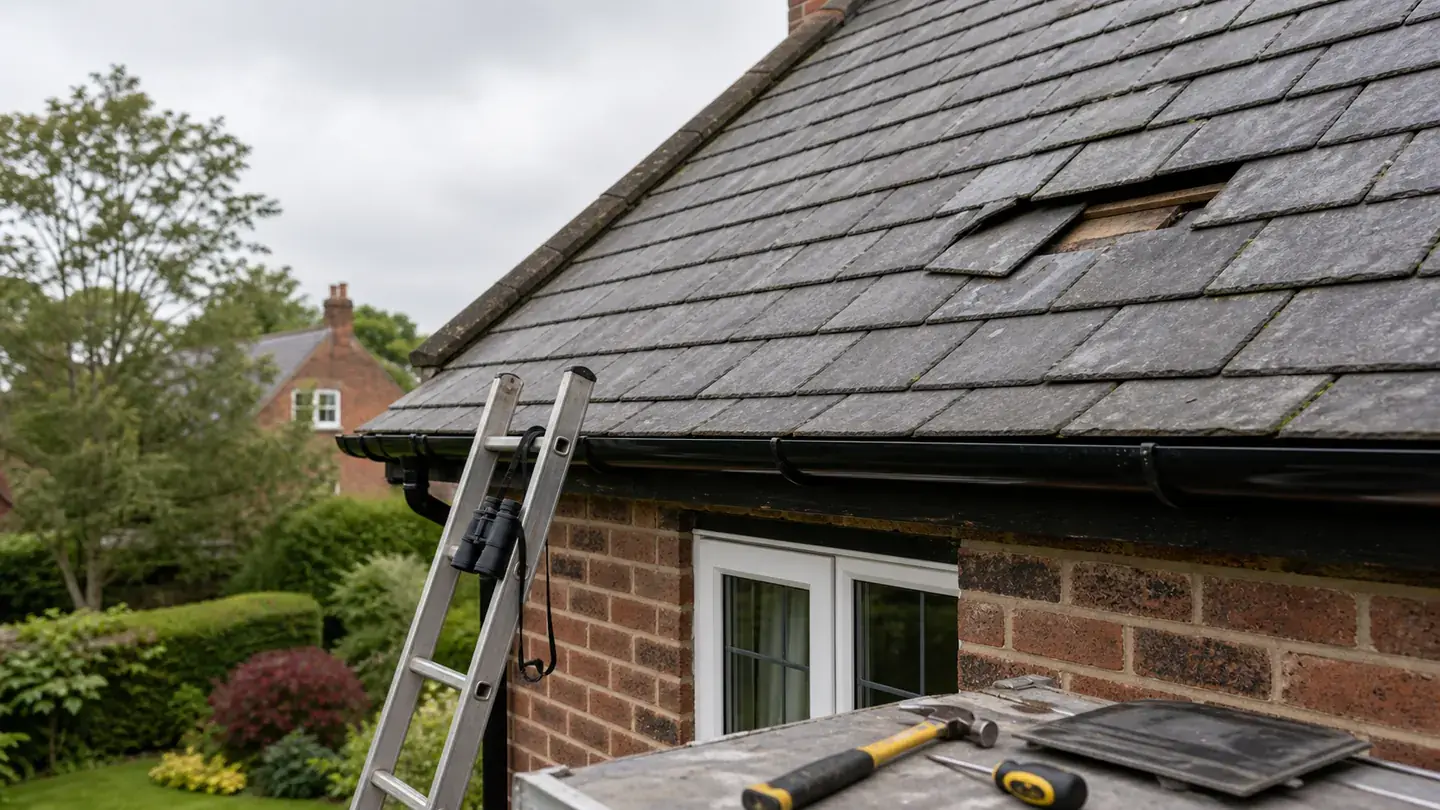
Roof repair costs in Chester typically start from around £95 for a single slipped or cracked tile; a small repair covering a few tiles, a ridge tile or a minor leak depends on the size of the job and access. A storm-damage inspection with a written report starts from £95. Larger jobs such as ridge re-bedding or chimney flashing are priced on the work and access, and every job is confirmed after a few photos or a visit, so there are no surprises.
Why roof repairs vary so much in price
A roof repair is priced on access, roof type and how far the damage has spread, not just the time on the tiles. A slipped tile on a single-storey extension is quick; the same tile high on a three-storey Hoole townhouse, or on an awkward valley, costs more because of the access and the care needed to do it safely.
Around Chester, Cheshire and the Wirral you see a real mix of roofs — Victorian and Edwardian terraces in Hoole and Handbridge with clay or slate, post-war semis with concrete interlocking tiles, and 1960s–80s estates in places like Upton and Saughall with flat felt garage and extension roofs. Each one fails differently, so a quick photo or visit tells us far more than a phone quote ever could.
Our wet, windy weather coming in off the Irish Sea is the other big factor. A run of gales will lift ridge tiles and slip slates, and driving rain finds any gap in the flashing or felt. Catching one slipped tile early is a small job; leaving it until water has been getting into the loft for a season turns a £95 repair into damp timber, stained ceilings and a much bigger bill.
Roof repairs — our guide prices in Chester & Cheshire
| Job | Guide price | What affects it |
|---|---|---|
| Single slipped or cracked tile re-fixedOne tile, accessible roof — often the cheapest fix to a leak | From £95 | One tile, accessible roof — often the cheapest fix to a leak |
| Small roof repair (a few tiles / ridge tile / minor leak)Re-bed a ridge tile, replace a small group of tiles or seal a small leak | Quoted from photos | Re-bed a ridge tile, replace a small group of tiles or seal a small leak |
| Storm-damage inspection and written reportUseful for insurance claims after high winds; photos included | From £95 | Useful for insurance claims after high winds; photos included |
| Leadwork or flashing repair (chimney / valley / abutment)Re-seal or re-dress lead where water is getting in around a join | Quoted from photos | Re-seal or re-dress lead where water is getting in around a join |
| Small flat-roof felt patch repairLocalised patch on a garage or extension roof to stop a leak | Quoted from photos | Localised patch on a garage or extension roof to stop a leak |
These are our guide figures for typical Chester roofs. Roof work is confirmed after a few photos or a quick visit, because height, access, roof type, the spread of damage and any underlying timber or felt change the scope. Where safe access needs a scaffold tower, that is quoted separately and shown up front.
The main types of roof repair — and what each involves
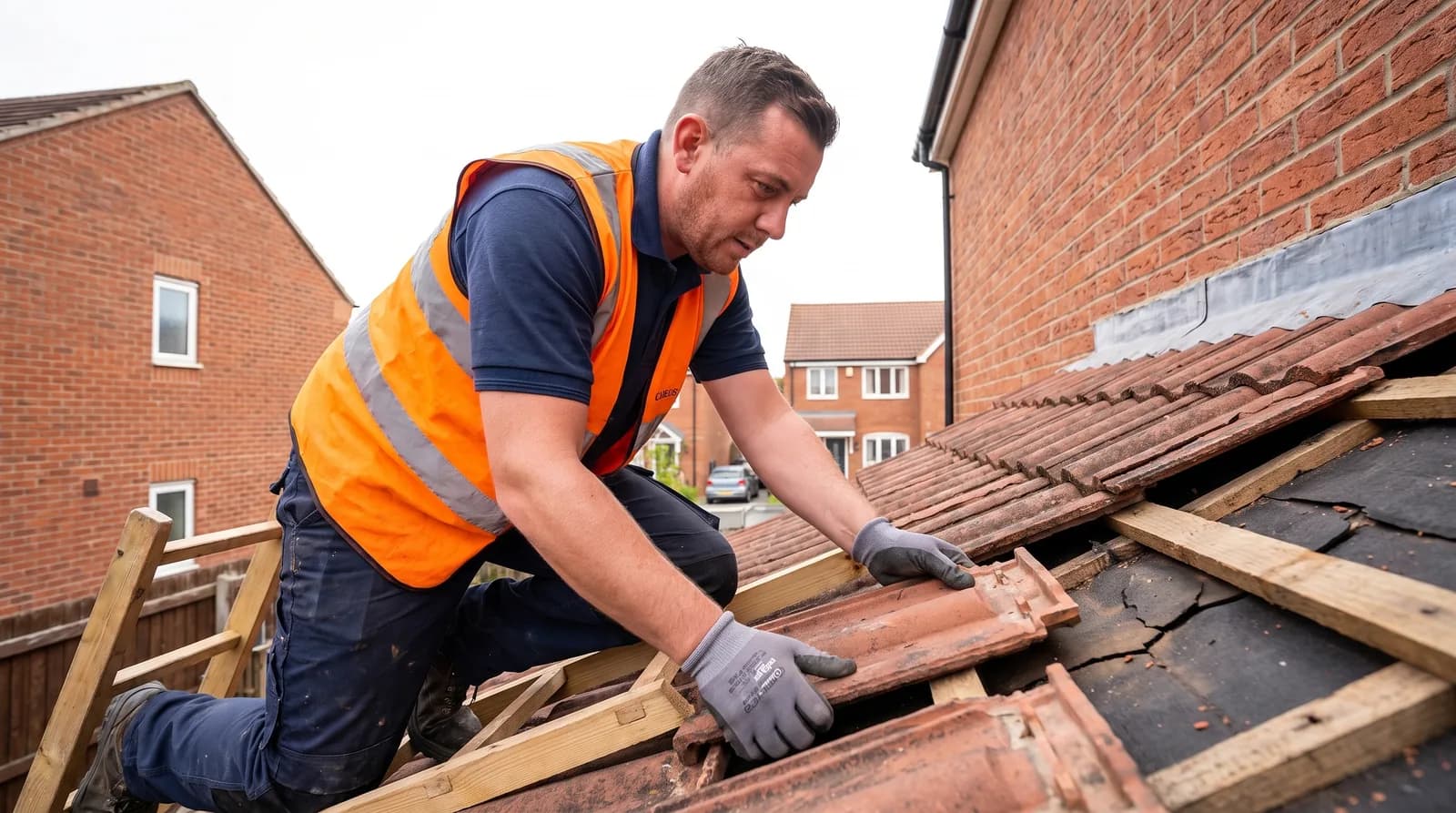
Slipped and cracked tiles or slates are by far the most common repair. Wind lifts a tile, an old fixing nail rusts through (roofers call it "nail sickness"), or frost cracks a slate — and a single displaced tile is enough to let water in. Refixing or replacing one accessible tile is usually the cheapest possible fix, which is exactly why it pays to sort it early.
Ridge and hip tiles sit along the apex and edges of the roof, bedded on a strip of mortar. Over years that mortar cracks and crumbles, tiles work loose, and in a gale they can come off completely. Re-bedding a ridge tile — or a run of them — in fresh mortar, or fitting a dry-ridge system, restores the seal at the most exposed line on the whole roof.
Leadwork and flashing is where most leaks actually begin. The lead around a chimney, in a valley, or where a roof meets a wall (an abutment) cracks, lifts or pulls away, and water finds the gap long before the tiles themselves fail. Re-dressing or re-sealing that lead is a specific skill. Flat felt roofs on garages and extensions are the other frequent culprit — splits, blistering and pooling water — and storm damage can hit any of these in one hit.
Because so many leaks trace back to leadwork rather than obvious broken tiles, the visible symptom and the real fault are often in different places. That is why a proper look nearly always beats a guessed-at repair.
Typical UK guide prices for common roof repairs
| Job | Guide price | What affects it |
|---|---|---|
| Refix or replace a slipped/cracked tile or slatePer tile on an accessible roof; more for high, steep or fragile roofs | £95–£250 | Per tile on an accessible roof; more for high, steep or fragile roofs |
| Re-bed or re-point a run of ridge tilesA few metres re-mortared; a full ridge or a dry-ridge system costs more | £200–£700 | A few metres re-mortared; a full ridge or a dry-ridge system costs more |
| Flashing repair (roof-to-wall abutment / step)Re-seal or re-dress lead where a leak has started at a join | £150–£500 | Re-seal or re-dress lead where a leak has started at a join |
| Chimney flashing / lead re-dressAround the chimney base — a very common source of water ingress | £200–£650 | Around the chimney base — a very common source of water ingress |
| Valley repair or re-layThe channel between two slopes; higher if the valley lining has failed | £250–£900 | The channel between two slopes; higher if the valley lining has failed |
| Scaffold tower or edge protection (when needed)The single biggest variable — safe access on a two/three-storey roof | £150–£900+ | The single biggest variable — safe access on a two/three-storey roof |
Typical UK guide ranges for the work only, materials included where noted. Access and scaffolding are the main reason two similar-looking jobs are priced differently — often the safe-access kit costs more than the repair itself, so bundling several roof jobs into one scaffold visit is far better value. These are market ranges, not a CPAGM quote: send photos for a firm price.
Why finding a leak's source can need proper investigation
A wet patch on a bedroom ceiling is almost never directly below the fault. Water gets in at the roof, then tracks sideways along battens and rafters — sometimes a metre or more — before it finds a low point and drips. Repair the spot under the stain and the leak simply carries on, because the actual entry point was never touched.
Finding the true source is a short piece of detective work: looking over the roof surface, checking the flashings and valleys, and going into the loft while it is raining or straight after to see where the water is really running. On stubborn leaks a controlled hose test — wetting one section of roof at a time — pins down the exact gap. That investigation is worth doing first, because it turns a hopeful patch into a repair that actually stops the water. It is also why a genuine price follows the look, not the phone call.
What a roof repair visit involves
- 1
Find the real cause, not just the symptom
A wet patch on a ceiling is rarely directly below the fault — water tracks along timbers before it drips. We look at the roof and, where helpful, the loft to find where it is actually getting in.
- 2
Agree the scope and a fair price
You get a clear explanation of what needs doing, any access or scaffolding needed, and a price before we start. No surprises added once we are up there.
- 3
Carry out the repair safely
We re-fix slipped tiles, re-bed ridge tiles, sort leadwork and flashing or patch felt — using proper access equipment, fully insured, with care for the rest of the roof.
- 4
Show you the result and flag what's coming
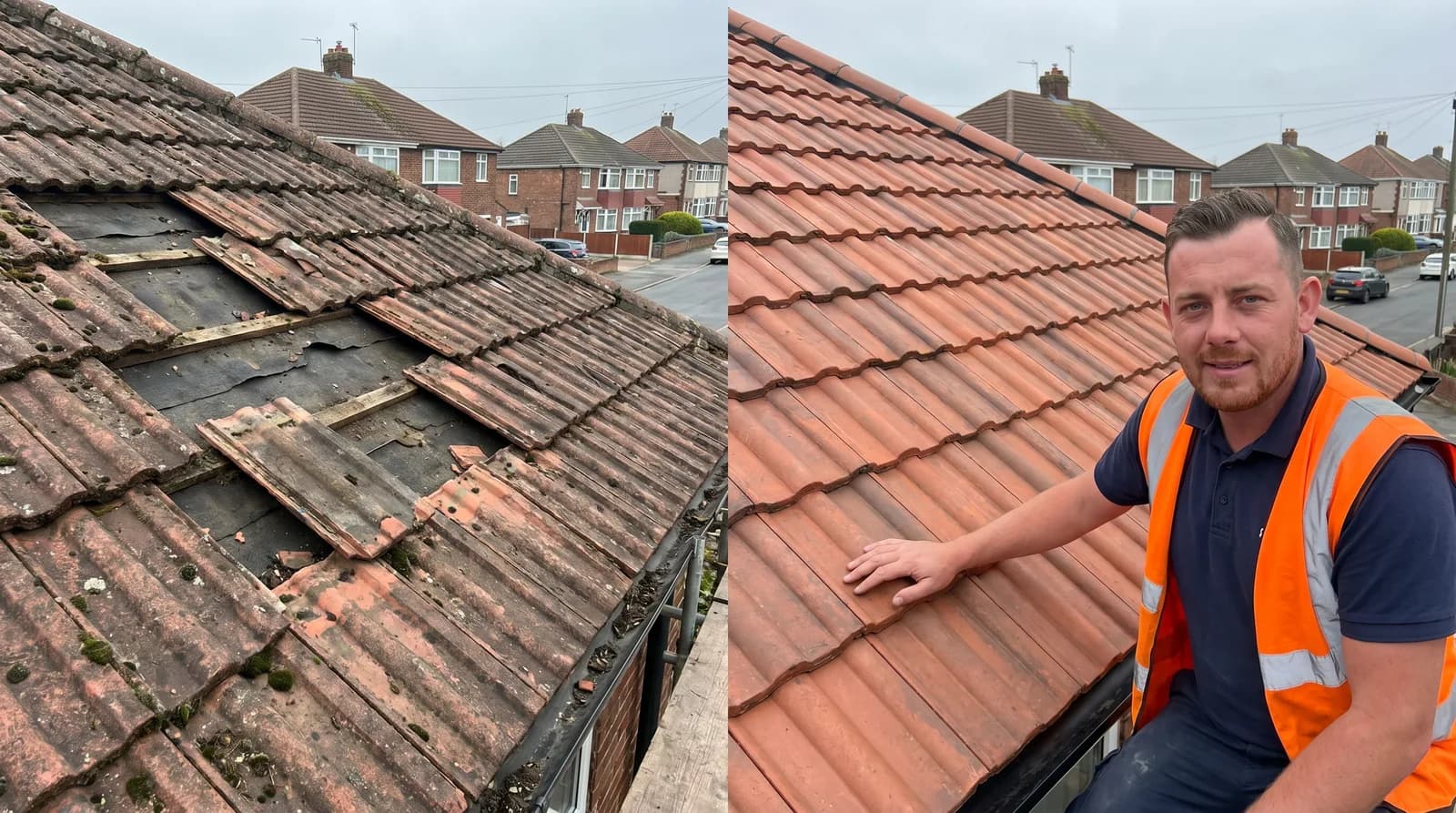
You get before-and-after photos and an honest note on the roof's condition — including whether it has years left or is heading towards a re-roof, so you can plan rather than be surprised.
Never go up on the roof yourself to chase a leak
Falls from height are the single biggest cause of fatal and serious injury in UK construction and home maintenance, and roof tiles are brittle and slippery. A wet or mossy roof, a fragile felt garage roof, or a leaning ladder on a two-storey house is genuinely dangerous. If the problem is above a single-storey lean-to, leave it to someone working safely with the right access kit and insurance — the saving is never worth the risk.
Access and scaffolding: the biggest cost variable
Two roofs can have exactly the same fault and be priced very differently, and access is usually why. On a single-storey extension or a low garage, a ladder or a small tower is enough and the cost is mostly the repair itself. On a two- or three-storey house — or anything steep, mossy or over a conservatory — safe working means a proper scaffold tower or edge protection, and that kit can add anywhere from a hundred pounds to several hundred before a single tile is touched.
There is a sensible way to use that to your advantage. If you already suspect the roof needs a couple of things — a slipped tile here, a bit of ridge re-bedding there, a flashing re-seal — get them all looked at and done in one visit while the access is set up, rather than paying to reach the roof twice. Around Chester and out towards Frodsham, Northwich, Tarporley and Ellesmere Port the pattern is the same: the further and higher the job, the more the access matters, and bundling is what keeps the cost per fix down.
Small repair vs full re-roof — which do you actually need?
| Small repair | Full re-roof / large works | |
|---|---|---|
| Typical trigger | A few slipped or cracked tiles, one leak, storm damage in one spot | Widespread tile failure, sagging, failed underfelt, repeated leaks across the roof |
| Guide cost | From £95, confirmed from photos, plus access if needed | Several thousand pounds — quoted separately by a roofing contractor |
| How long it lasts | Buys you years if the rest of the roof is sound | A new roof, typically decades |
| Honest advice | If a repair is the right call, that's what we do | If your roof really needs replacing, we tell you straight rather than patching and re-patching |
| Disruption | Usually a single short visit | Scaffolding, several days, larger spend |
When a repair beats a replacement
For most leaks and storm damage, a targeted repair is the right and far cheaper answer. If the roof structure is sound, the underfelt still has life in it, and the great majority of tiles are in good order, fixing the one thing that has failed will often buy you many more years — there is no sense re-roofing a house because of one slipped tile or a cracked length of flashing.
A replacement earns its keep when the failure is spread across the whole roof: nail sickness slipping tiles all over the slope, perished felt beneath, a visible sag, or the same roof leaking in a new place every few months. At that point patching becomes a cost with no end. Our approach is simple — if a repair will genuinely hold, we repair it; if it will not, we tell you honestly rather than keep taking money for a roof that needs replacing.
Photos that get you an accurate price fast
- A wide shot of the whole roof slope, so we can see the tile type and any obvious slipped or missing tiles
- A close-up of the problem area — the slipped tile, cracked ridge, lead flashing or felt split
- Any inside damage (ceiling stain, damp patch, water in the loft), plus how the property is accessed and how many storeys it is
Frequently asked questions
How much does a roof repair cost in the UK?
As a UK guide, most small roof repairs cost between about £95 and £500 for the work, depending on the fault and the roof. A single slipped or cracked tile is at the lower end, while ridge re-bedding, valley work or chimney flashing runs from a few hundred pounds up. The main extra is access — a scaffold tower on a tall or steep roof can add a hundred to several hundred pounds. In Chester our repairs start from around £95, and your exact price is confirmed after photos.
What are typical roof repair prices in the UK?
Typical UK roof repair prices are roughly: £95–£250 to refix or replace a slipped tile, £200–£700 to re-bed a run of ridge tiles, £150–£500 for a flashing repair, £200–£650 for chimney flashing, and £250–£900 for a valley repair. Scaffolding, where it is needed for safe access, is the biggest variable on top. These are market ranges rather than a fixed quote — the real price depends on your roof, which is why we confirm it after a few photos or a visit.
How much does it cost to repair a roof?
The cost to repair a roof depends on what has failed and how easy the roof is to reach safely. Small, accessible jobs — a slipped tile, a minor leak — typically start from around £95. Bigger repairs such as ridge re-bedding, leadwork or valley work run from a few hundred pounds up, and access or scaffolding is added where a tall or steep roof needs it. A full re-roof is a different scale of job at several thousand pounds; most homeowners only need a targeted repair.
How much does it cost to fix a roof leak?
Fixing a roof leak depends on the cause. If a single slipped tile is letting water in, the repair can be from around £95. A leak around lead flashing, a chimney or a valley, or a split in flat-roof felt, is priced on the work and access, confirmed from a few photos. The important first step is finding the true source — water tracks along timbers before it drips, so the fix and the price follow from a proper look rather than a guess.
How much does slipped tile repair cost?
A slipped or cracked tile repair typically costs from around £95 for a single tile on an accessible roof — often the cheapest possible fix to a leak. On a tall, steep or fragile roof where safe access needs a tower, or where several tiles have moved, it costs more. It is well worth sorting early, because one displaced tile left over winter can turn a £95 job into damp timber and a stained ceiling.
How much does ridge tile repair cost?
Re-bedding a ridge tile is priced as part of a small repair, confirmed from a few photos before anything is booked; a longer run of ridge tiles re-mortared, or a dry-ridge system, is typically £200–£700 as a UK guide. Ridge tiles sit on the most exposed line of the roof, so cracked, loose mortar is a common cause of tiles slipping in a gale — catching it early is far cheaper than replacing tiles that have already come down.
Do I need scaffolding for a roof repair, and what does it add?
Not always. A low or single-storey roof can often be reached safely with a ladder or small tower. A two- or three-storey house, a steep pitch, or work over a conservatory usually needs a scaffold tower or edge protection for safe working, which can add anywhere from about £150 to several hundred pounds. If it is needed, we quote it separately and up front — and bundling several roof jobs into one access visit keeps the overall cost down.
When is it cheaper to replace a roof than repair it?
A repair is almost always the cheaper and right choice when the roof structure and underfelt are sound and only a few tiles or a bit of flashing have failed — it can buy you years. Replacement makes sense when failure is widespread: tiles slipping all over the slope (nail sickness), perished felt, a visible sag, or leaks appearing in a new place every few months. If patching would just be throwing good money after bad, we will say so honestly.
My roof was damaged in a storm — can you help with insurance?
Yes. A storm-damage inspection with photos and a written report (from £95) gives your insurer the evidence they need, and we can carry out the repair once the claim is agreed. Do not climb up to check it yourself after a storm — wet, wind-loosened tiles are especially dangerous.
Will a small repair really stop the leak, or am I just delaying a new roof?
If the rest of the roof is sound, a targeted repair often buys you years. If it's failing across the board, a repair is a short-term fix — and we'll say so rather than take your money for something that won't last.
What makes a roof repair cost more?
Height and number of storeys, awkward or steep access, the roof type (slate and clay are more delicate than concrete tiles), how far the damage has spread, and whether the timber or felt underneath has been affected by water getting in. The cost of safe access — a scaffold tower where one is needed — is often the single biggest factor.
Do you replace whole roofs, and do you cover Cheshire and the Wirral?
We focus on repairs and maintenance — slipped tiles, leaks, ridge tiles, leadwork and storm damage — across Chester and roughly a 45-minute radius, including the wider Cheshire area, the Wirral and parts of Wrexham and Flintshire. If a proper inspection shows a roof genuinely needs replacing, we'll tell you honestly and point you towards a full re-roof rather than keep patching it.