Short answer
To remove moss from a roof, gently brush and scrape it off by hand working top-down, never with a pressure washer, then apply a biocide so it does not grow straight back. On anything above single-storey that means a tower, roof ladder or harness rather than a leaning ladder, so most Chester roofs are safer cleared by a professional. Roof moss removal starts from around £350, with any treatment priced with your quote.
The short answer: the best way to remove moss from roof tiles
The best way to remove moss from roof tiles is careful manual removal followed by a biocide treatment — not force. You work from the top of the roof down, lift the moss out of the tile laps with a stiff brush and a plastic or wooden scraper, bag the debris as you go, then apply a soft, low-pressure biocide that kills the remaining spores and weathers the rest off over the following months. Done this way, the surface of the tile is left intact and the roof stays clean for years.
What you must not do is blast it. A pressure washer looks fast and satisfying, but it strips the weatherproof coating off concrete tiles, forces water up under the laps where it has no business being, and knocks brittle old tiles loose. It is the single most common way a sound roof gets damaged in the name of cleaning it. Slow and gentle wins here — and the biocide, not the scraping, is what actually keeps the moss away.
Should you even remove moss from your roof?
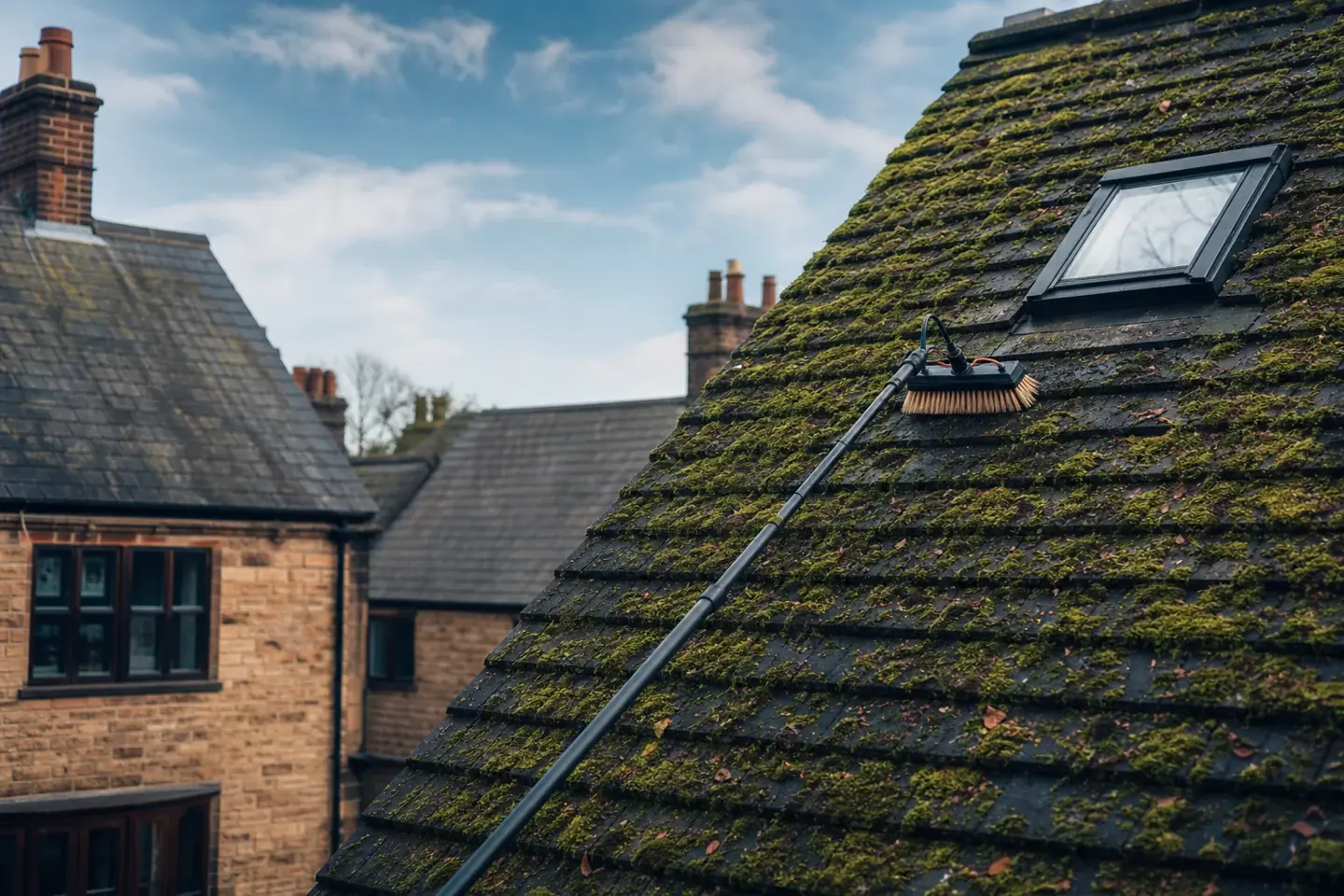
It is a fair question, and the honest answer is: usually yes, but not because green tiles look untidy. A light dusting of moss on a sound roof is mostly cosmetic and no emergency. The reason to deal with it is what moss does over time — it acts like a sponge, holding rainwater against the tiles and in the laps instead of letting it run off cleanly. In a Chester winter that trapped water freezes, expands, and lifts or cracks the tiles, and the loose clumps wash into the gutters and block them.
So the trigger for action is not the colour, it is the thickness and where it is sitting. Thick, spongy moss along the lower courses and in the valleys, moss that is visibly holding water, or moss on an older concrete or slate roof that is already past its best — that is worth removing and treating. A faint green film on a newer roof can often just be treated with a biocide and left to weather off, no scraping needed. If you are not sure which camp your roof is in, a few photos are usually enough for us to tell you honestly whether it needs doing now or can wait.
Why Chester roofs get so mossy
Moss loves the exact conditions we get across Chester, Cheshire and the Wirral: damp, mild winters, plenty of rain off the Irish Sea, and a lot of north-facing roof slopes that never really dry out. If your house sits under trees in Hoole, Boughton, Upton or out towards Saughall, falling leaves and shade make it worse — the tiles stay wet, spores settle, and within a few years you have a thick green carpet along the lower courses.
It is not just cosmetic. Moss holds water against the tiles and traps it in the laps, which speeds up frost damage in winter and can lift or crack older concrete tiles. Clumps that break off wash straight into the gutters and block them, so a mossy roof and a blocked gutter usually turn up together. On the older slate and clay roofs around the city centre and the conservation areas, and on exposed properties out towards Frodsham and Tarporley, that trapped damp is the thing that quietly shortens a roof's life.
How roof moss is removed safely, step by step
- 1
Get safe access first — not a ladder against the roof
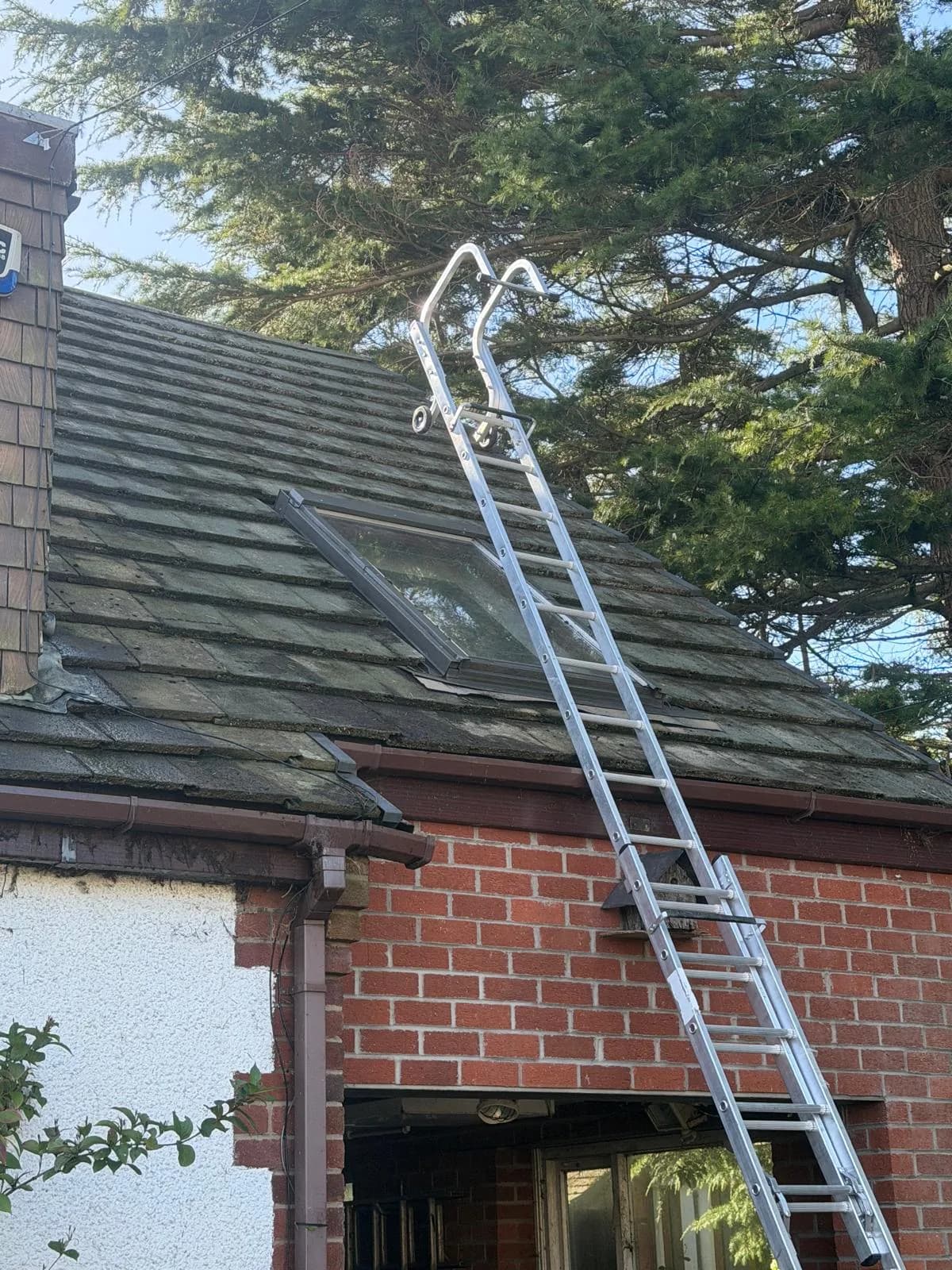
Roof slopes are slippery and tiles are not designed to be walked on. Safe access means a scaffold tower, a roof ladder hooked over the ridge, or a harness — never a leaning ladder you step off onto the tiles. This is the part most DIY attempts get wrong, and it is where the real risk sits.
- 2
Have a quick look while you're up there
Before touching the moss, the tiles, ridge, flashing and valleys get a once-over. It is far cheaper to spot a slipped tile or a failing bit of ridge mortar now than to find it after a winter leak — and it stops moss removal disturbing a problem that was already there.
- 3
Scrape and brush the moss off by hand
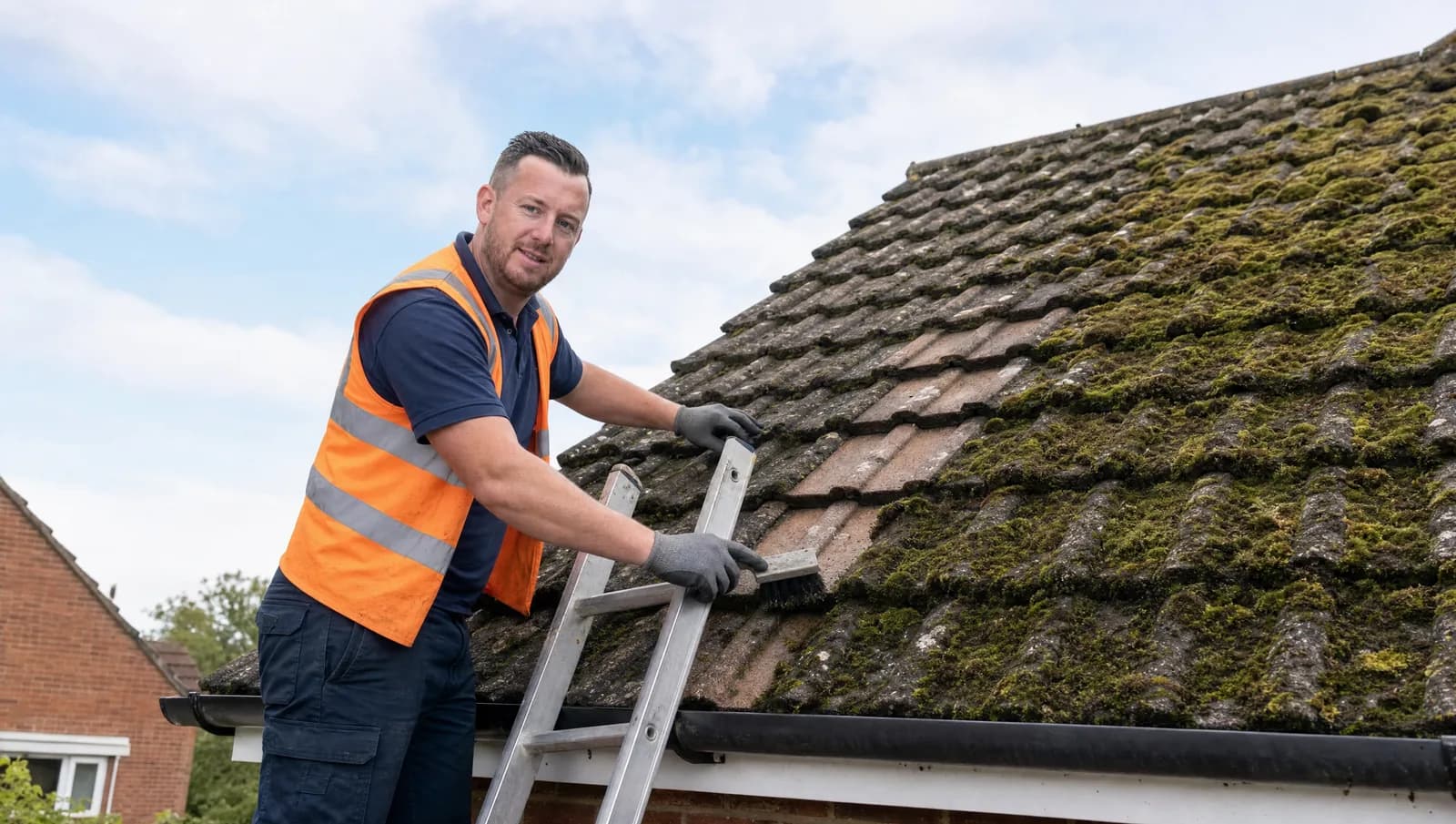
Work top-down with a stiff brush and a plastic or wooden scraper, lifting the moss out of the tile laps without gouging the surface. It is slow, careful work, and the debris is bagged as you go rather than left to wash into the gutters.
- 4
Clear the gutters and downpipes
All that loosened moss ends up in the gutters, so they get cleared and flow-checked afterwards — otherwise you have just moved the blockage from the roof to the roofline.
- 5
Apply a moss-killing biocide treatment
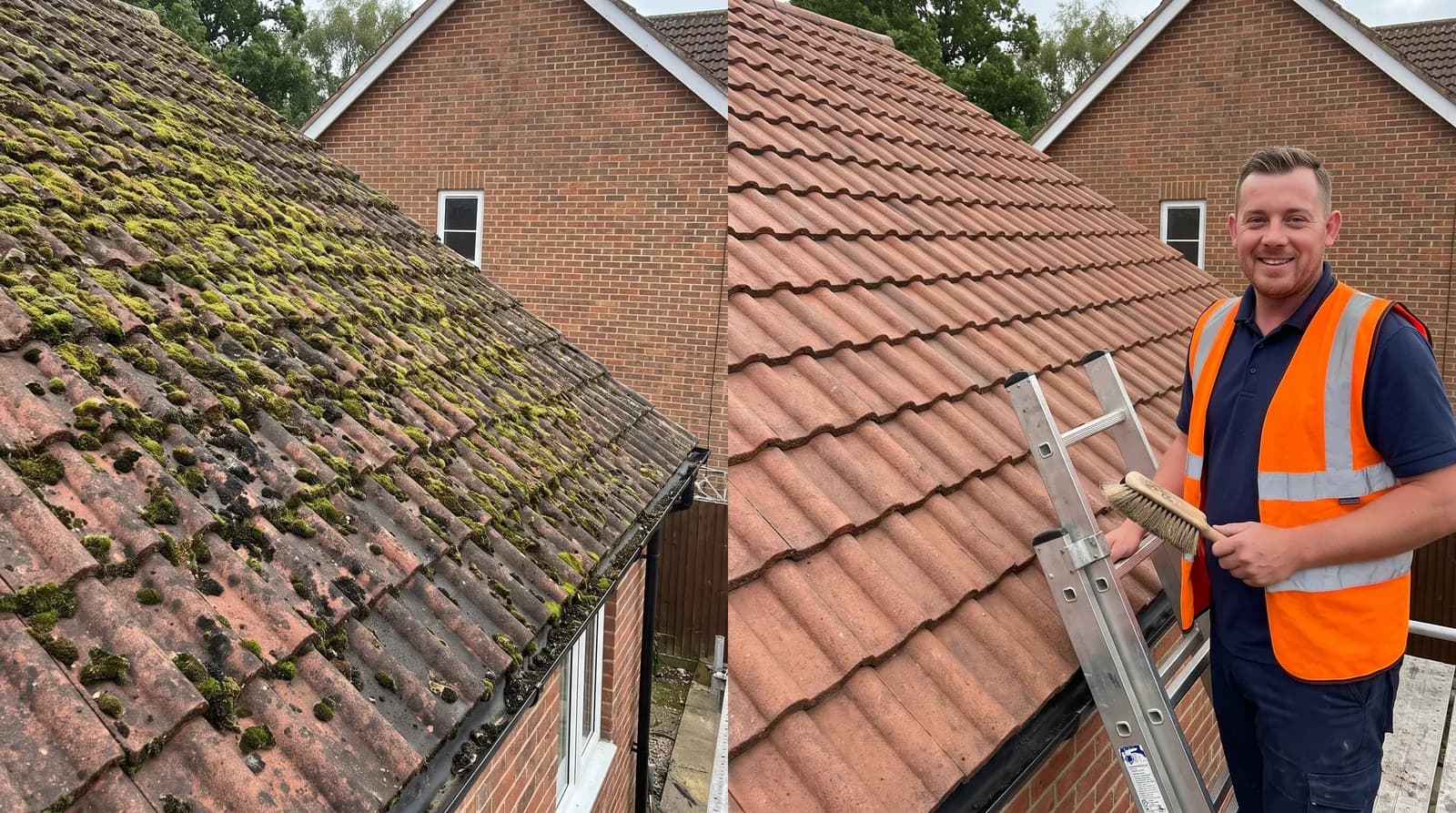
A soft-applied biocide kills the remaining spores and stops regrowth for a few years. This is what makes the difference between a clean roof and one that is green again by next autumn — the treatment is the real job, not just the scraping. It is left to weather in rather than rinsed off, so the rest of the moss dies back and washes away naturally over the following months.
Never jet-wash a roof, and never walk a sloped roof on a ladder
A pressure washer strips the protective surface off the tiles, forces water under the laps, and can take years off the roof — reputable cleaners use soft, low-pressure methods instead. And falls from height are one of the most common causes of serious injury in UK home maintenance. If your roof is above single-storey, or steep, or the tiles are old and brittle, stop and bring in someone with proper access equipment and insurance. The saving is genuinely not worth a fall.
Roof moss removal prices in Chester — what CPAGM charges
| Job | Guide price | What affects it |
|---|---|---|
| Small roof moss removalA smaller semi, terrace or single roof slope — hand-cleared and tidied | From £350 | A smaller semi, terrace or single roof slope — hand-cleared and tidied |
| Bungalow roof cleanLower access, larger footprint — full clear of the whole roof and gutters | Confirmed from photos | Lower access, larger footprint — full clear of the whole roof and gutters |
| Detached house roof cleanBigger, often higher roof — more area, more access equipment, more time | Confirmed from photos | Bigger, often higher roof — more area, more access equipment, more time |
| Biocide treatment add-onThe step that stops regrowth for a few years — added to any clean | Priced with your quote | The step that stops regrowth for a few years — added to any clean |
Roof cleaning starts from £350 in the Chester area and roughly a 45-minute radius. The final figure depends on the roof's size, pitch, height, how much moss there is and how the property is accessed, so every job is confirmed after you send a few photos or the details. We won't quote a roof blind.
Why moss comes back — and how to stop it growing on your roof
Here is the part people find frustrating: scrape a roof clean and, without treatment, a damp north-facing Chester roof can be visibly green again within a single season. That is because scraping removes what you can see but leaves the microscopic spores behind, and the conditions that grew the moss in the first place — shade, damp, leaf litter — have not changed. So the moss simply starts again.
The way to stop moss growing back on a roof is a two-part approach. First, the biocide treatment after cleaning: it kills the spores and keeps the tiles hostile to regrowth for a few years, and re-applying every two to three years keeps on top of it cheaply. Second, reduce what feeds it — keep overhanging branches trimmed back so the roof gets more light and air, keep the gutters clear so water drains instead of sitting, and clear leaf litter from valleys and behind chimneys where it collects. You will never make a shaded Cheshire roof permanently moss-proof, but you can slow it right down so a clean lasts years instead of months.
The gutter knock-on: why moss and blocked gutters go together
Roof moss and blocked gutters are almost always the same problem showing up in two places. As moss grows, clumps break off in the wind and rain and wash down the slope straight into the gutters. There they mat together with leaves and grit, water backs up, and before long it is spilling over the edge, running down the wall, or soaking into the fascia and soffit behind it.
That is why a proper roof moss removal always includes clearing and flow-checking the gutters and downpipes afterwards — clean the roof but leave the gutters full of the moss you just removed and you have simply relocated the blockage. If your gutters are already overflowing or you have damp appearing at the top of a wall, the moss on the roof above is very often the root cause, and it is worth dealing with both together rather than treating the symptom on its own.
Roof moss removal: DIY vs a professional roof clean
| DIY from a ladder | Professional roof clean | |
|---|---|---|
| Safety | Working at height on a slope or ladder — high fall risk | Proper access (tower, roof ladder or harness) and full insurance |
| Tile damage | Easy to crack tiles or be tempted to pressure-wash | Gentle hand-scrape and soft biocide that protects the tiles |
| Lasting result | Moss often grows back within a season without treatment | Biocide treatment keeps regrowth down for a few years |
| Mess and gutters | Loosened moss washes into and blocks the gutters | Gutters cleared and flow-checked as part of the job |
| Hidden faults | A slipped tile or failing flashing is easy to miss | Roof and roofline checked over while access is set up |
| Typical cost | £30–£60 of kit, plus your time and the risk | From around £350, insured, with before-and-after photos |
When a professional is essential, not just easier
There is a line where roof moss removal stops being a sensible DIY job. If your roof is two-storey or higher, steep enough that you couldn't stand on it comfortably, made of old or brittle slate or clay, or if there is any sign of slipped tiles, cracked ridge mortar or a leak, do not go up there. At that point the money you might save is dwarfed by the cost of a fall or a botched repair, and it needs someone with the right access equipment, insurance and an eye for what the roof is actually telling them. Send a few photos instead and let someone assess it from the ground.
If you do tackle a low single-storey roof yourself
- Only ever from stable, footed access with the roof ladder hooked over the ridge — never a leaning ladder you step onto the tiles
- Dry, calm, non-frosty day — wet or icy tiles and any wind make it far too dangerous
- Someone else at home who knows you are up there, and a phone in your pocket
- A stiff brush and a plastic or wooden scraper only — no metal tools and absolutely no pressure washer
- Work top-down, bag the moss as you go, then clear the gutters and treat with a biocide — cleaning without treating just buys you one season
Frequently asked questions
What is the best way to remove moss from roof tiles?
The best way to remove moss from roof tiles is to brush and scrape it off gently by hand, working top-down, and then apply a biocide so the remaining spores die and the moss does not grow straight back. You never pressure-wash it — high pressure strips the tile surface and forces water under the laps. On anything above a single-storey roof it should be done from a tower, roof ladder or harness, which is why most Chester homes are safer cleared by a professional.
How do I get moss off my roof?
Get safe access first (not a ladder leaning against the tiles), then lift the moss out of the tile laps with a stiff brush and a plastic scraper, working from the top down and bagging the debris. Clear the gutters of everything that has washed down, then treat the roof with a moss-killing biocide. If the roof is high, steep or the tiles are old, get someone with proper access equipment to do it rather than risking a fall.
Can I just pressure wash the moss off my roof?
No — please don't. High pressure blasts the weatherproof surface off the tiles and drives water under the laps, which leads to leaks and frost damage. Moss should be scraped and brushed off gently, then treated with a biocide. Pressure washing is one of the quickest ways to ruin an otherwise sound roof.
Should I remove moss from my roof, or leave it?
If the moss is thick, holding water, sitting in the valleys and lower courses, or growing on an older roof, it is worth removing and treating — it traps damp against the tiles and speeds up frost damage. A faint green film on a newer, sound roof is largely cosmetic and can often just be treated with a biocide and left to weather off. If you are unsure, send a few photos and we will tell you honestly whether it needs doing now.
How do I stop moss growing back on my roof?
Apply a biocide after cleaning — that is what keeps a north-facing Chester roof clear for a few years rather than a single season — and re-treat every two to three years. Alongside that, cut back overhanging branches so the roof gets more light and air, keep the gutters clear so water drains away, and remove leaf litter from valleys. You can't make a shaded roof moss-proof, but you can slow it right down.
Is DIY roof moss removal a good idea?
For a low single-storey roof you can reach safely from footed access, on a dry calm day, with a brush, a plastic scraper and a biocide — cautiously, yes. For anything two-storey, steep, or with old brittle tiles, it is not worth it: falls from height are a leading cause of serious injury, and it is easy to crack tiles or be tempted to pressure-wash. In those cases a professional with proper access and insurance is the safer and often cheaper option once you factor in the risk.
Will the moss come back after it's removed?
It will eventually — but a proper biocide treatment after cleaning keeps it down for a few years. Without the treatment, a damp north-facing Chester roof can be green again within a season, because scraping removes what you can see but leaves the spores behind. Re-treating every two to three years keeps on top of it cheaply.
How much does roof moss removal cost in Chester?
As a guide, roof moss removal starts from £350, and a biocide treatment can be added and priced with your quote. The final price depends on the roof's size, pitch, height, how much moss there is and how the property is accessed — it's confirmed after you send a few photos or the details.
Do I need scaffolding to have my roof cleaned?
Not usually. Most homes are cleared safely with a roof ladder, harness or a light access tower. Full scaffolding is only needed on larger or awkward roofs, or where repair work is involved — and you'd be told before any quote is agreed.
When is the best time to remove roof moss?
Autumn is a good time, once the worst of the leaf-fall is over and before the frosts, so the moss isn't holding water against the tiles where it can freeze, expand and lift them. That said, a biocide can be applied through much of the year — the main thing is to treat after cleaning rather than leaving a scraped roof to green over again.
Do you cover Cheshire and the Wirral as well as Chester?
Yes. We cover Chester and roughly a 45-minute radius — the wider Cheshire area, the Wirral, and parts of Wrexham and Flintshire, including places like Hoole, Handbridge, Upton, Saughall, Frodsham, Northwich and Ellesmere Port. Send a few photos of your roof and we'll come back with a clear guide price.