
Short answer
The clearest signs you need roof repairs are a slipped, cracked or missing tile, a damp patch or brown stain on an upstairs ceiling, granules from the tiles collecting in the gutter, and daylight or draughts in the loft. Most start small and cheap to fix — roof repairs in Chester start from £95, confirmed from a few photos — and are far simpler to put right before water gets in.
Why Chester roofs need watching
Most homes around Chester, Cheshire and the Wirral are pitched-roof properties — Victorian and Edwardian terraces in Hoole and Boughton, post-war semis across Blacon and Upton, and detached houses out toward Saughall, Tarporley and the Wrexham and Flintshire border. They take a real battering. We sit in a wet, windy corner of the north-west, the Irish Sea throws storms at the Wirral coast, and a roof that has shrugged off twenty winters can still lose a ridge tile in one bad night.
The thing about a roof is that you cannot see most of it from where you stand, and the early signs are quiet. A single slipped tile does not leak straight away — but it lets wind under the tiles next to it, and the water finds its way in weeks or months later, usually showing up as a stain on a bedroom ceiling long after the tile actually moved. Catching it early is the whole game. A slipped tile put back is a small job; a rotten roof timber and a soaked ceiling is not.
Outdoor signs — what to look for from the ground
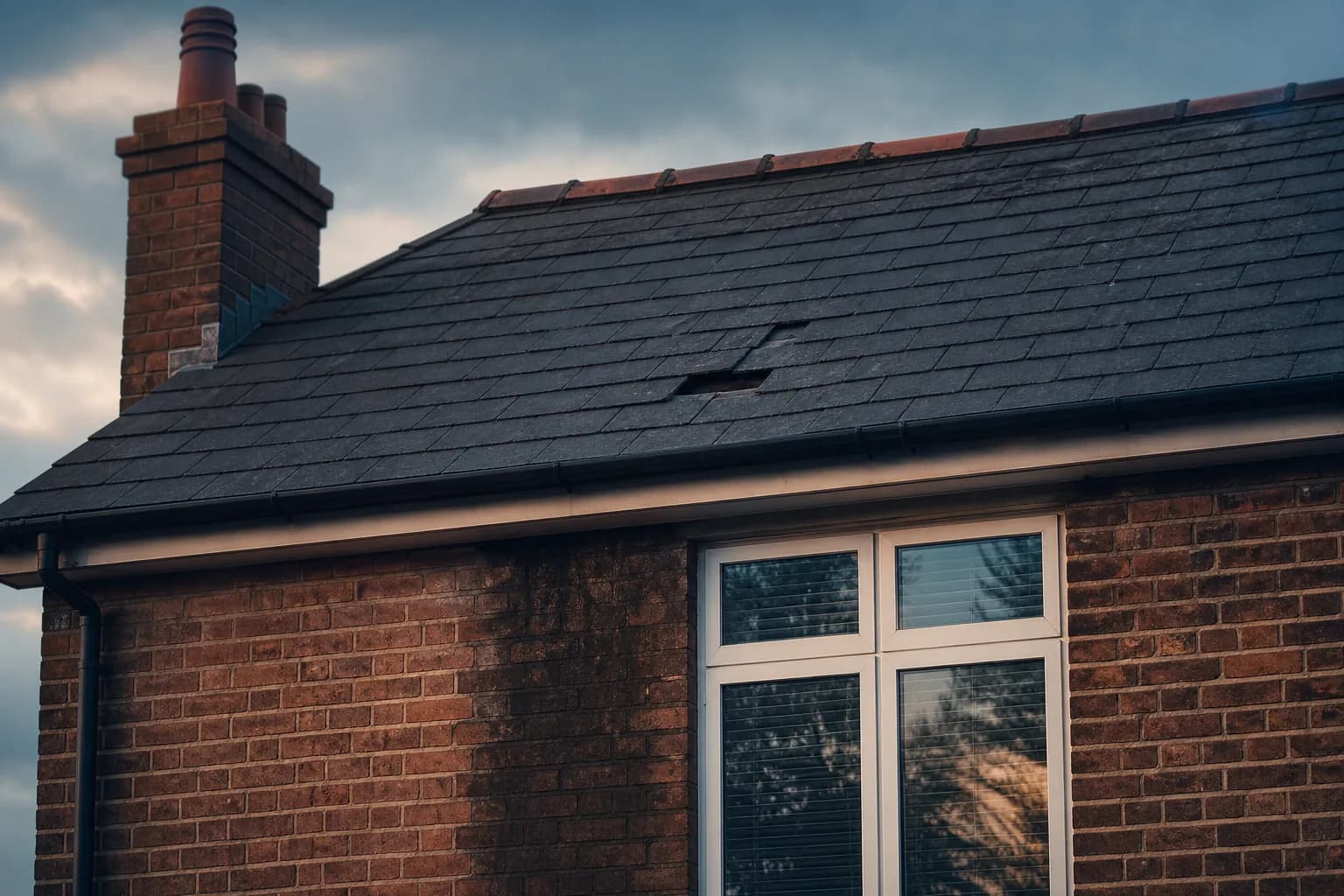
- A tile or slate sitting out of line, cracked, or missing from the pattern
- A dark gap or patch of exposed felt where a tile has slipped
- Broken tile or slate pieces on the path, drive or garden after a storm
- Loose, cracked or crumbling mortar along the ridge or the verge (the gable edge)
- A ridge tile sitting proud, tilted, or slipped out of place
- Lead flashing around the chimney, dormer or valley that has lifted, split or pulled away from the brickwork
- Thick moss, lichen or plant growth spreading across the slope or clogging the gutter
- Gritty granules or sand collecting in the gutter or on the ground below the downpipe
- A visible sag, dip or wave in what should be a straight ridge or slope
- Gutters that overflow, sag or pull away from the fascia when it rains
Indoor signs — ceilings, loft and insulation
- A brown, yellow or grey stain or ring on a top-floor ceiling
- Flaking, bubbling or blistered paint, or a musty damp smell, in an upstairs room
- Drips or fresh water marks that appear or grow after heavy rain
- Pinpricks of daylight through the roof when you look in the loft on a bright day
- A draught you can feel around the roof timbers or at the eaves
- Dark, damp or mouldy patches on the rafters, the felt or the underside of the tiles
- Loft insulation that is wet, flattened, stained or has slipped out of place
- Sagging, bulging or discoloured plasterboard on a top-floor ceiling
The warning signs explained, one by one
- 1
1. A slipped, cracked or missing tile or slate
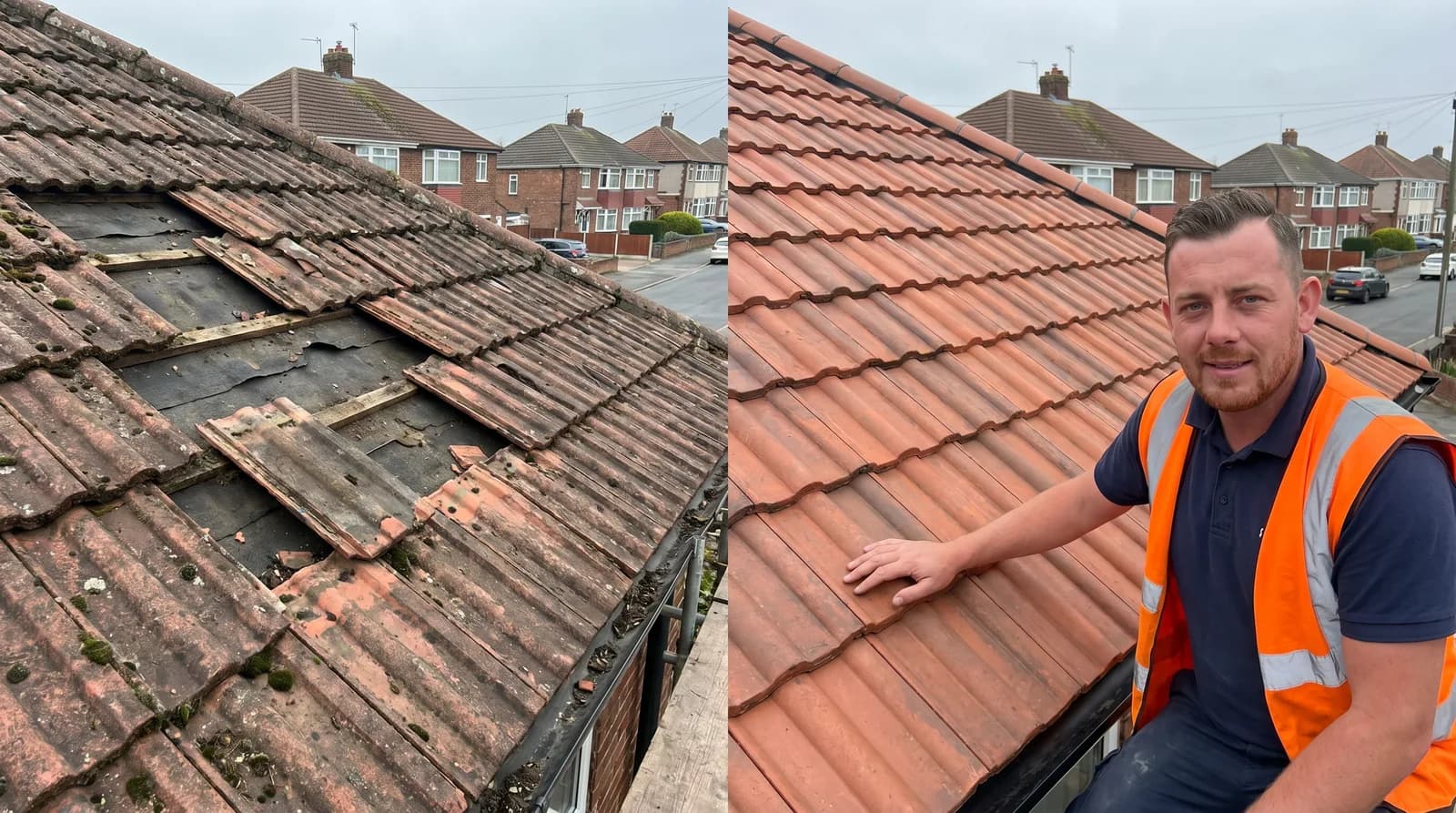
The most common one, and easy to spot from the garden or street — a tile sitting out of line, a gap in the pattern, or a broken tile in the border or on the path after a storm. One out-of-place tile exposes the felt underneath and the tiles around it to wind and rain, and it is the single cheapest sign to put right early.
- 2
2. A damp patch or stain on an upstairs ceiling
A brown or yellow ring on a top-floor ceiling, flaking paint, or a musty smell in a back bedroom usually means water is getting in above. The leak point on the roof is often nowhere near the stain, because water runs along timbers before it drops — which is why a small torch check in the loft tells you far more than the ceiling does.
- 3
3. Granules or grit building up in the gutter
If you are clearing the gutters and finding gritty, sandy granules along with the leaves, that is the surface wearing off the tiles. It is a sign the covering is ageing and worth keeping an eye on, especially on older concrete-tiled roofs common across the Chester estates.
- 4
4. Daylight, draughts or damp in the loft
Pop your head into the loft on a bright day. Pinpricks of daylight through the roof, a draught you can feel, damp dark patches on the timbers or felt, or wet, flattened insulation all point to a gap that needs sorting before it lets more water in.
- 5
5. Damaged ridge tiles or loose, cracked mortar
The ridge runs along the very top, and the mortar holding the ridge and verge tiles is one of the first things to go on older Chester roofs. Cracked, missing or crumbling mortar lets ridge tiles work loose — a real hazard in high winds, and a common cause of storm call-outs across Cheshire.
- 6
6. Lead flashing that has lifted, cracked or pulled away
Leadwork seals the joins around chimneys, around dormers and in the valleys between roof slopes. If it has lifted, split or sprung away from the brickwork, those joins are exactly where leaks start. It is worth a close look after every big storm, as wind is what tends to lift old flashing.
- 7
7. Heavy moss, lichen or plant growth on the slope
A light dusting of moss is cosmetic, but thick cushions of it hold water against the tiles, block the flow into the gutter and can lift the edges of tiles over time. On north-facing and tree-shaded slopes — common on the leafier Cheshire streets around Tarporley and Frodsham — it builds up fastest and is worth clearing before it does damage.
- 8
8. Sagging roofline or a dip in the slope
Stand back and look along the ridge and the slopes. A visible dip, sag or wave in what should be a straight line can mean a structural problem underneath, not just a surface one. This one is not a wait-and-see — get it looked at rather than watching it.
Which signs need sorting now, and which can wait
| How urgent | Why | |
|---|---|---|
| Sagging or dipping roofline | Now — don't wait | Can point to a structural problem under the covering, not just surface wear |
| An active drip or a spreading ceiling stain | Now | Water is already reaching timbers, insulation and plaster |
| Loose ridge tile or crumbling ridge mortar | Soon | A ridge tile can blow off in high winds — a genuine safety hazard below |
| Lifted or split lead flashing | Soon | Flashing joins are where most leaks begin, especially after storms |
| A single slipped tile, no leak yet | Soon | Cheap to refix now; left alone it exposes the felt and neighbouring tiles |
| Light moss or a few granules in the gutter | Monitor | Signs of ageing to keep an eye on — not an emergency on their own |
Roof repair — guide prices in Chester & Cheshire
| Job | Guide price | What affects it |
|---|---|---|
| Slipped or broken tile refixedSingle tile put back or replaced, straightforward access | From £95 | Single tile put back or replaced, straightforward access |
| Small roof repairA few tiles, a section of ridge, or minor patch work | Quoted from photos | A few tiles, a section of ridge, or minor patch work |
| Ridge tile re-bed / re-pointRe-securing loose ridge tiles and renewing mortar — a small roof repair | Quoted from photos | Re-securing loose ridge tiles and renewing mortar — a small roof repair |
| Lead flashing repairRe-dressing or repairing flashing around a chimney or valley — a small roof repair | Quoted from photos | Re-dressing or repairing flashing around a chimney or valley — a small roof repair |
| Storm damage inspection and reportWe look, photograph and tell you honestly what needs doing, with a written record | From £95 | We look, photograph and tell you honestly what needs doing, with a written record |
Roof repairs start from £95 for typical Chester homes, and the specific repairs above are priced on the work involved. The job is confirmed after you send a few photos or we take a quick look, because roof height, access, the type of tile and how much has actually moved all change the scope. We will never quote a big job where a small fix will do.
What to do if you spot a sign
- 1
Check from the ground first
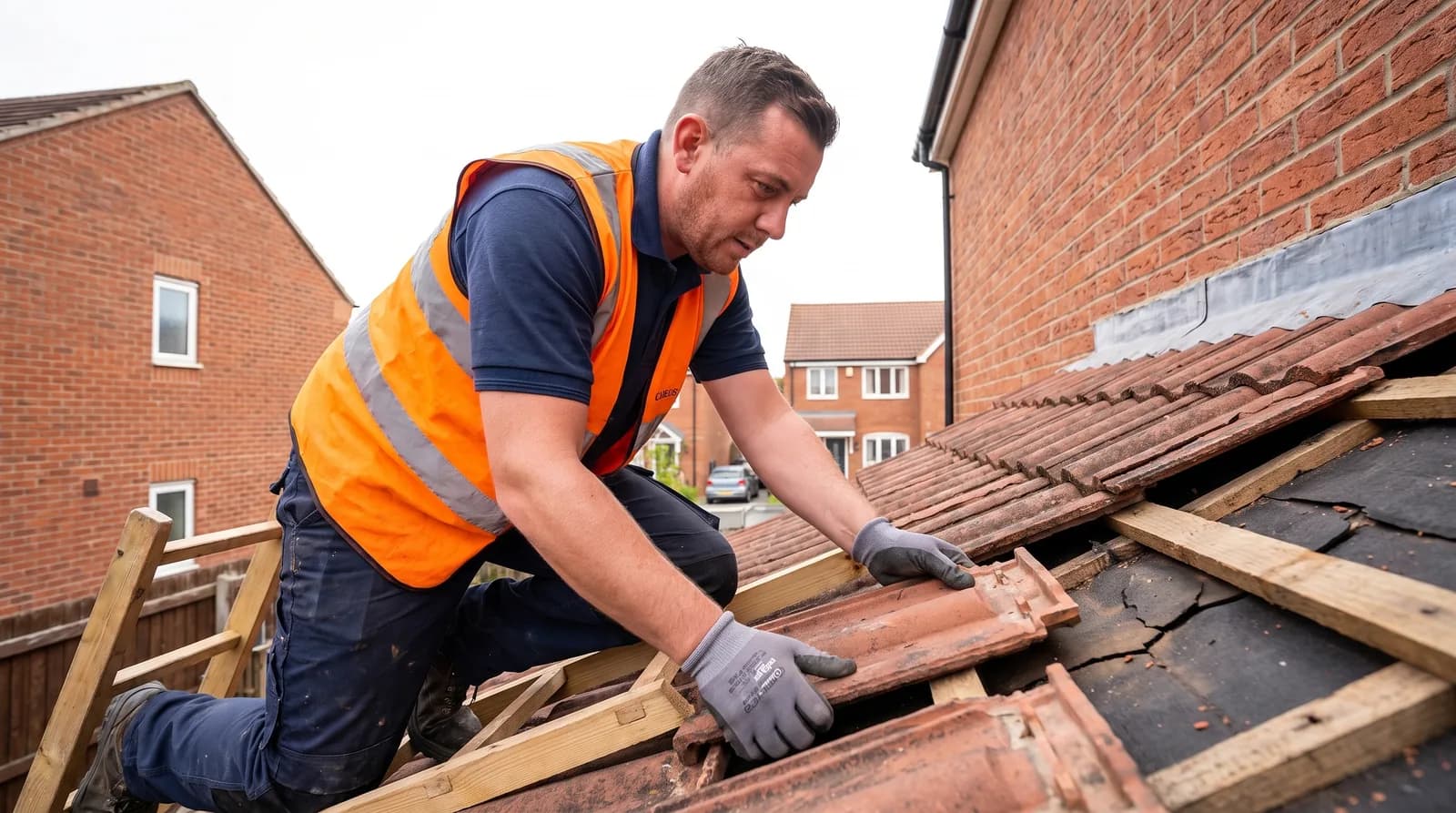
Have a proper look from the garden and the street, ideally with binoculars or a phone zoom. Note anything out of line, then walk around the whole house — a lot of roof problems are on the side or rear slope you never normally see.
- 2
Look in the loft with a torch
On a bright day, glance up for daylight and feel for draughts; run a torch over the timbers, felt and insulation for damp, dark patches or wet fibres. This is safe from the loft hatch and often shows the real leak point long before the ceiling does.
- 3
Take a few clear photos
Photograph the suspect area, the wider roof slope, and any damp patch inside. Photos let us give you a sensible idea of cost and urgency without anyone needing to climb anything yet.
- 4
Get it looked at before the next downpour
Small roof faults are weather-driven — they sit harmless until a storm drives rain in. If you have spotted a slipped tile or lifted flashing, it is worth sorting before the next spell of bad weather rather than after, when every roofer around Chester is booked up.
- 5
Keep a dated record after storms
If you think the damage is storm-related, dated photos help with any insurance claim. Our storm damage inspection and report (from £95) gives you a clear written record of exactly what we found.
Do not go up on the roof yourself
Falls from height are one of the most common causes of serious injury in the UK, and a wet or mossy roof is lethal underfoot. Checking from the ground or from a loft hatch is fine. Climbing onto the roof, leaning a ladder up to it, or walking on tiles is not a DIY job — leave that to someone insured and properly equipped. The saving is never worth the risk.
Why early repair beats waiting
A roof fault almost never stays a roof fault. A slipped tile that lets water past the felt does not simply need a tile put back later — by then the water may have soaked the timbers, run down into the insulation and left a stain that needs re-plastering and repainting. What starts as a small roof repair from £95 turns into a repair plus damp treatment, plasterwork and decorating, often several times the original cost.
Timing matters just as much as the fix. Small roof problems are weather-driven: they sit harmless in dry spells and then let water in during the first real storm off the Irish Sea. Sorting a fault while the weather is settled means a single booked visit at a sensible price, rather than an emergency call-out after a downpour. Early repair is cheaper, far less disruptive, and it stops a small covering problem from spreading into the structure of the house.
Fix it now vs leave it
| Sorted early | Left until it leaks | |
|---|---|---|
| Typical cost | Small fix from around £95 | Repair plus damp, plaster and decorating — often hundreds more |
| Damage | Contained to the roof covering | Wet timbers, ruined insulation, stained ceilings, possible rot |
| Disruption | One short visit | Drying out, re-plastering and repainting rooms |
| Urgency | Booked in at a sensible time | An emergency call-out after a storm, when everyone is busy |
| Peace of mind | Roof checked and weather-ready | Watching the ceiling every time it rains |
Frequently asked questions
What are the signs you need roof repairs?
The main signs you need roof repairs are a slipped, cracked or missing tile, a damp patch or brown stain on an upstairs ceiling, granules from the tiles building up in the gutter, daylight or draughts in the loft, loose ridge tiles or crumbling mortar, lifted lead flashing, heavy moss, and a sag or dip in the roofline. Most start small and are cheap to fix early — roof repairs in Chester start from £95, and your exact price is confirmed from a few photos.
What are the most common signs of roof damage?
The most common roof damage warning signs are visible from the ground: tiles or slates that have slipped, cracked or gone missing, gaps in the tile pattern, loose or missing ridge mortar, lifted flashing around the chimney, thick moss on the slope, and grit or granules washing into the gutter. Inside the house, look for ceiling stains, damp loft timbers and wet insulation.
How can I tell if my roof needs repair?
You can tell if your roof needs repair with a quick two-minute check. Stand back in the garden and the street and look along the roofline for slipped, cracked or missing tiles, a sag or dip, or loose ridge mortar. Then look inside the loft on a bright day for daylight, draughts or damp, and check upstairs ceilings for stains after rain. Take a few photos and we can tell you what it needs.
What are the signs of a roof leak?
The signs of a roof leak usually show up indoors before they are obvious outside: a brown, yellow or grey stain or ring on a top-floor ceiling, flaking or bubbling paint, a musty damp smell, drips during heavy rain, and wet or flattened loft insulation. The leak point on the roof is often nowhere near the stain, because water runs along the timbers before it drops.
When should I repair my roof?
Repair your roof as soon as you spot a fault and before the next spell of bad weather, not after. Small roof problems are weather-driven — a slipped tile or lifted flashing sits harmless until a storm drives rain underneath. Fixing early, while it is still a small repair from £95, is far cheaper than waiting for a leak that also soaks timbers, insulation and ceilings.
Is one slipped tile really worth fixing straight away?
Yes. A single slipped tile rarely leaks at first, but it exposes the felt and the surrounding tiles to wind and driving rain. Putting it back is a small, quick job from £95 — leaving it is how a cheap fix turns into a damp ceiling and a much bigger bill.
How can I tell if a ceiling stain is from the roof or a pipe?
Roof leaks usually show up after heavy rain and on top-floor ceilings, while plumbing leaks tend to be more constant and can be on any floor. If a stain grows or reappears after a downpour, the roof is the likely culprit. A quick look in the loft with a torch, and a few photos, help us narrow it down.
Can I check my roof safely myself?
Yes — from the ground and from the loft hatch. Look along the roofline from the garden and street with binoculars or a phone zoom, and use a torch in the loft to check for daylight, draughts and damp. What you should not do is climb onto the roof or lean a ladder up to it; working at height on tiles is dangerous and best left to someone insured and equipped.
Do you do emergency or storm-damage repairs around Chester?
We handle storm damage, slipped tiles and small leaks across Chester, Cheshire, the Wirral and into Wrexham and Flintshire. For storm jobs we can carry out an inspection and report first (from £95), with photos, so you know exactly what needs doing and have a record for insurance.
Will you tell me if it actually needs a full new roof?
We will be straight with you. Most of what we see is small, fixable stuff — a slipped tile, loose ridge mortar, tired flashing. If a roof genuinely needs more than a patch repair, we will say so and explain the options rather than paper over it or quote a big job where a small fix will do.
How often should I check my roof?
A quick look from the ground a couple of times a year is sensible — ideally in autumn before the worst weather, and again after any big storm. While the gutters are being cleared is a natural time to give the roofline a once-over from below.