Short answer
Solar panel cleaning is worth it when your panels are visibly soiled, shaded by trees, near the coast or where birds gather, or simply haven't been touched in years. Everyday UK dust only trims output by a few percent, so rain handles most routine grime. But bird mess, moss and lichen bake on and genuinely block light — for most Chester homes, one professional pure-water clean a year, from around £85, keeps them earning.
Does cleaning solar panels actually make a difference?
Solar panels make less power when less light reaches the cells, so anything sitting on the glass — dust, tree pollen, algae, moss, lichen or bird droppings — has some effect on output. The honest question is how much. For the general film of grime that settles across a UK roof, the answer is usually modest: studies and installer data tend to put average soiling losses in the low single digits of percent over a year, because our frequent rain rinses a lot of it off before it builds up.
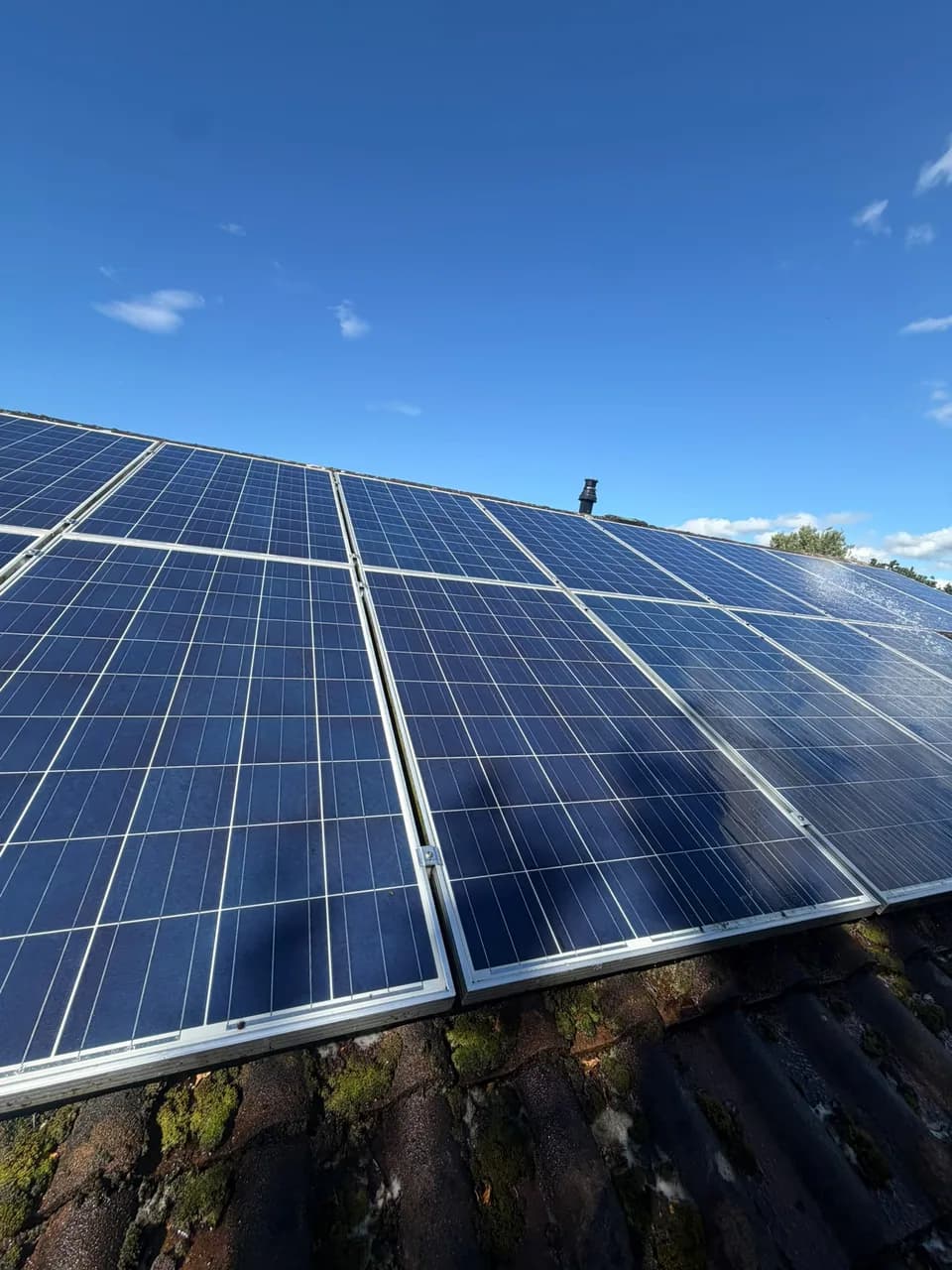
The picture changes with heavier, localised soiling. A single large bird dropping, a patch of lichen, or a run of moss creeping down from the ridge doesn't just dim the glass — it can shade individual cells, and because cells are wired in series, one shaded cell can drag down the output of a whole string far more than its size suggests. That is why the panels that benefit most from cleaning are rarely the ones with an even coat of dust; they're the ones with sharp, sticky, stubborn soiling in a few spots.
Across Chester, Cheshire and the Wirral we see the usual culprits: damp, shaded roofs in older parts of Hoole and Handbridge that green over with algae, tree-lined streets in Upton that drop pollen and sap, and gulls and pigeons that leave acidic droppings which bake hard in summer. Panels near trees or on a low-pitch roof stay dirtier for longer, because rain alone never quite rinses them clean.
The honest verdict — when it's worth paying for
We'd rather tell you the truth than sell you a clean you don't need. If your panels look clean from the ground, sit on a decent pitch, aren't under trees and get a good wash from the weather, a professional clean probably won't move your generation figures enough to notice this year. Rain is doing the job for free.
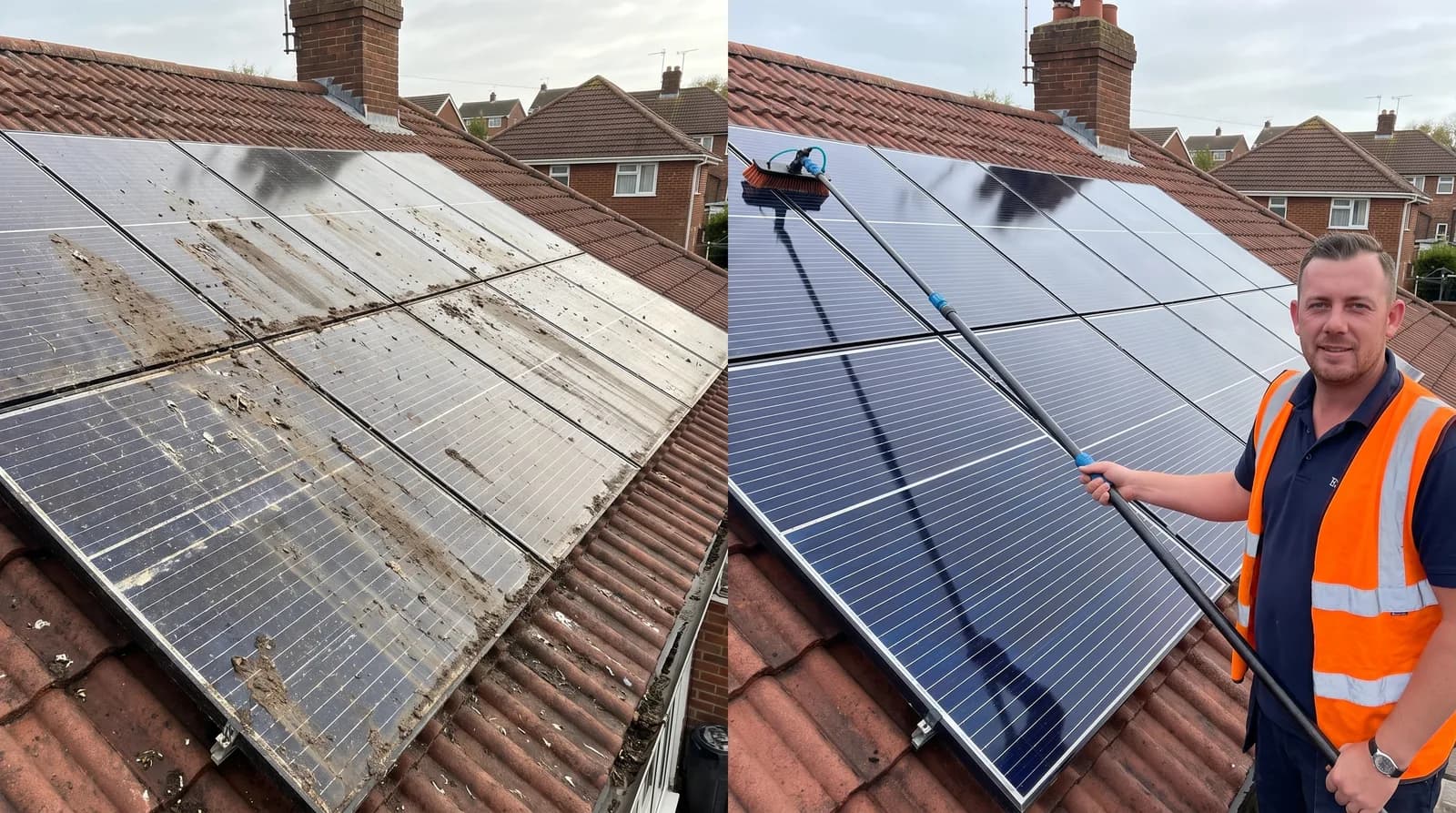
Cleaning earns its money in specific situations: when panels are visibly dirty or streaked, when they're shaded by or downwind of trees, when you're near the coast or under a flight path where birds gather, when moss or lichen has taken hold at the edges, or simply when it has been several years and they've never been cleaned since the scaffolders left. In those cases you're not paying for a shine — you're removing something that is measurably blocking light, and the dirtier they were to start with, the more obvious the difference afterwards.
It's also worth thinking about it as maintenance rather than a one-off boost. Growth like moss and lichen starts at the frames and edges and spreads inward, so a periodic clean stops small problems becoming a roof-wide green film that's far harder to shift. For most households that means a light once-a-year clean is plenty; for a genuinely exposed or tree-shaded roof, twice a year makes sense.
How much does solar panel cleaning cost? Guide prices
| Job | Guide price | What affects it |
|---|---|---|
| Up to 12 panels (typical small array)Standard residential roof with ground-reach access — the most common domestic job | From £85 | Standard residential roof with ground-reach access — the most common domestic job |
| Typical residential systemA larger array or a higher roof that needs more reach and time | Quoted from photos | A larger array or a higher roof that needs more reach and time |
| Small commercial systemBarn, unit or small commercial roof — depends on panel count and access | Quoted from photos | Barn, unit or small commercial roof — depends on panel count and access |
These are CPAGM guide prices for the Chester area, confirmed after photos or a quick visit. Panel count, roof pitch, height and access are what move the final number. As a UK benchmark, domestic solar cleans commonly sit somewhere between roughly £4 and £15 per panel or from around £80 for a small array — our From £85 for up to 12 panels is squarely in that range.
Professional pure-water clean vs DIY or leaving it to rain
| DIY / leave it to rain | Professional pure-water clean | |
|---|---|---|
| Routine dust | Rain genuinely handles most of it — no action needed | Not usually needed just for light dust; save it for real soiling |
| Stubborn soiling | Rain won't shift baked-on bird mess, moss, lichen or sap | Softened and lifted off the glass and frames properly |
| Streaks | Tap water and detergent dry with mineral spots and smears | Purified water dries clear, with no spotting or residue |
| Safety | DIY often means climbing on the roof — a real fall risk | Reach-and-wash from the ground, no roof walking |
| Panel care | Abrasive cloths, jet washers and detergents can damage coatings | Soft brush and pure water only — gentle on the glass and warranty |
| Result | Can look done while residue and growth remain | Genuinely clean glass that lets more light reach the cells |
Doesn't the rain clean them for me?
Mostly, yes — and that's the part a lot of cleaning adverts quietly skip. Rain does most of the routine work on a UK roof, especially on a well-pitched array where water runs off freely. If loose dust and pollen were the only issue, you could reasonably leave your panels alone for years.
What rain doesn't do is shift the things that actually cost you output. Baked-on bird droppings, sap, moss and lichen are sticky and water-resistant by nature, so they sit through downpour after downpour. Rain also runs straight over the low edges and aluminium frames — exactly where dirt collects and where moss and lichen get their first foothold. Those margins hold moisture, growth spreads inward from them, and no amount of weather clears them. That's the gap a proper clean fills: not competing with the rain on the easy stuff, but dealing with the stubborn soiling and the edges the rain never reaches.
What a professional solar panel clean involves
- 1
Check whether you even need it
We look at photos or take a quick look on a visit. If the panels are clean and rain-washed, we'll say so — there's no sense charging for a clean that won't change anything.
- 2
Clean from the ground, safely
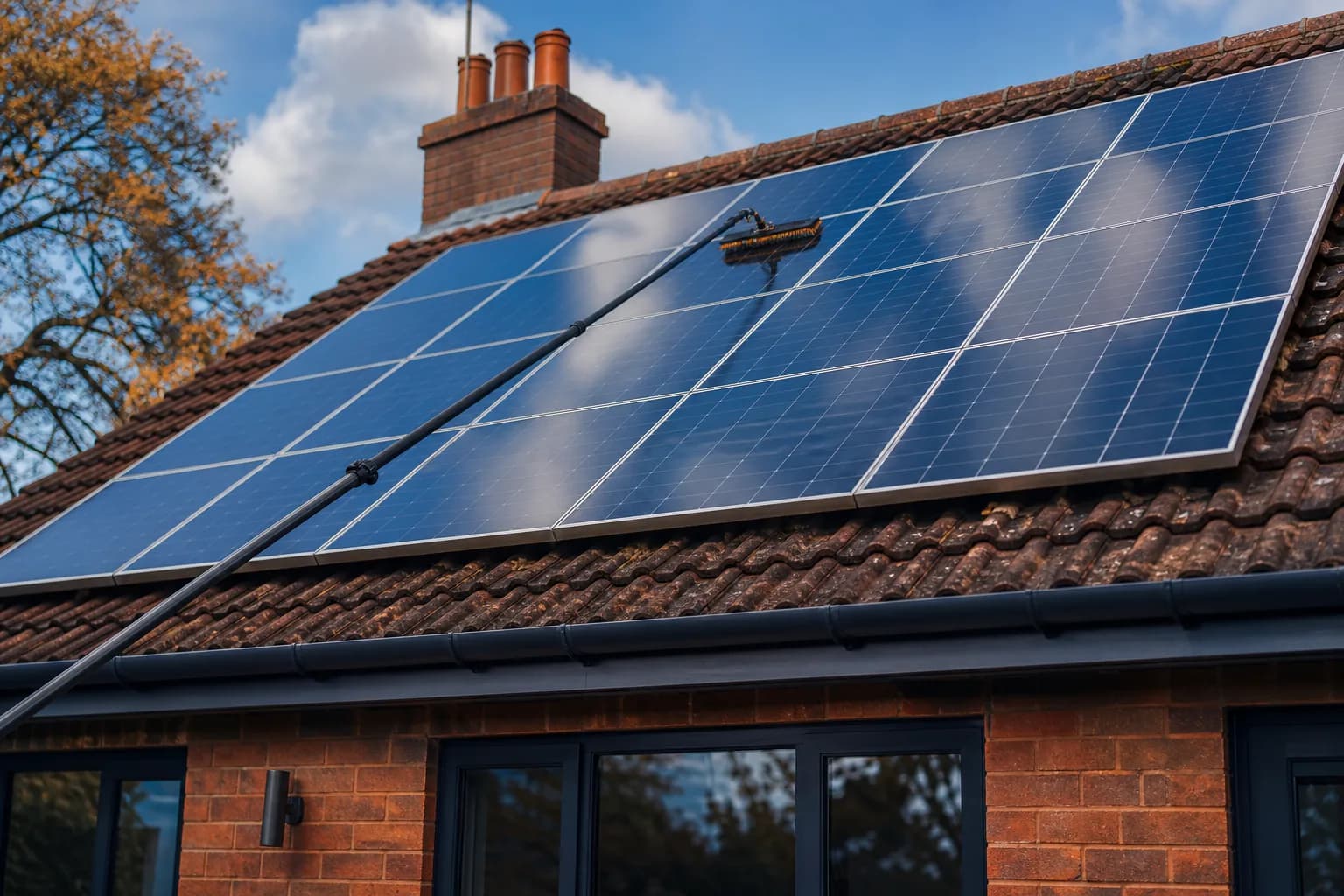
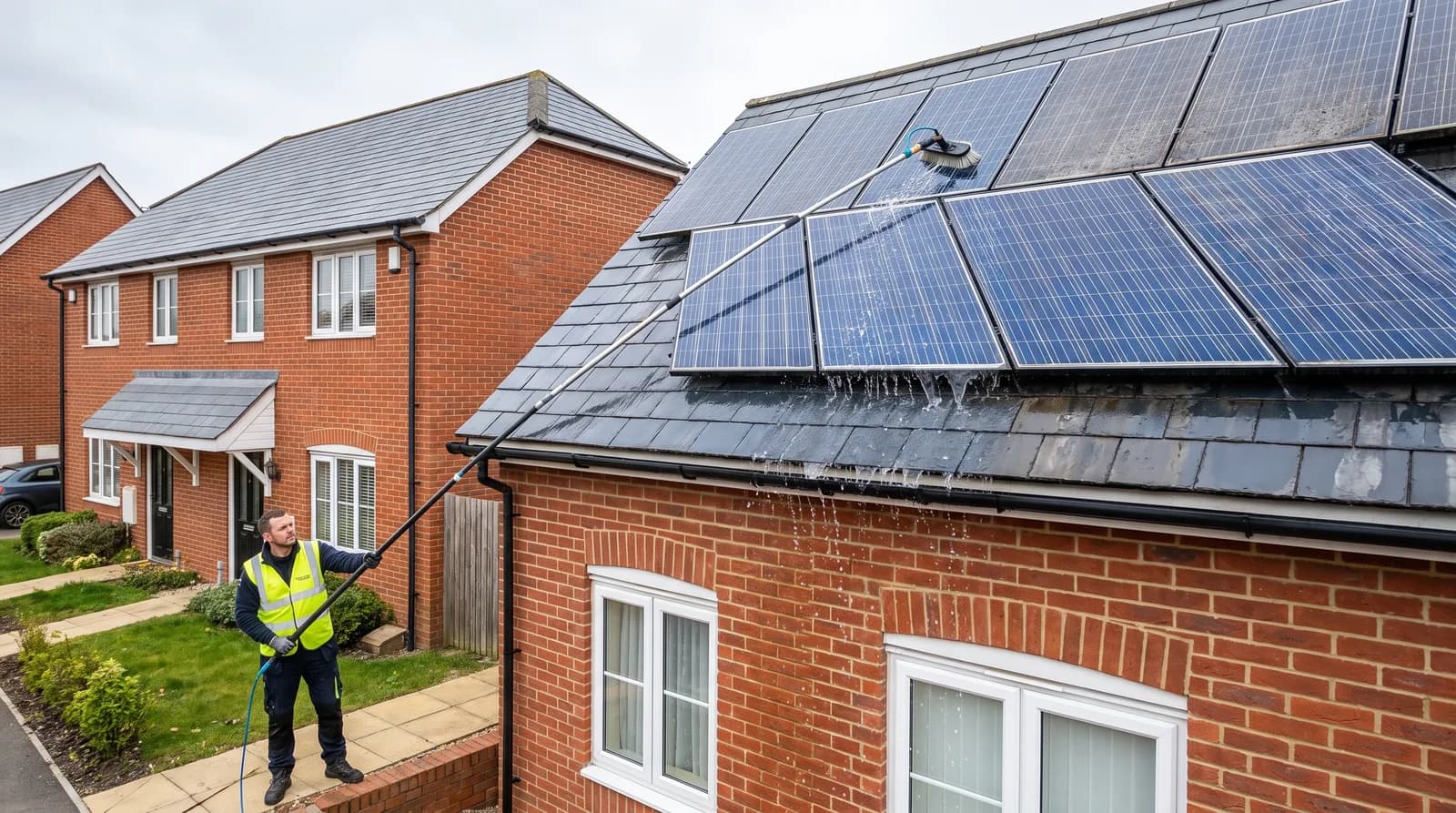
Wherever possible we use a pure-water reach-and-wash pole system, so nobody stands on the roof or leans on the panels. A soft brush loosens the soiling and purified water flushes it away.
- 3
Target the edges and frames
We pay particular attention to the low edges and aluminium frames where dirt collects and where moss and lichen start, because that's where growth builds if it's left.
- 4
Rinse clear and leave no residue
Purified water dries without spotting, so there are no detergents or mineral smears left on the glass to attract the next layer of dirt — just clean panels catching full light again.
Don't walk on your roof — and don't blast panels with a jet washer
Getting up on a roof to clean panels is a genuine fall risk, and standing or leaning on the glass can crack cells and void the warranty. Just as important: never use tap water, washing-up liquid, abrasive pads or a pressure washer. Minerals in tap water leave streaks, detergents leave a film, and high-pressure water or abrasives can force past seals and damage the anti-reflective coating. Soft brush and purified water from the ground is the safe, warranty-friendly way — which is exactly why we do it that way.
Signs your solar panels are worth cleaning
- You can see a green, grey or dusty film on the glass from the ground
- There are visible bird droppings, moss or lichen — especially along the frames and lower edges
- The panels sit under or near trees, or on a low-pitch roof that rain doesn't rinse well
- You're near the coast or a spot where gulls and pigeons regularly gather
- Your generation has quietly drifted down and the panels haven't been cleaned in years
- They've never been properly cleaned since the day they were installed
How often should you clean solar panels?
For most homes in Chester and the surrounding Cheshire, Wirral and Flintshire area, once a year is the sensible rhythm — enough to clear the season's soiling and stop moss or lichen taking hold, without paying for cleans the rain has already made unnecessary. Late spring or early summer is a natural time, once the wet, growth-friendly months are behind you and before the peak generating season.
Some roofs justify twice a year: panels directly under trees that shed pollen, sap and leaves; low-pitch arrays that hold dirt; and roofs in Frodsham, Northwich or anywhere birds routinely gather and leave droppings. On the other hand, a clean, well-pitched, tree-free roof might genuinely be fine for a couple of years between cleans. The right answer is whatever the panels look like — not a fixed schedule someone's trying to sell you. If you're not sure, send us a photo and we'll give you an honest view.
Frequently asked questions
Is solar panel cleaning worth it?
It's worth it when panels are visibly soiled, shaded by trees, near the coast or where birds gather, or haven't been cleaned in years. In those cases you're removing bird mess, moss, lichen or a heavy film that genuinely blocks light. If your panels already look clean and the rain washes them well, a professional clean usually isn't worth paying for that year.
Does cleaning solar panels make a difference?
It makes a difference in proportion to how dirty they were. Clearing everyday dust off already-clean panels barely moves output, because rain has done most of that job. But removing baked-on droppings, moss or lichen that's shading cells can make a clear, noticeable difference — the dirtier the panels were to start with, the more you'll see afterwards.
Should I clean my solar panels?
Clean them if you can see dirt, streaks, bird mess, moss or lichen from the ground, if they're under trees or on a low-pitch roof, or if it's been several years since they were last done. If they look clean and get plenty of rain, you can reasonably leave them. When in doubt, a quick photo is enough for us to tell you honestly.
How much does solar panel cleaning cost in the UK?
As a rough UK benchmark, domestic solar panel cleaning commonly works out somewhere between about £4 and £15 per panel, or from around £80 for a small array. With CPAGM, solar panel cleaning in the Chester area starts from £85; your exact price depends on the number of panels, the roof and access, and we confirm it from a few photos or a visit before anything is booked.
How often should you clean solar panels?
For most Chester homes, once a year is enough to clear seasonal soiling and stop moss or lichen taking hold. Panels under trees, on low-pitch roofs, or where birds gather can benefit from twice a year, while a clean, well-pitched, tree-free roof may go a couple of years between cleans.
Do solar panels need cleaning in the UK?
Often less than people expect, because UK rain rinses off most routine dust. What rain doesn't shift is stubborn, localised soiling — bird droppings, sap, moss and lichen — and the low edges and frames where growth starts. Those are the times a clean is genuinely worth it; light general dust usually isn't.
How much output do dirty panels actually lose?
For an even film of everyday dirt, typical UK soiling losses are usually modest — often in the low single digits of percent over a year — because rain keeps it in check. Heavy or localised soiling is different: a large bird dropping or a patch of lichen can shade individual cells and pull down a whole string more than its size suggests. We won't promise a fixed percentage gain, because it depends entirely on how dirty your panels were.
Why pure water and not normal tap water or detergent?
Purified water has the minerals removed, so it dries without the spots and smears that tap water leaves behind, and it needs no detergent sitting on the glass. Tap water, washing-up liquid, abrasive pads and pressure washers can all leave residue or damage the panel's coatings and seals, which is why we avoid them.
Is the panel cleaned from the roof or the ground?
Wherever possible, from the ground using a pure-water reach-and-wash pole. It's safer for everyone, and it avoids anyone standing or leaning on the panels, which can crack cells and void warranties. Reaching the frames and edges from the ground also lets us tackle the exact spots where moss and lichen begin.
Do you cover my area around Chester?
Yes. CPAGM covers Chester and roughly a 45-minute radius, including the wider Cheshire area, the Wirral, and parts of Wrexham and Flintshire — from Hoole, Handbridge and Upton to Frodsham and Northwich. With over 10 years of local property and garden maintenance experience, every job is confirmed after we've seen a few photos or details.