Short answer
How often should you clean solar panels? For most UK homes, about once a year is enough — usually in spring or early summer, once the wet, mucky winter is behind you. Clean roughly twice a year if your panels are shaded, near trees or the coast, or where gulls and pigeons gather. A residential clean starts from around £85. Rain rinses the middle of the glass but not the edges, lichen or baked-on bird mess.
Do solar panels need cleaning at all?
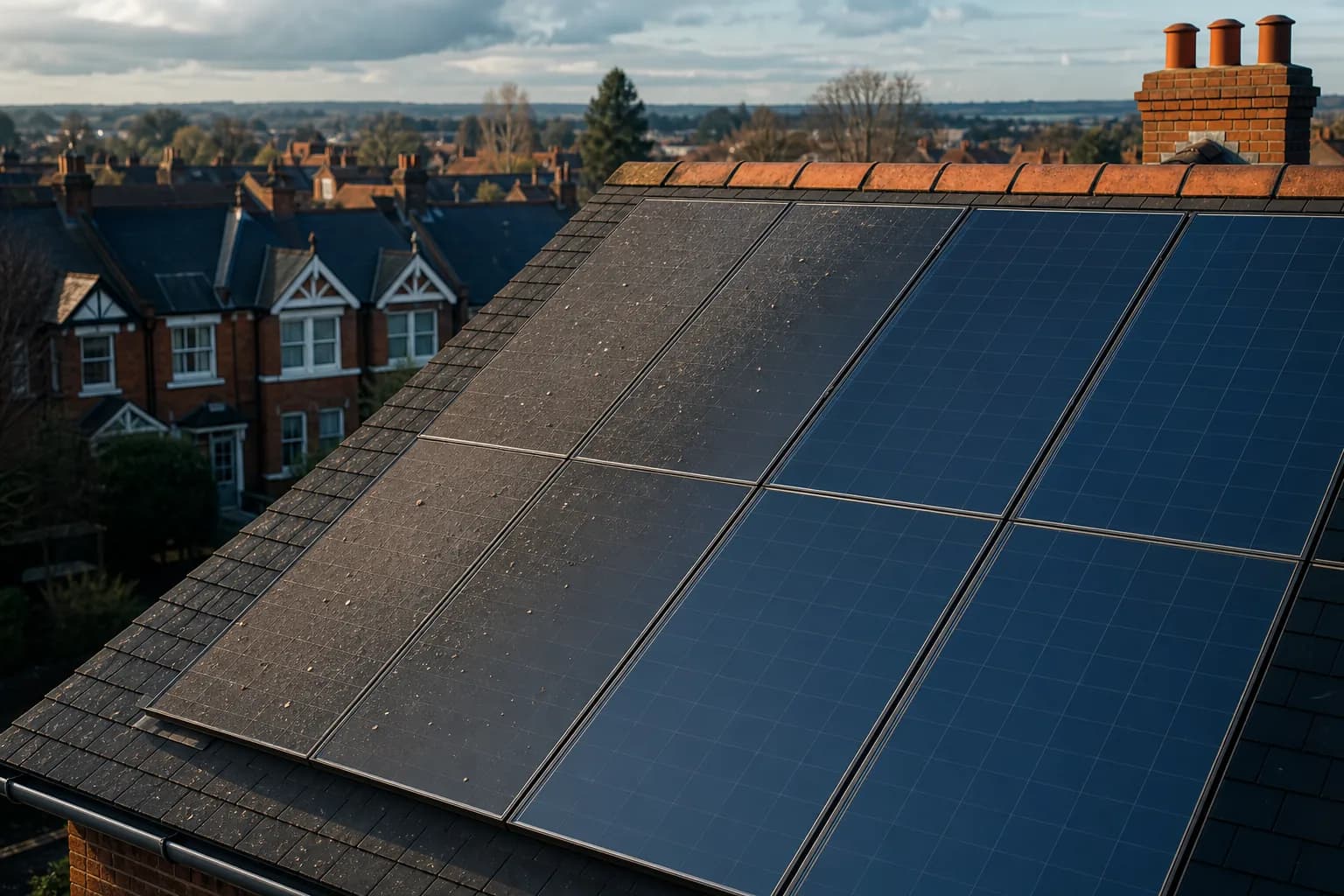
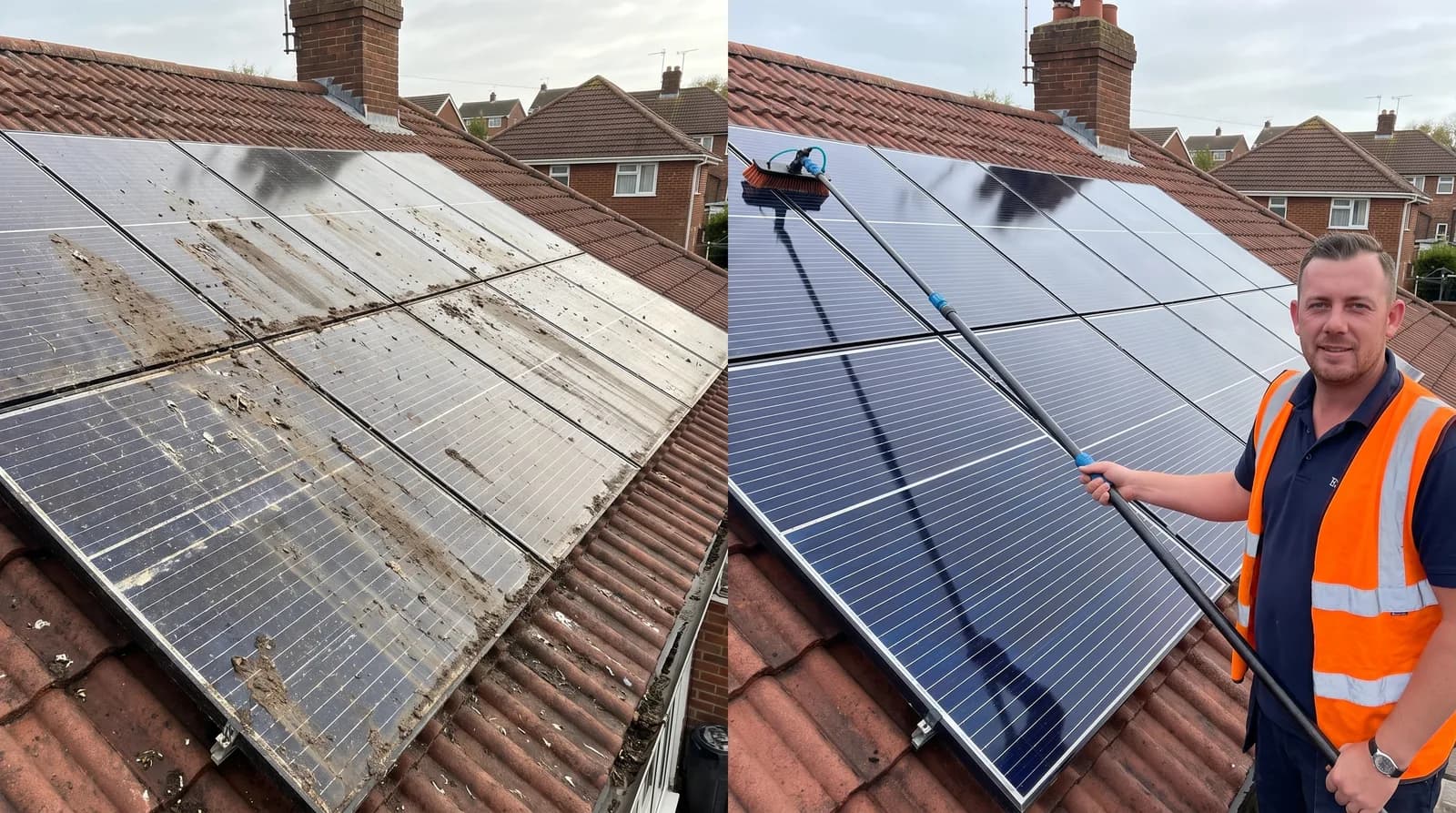
Yes — but not as often as many people fear, and not as rarely as the brochures suggest. Solar panels are sold as low-maintenance, and on a steep, open, south-facing roof that is broadly true: rain does a fair bit of the rinsing. What rain does not do is lift the dirt that sits at the panel edges and in the frame channels, or shift lichen, tree sap and baked-on bird droppings. Those build up slowly, and because they build up slowly most people never notice until the glass is visibly dull.
It is worth being measured about the output side of this. For panels that are only lightly dusty, the generation loss is usually modest — often just a few per cent — and a clean will not transform your bills overnight. Where cleaning genuinely pays back is localised soiling: a smear of bird mess or a shaded, mossy edge can shade a whole string of cells and drag the output of several panels down far more than a thin, even film ever would. So the honest answer to 'do solar panels need cleaning' is that routine light dust matters little, but heavy or patchy soiling matters a lot — and a sensible once-a-year clean is mostly about catching the second kind before it costs you.
The rule of thumb, then: about once a year for a typical home, more often if your roof is shaded, tree-lined, coastal or a favourite perch for birds. Everything below is how to judge which camp your roof falls into.
How often to clean solar panels, by the kind of property you've got
- 1
Most homes — once a year
A standard pitched, reasonably open roof away from heavy tree cover is fine on an annual clean. Spring or early summer is the natural time, after the worst of the winter grime and before the brighter, higher-output months when you want the panels at their best.
- 2
Near trees or on a low-pitch roof — twice a year
Panels under or beside trees, or on a shallow roof where rain doesn't run off well, collect pollen, sap, leaf debris and algae much faster. Two cleans a year — roughly spring and again in early autumn — keeps them from greening over and clears leaf-fall before it mats down.
- 3
Where birds gather, or coastal Wirral — twice a year
Properties near the coast, near water, or where gulls and pigeons roost get acidic droppings and salt-laden grime that bake on hard over summer. A second clean lifts it before it etches and stains the glass.
- 4
Commercial and larger arrays — review every six months
On a bigger system a small percentage drop across many panels adds up to real money, so it's worth checking the glass and the generation figures twice a year and cleaning on a schedule that suits the site rather than waiting for it to look bad.
Solar panel cleaning — CPAGM prices in Chester & Cheshire
| Job | Guide price | What affects it |
|---|---|---|
| Up to 12 panelsA standard domestic array, cleaned from the ground with a pure-water reach pole — no ladders on the roof | From £85 | A standard domestic array, cleaned from the ground with a pure-water reach pole — no ladders on the roof |
| Typical residential systemA larger domestic roof or fuller array; every panel reached, edges and frames included, left streak-free | Confirmed from photos | A larger domestic roof or fuller array; every panel reached, edges and frames included, left streak-free |
| Small commercial systemBarn, office, shop or light-commercial roof, cleaned on a schedule that suits the site | Confirmed from photos | Barn, office, shop or light-commercial roof, cleaned on a schedule that suits the site |
Solar panel cleaning starts from £85 for typical Chester-area properties. The exact figure is confirmed after you send a few photos and the number of panels, because array size, roof height and access change the job. We cover Chester and roughly a 45-minute radius — Hoole, Handbridge, Upton, Saughall, Frodsham, Northwich, Ellesmere Port and Tarporley included.
Why panels here get dirtier than the brochure says
Solar panels are sold as low-maintenance, and on a steep south-facing roof in a dry climate that's broadly true — rain does a fair bit of the rinsing. Chester isn't that climate. We sit in a damp, sheltered corner off the Dee estuary and the Irish Sea, so panels stay wet for longer, algae and that thin green film take hold, and rain alone often spreads the dirt around rather than washing it off.
The local detail matters too. Tree-lined streets across Hoole, Boughton and Handbridge drop pollen, sap and leaf debris onto roofs all season. Gulls and pigeons leave acidic droppings that bake on hard over summer. Lower-pitch roofs and any panel that catches less direct sun stay grubby for months because the dirt simply never gets rinsed away.
None of this happens overnight, which is the catch. The film builds up slowly, output drifts down a little at a time, and most people never notice until the glass is visibly dull. A sensible cleaning interval keeps the panels working closer to how they were installed to.
When to clean solar panels — timing through the year
For a once-a-year clean, spring to early summer is the sweet spot. It clears the algae, pollen and grime that build over a damp Cheshire winter, and it does so just before the long, bright days when the array should be generating hardest — so you get the benefit when it counts rather than cleaning in autumn ahead of the darkest months.
If your roof is on the twice-a-year list, add a second clean in early autumn. That one is about leaf-fall, tree sap and the summer's worth of bird mess: lifting it before it mats down and freezes on over winter. Whatever the schedule, avoid the temptation to leave it years between cleans — the longer soiling sits, the more it etches, and the harder (and occasionally more expensive) it is to bring the glass back.
Signs your solar panels are due a clean
- The glass looks dull, green-tinged, streaked or spotted from the ground, even after recent rain
- Visible bird droppings sitting on the panels, especially baked on through summer
- Overhanging trees dropping pollen, sap or leaves onto the array
- A lasting, unexplained dip in your generation figures that the season and weather don't explain
- It's been over a year — or you can't remember the panels ever being cleaned
Don't climb on the roof, and don't use tap water or abrasives
Getting up on a roof to inspect or clean panels is a real fall risk, and standing or leaning on the panels can crack cells and void the manufacturer's warranty. Tap water leaves mineral spots as it dries because of the dissolved salts in hard water. Pressure washers force water past the seals and can heat-crack the glass, and scourers, scrapers or washing-up liquid scratch the surface and leave residue that attracts more dirt. Checking how dirty they are is best done from the ground or a window; the cleaning itself should be a reach-and-wash job from the ground, not a ladder-and-roof one.
How the panels are actually cleaned — pure-water pole
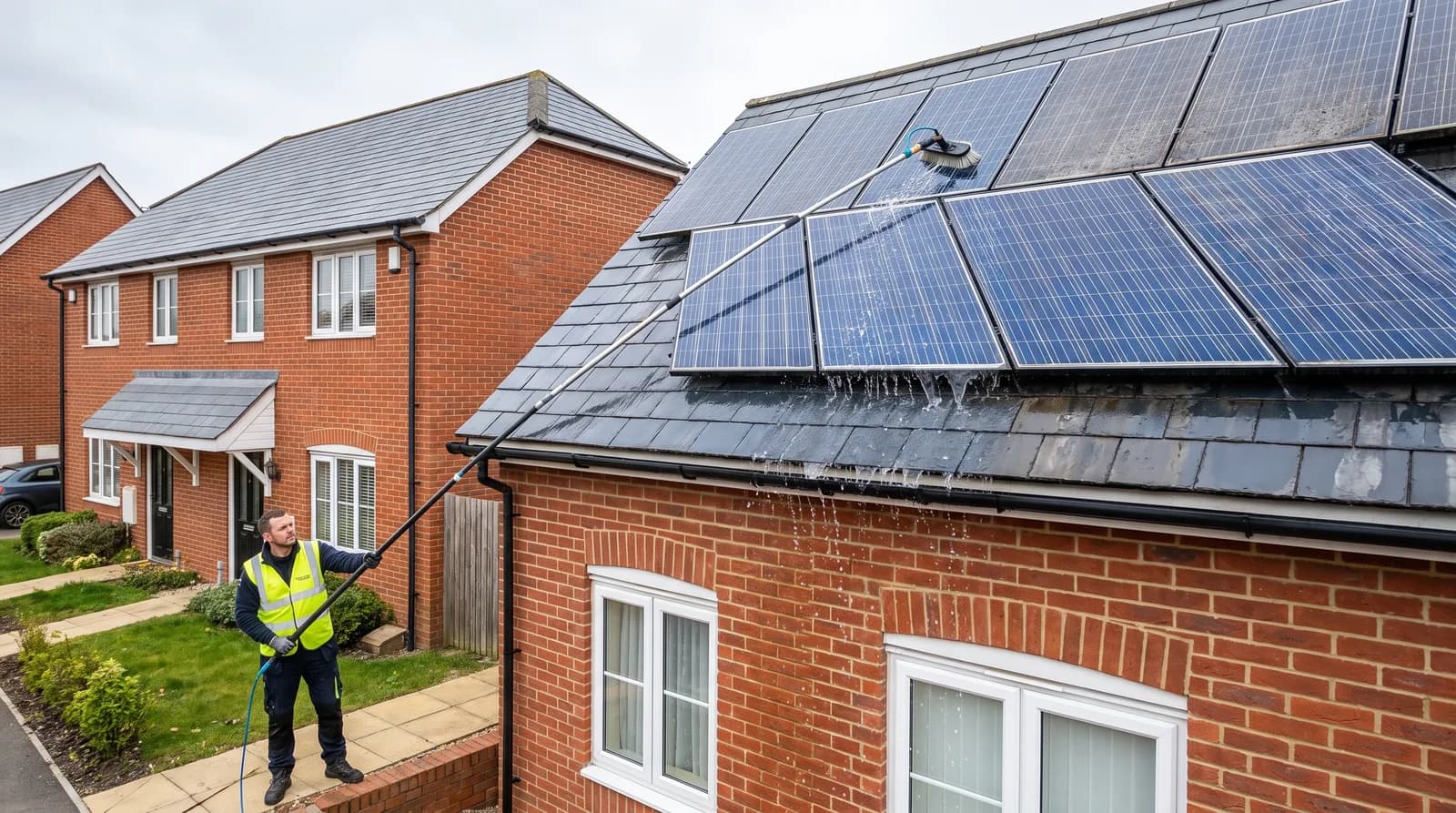
The method that suits solar glass is pure-water, pole-fed cleaning from the ground. Ordinary tap water is run through a filter that strips out the dissolved minerals — the same minerals that leave those chalky spots when hard water dries. That purified water is fed up a lightweight telescopic pole to a soft brush that agitates the dirt, and because the water is mineral-free it rinses away and dries to a streak-free finish with no detergent needed.
Two things make it the right choice for panels. First, safety: the operator stays on the ground, so nobody is on your roof and nobody is leaning on the glass. Second, it is kind to the panels — no chemicals to leave a film, no pressure to stress the seals, and nothing abrasive touching the surface, which keeps the manufacturer's warranty intact. It reaches the edges, the frame channels and the corners that rain never rinses, which is exactly where the stubborn algae and lichen live.
Professional pure-water clean vs DIY or leaving it to rain
| Professional pure-water clean | DIY / leave it to the rain | |
|---|---|---|
| Result | Whole panel cleaned — glass, edges and frame — streak-free and mineral-spot-free | Rain rinses the open middle of the glass only; edges, lichen and film stay put |
| Bird mess & lichen | Lifted and rinsed away before it etches or shades cells | Baked-on droppings and lichen are not shifted by rain and get worse |
| Safety | Done entirely from the ground — no one on the roof | Any DIY clean means ladders and roof access, i.e. a genuine fall risk |
| Panel & warranty risk | No pressure, chemicals or abrasives touching the glass; warranty protected | Tap water spots, hoses and scrubbing can damage seals and void warranties |
| Cost | From £85 for a domestic array, confirmed from a few photos | Free to leave it, but lost output and etched-on soiling can cost more over time |
Signs it's due now vs signs it can wait
| Clean it now | It can wait | |
|---|---|---|
| How the glass looks | Visibly dull, green-tinged, streaked or spotted from the ground | Still looks clear and reflective after recent rain |
| Bird mess | Droppings sitting on the panels, especially baked on in summer | Occasional marks that rain has already rinsed off |
| Surroundings | Overhanging trees dropping pollen, sap or leaves onto the array | Open roof, no trees, well-rinsed by weather |
| Output | A noticeable, lasting dip in generation you can't explain by the season or weather | Output tracking roughly as expected for the time of year |
| Last clean | Over a year ago, or you can't remember it ever being done | Cleaned within the last several months and still looking good |
Frequently asked questions
How often should you clean solar panels?
For most UK homes, about once a year is enough — usually in spring or early summer. Clean roughly twice a year if the panels are shaded, near trees or the coast, or where gulls and pigeons gather. In our damp Chester climate an annual clean still makes a difference even though the panels look after themselves in dry weather.
How often do solar panels need cleaning in the UK?
In the UK, once a year suits a typical open, pitched roof, with a second clean for roofs that are tree-lined, low-pitch, coastal or a favourite bird perch. Damp, sheltered areas like Chester and the Wirral tend towards the more frequent end because algae and green film take hold faster than in a dry, sunny climate.
Do solar panels need cleaning at all?
Yes, but be measured about why. Light, even dust usually costs only a few per cent of output and rain handles most of it. The clean earns its keep on the things rain can't shift — baked-on bird mess, lichen, sap and the film around the panel edges — which can shade whole strings of cells and drag output down much further than thin dust ever would.
When is the best time to clean solar panels?
Spring or early summer for a once-a-year clean — it clears the winter grime just before the brightest, highest-output months. If you're on a twice-a-year schedule, add a second clean in early autumn to lift leaf-fall, sap and the summer's bird mess before it sets on over winter.
Isn't rain enough to keep solar panels clean?
Rain helps, but in our damp, sheltered climate it often just moves dirt around rather than washing it off — and it does nothing for the panel edges, baked-on bird mess, sap or algae. On most Chester roofs an annual clean still makes a difference.
Will cleaning actually noticeably improve my output?
Only if the panels are genuinely dirty. Thin, even dust makes little difference — often just a few per cent. But localised soiling like a smear of bird droppings or a mossy, shaded edge can shade several cells at once and cause a much bigger drop, and clearing that is where you'll see a real improvement.
Can I clean solar panels myself with a hose and tap water?
We'd advise against it. Tap water leaves chalky mineral spots as it dries, and any DIY clean means going up a ladder onto the roof, which is a genuine fall risk — and leaning on the glass can crack cells and void the warranty. Purified water and a ground-based pole avoid all three problems.
Does cleaning solar panels void the warranty?
Cleaning done the right way doesn't — a pure-water pole clean from the ground uses no pressure, chemicals or abrasives, so nothing stresses the seals or scratches the glass. What can void a warranty is walking or leaning on the panels, or blasting them with a pressure washer, which is exactly why we clean from the ground.
How much does it cost to have solar panels cleaned?
As a guide, solar panel cleaning starts from £85 for a standard array of up to 12 panels. The exact price is confirmed after you send a few photos, because panel count, roof height and access affect the job.
How do I tell if mine need doing without going up there?
Look from the ground or an upstairs window: a dull, green-tinged or visibly spotted surface, or droppings sitting on the glass, are the obvious signs. A lasting, unexplained dip in generation is another. There's no need to climb up to check.
Do you clean them from the roof or the ground?
From the ground wherever possible, with a pure-water reach pole. It's safer for everyone and kinder to the panels and their warranties than walking on the roof or using detergents and pressure washers.