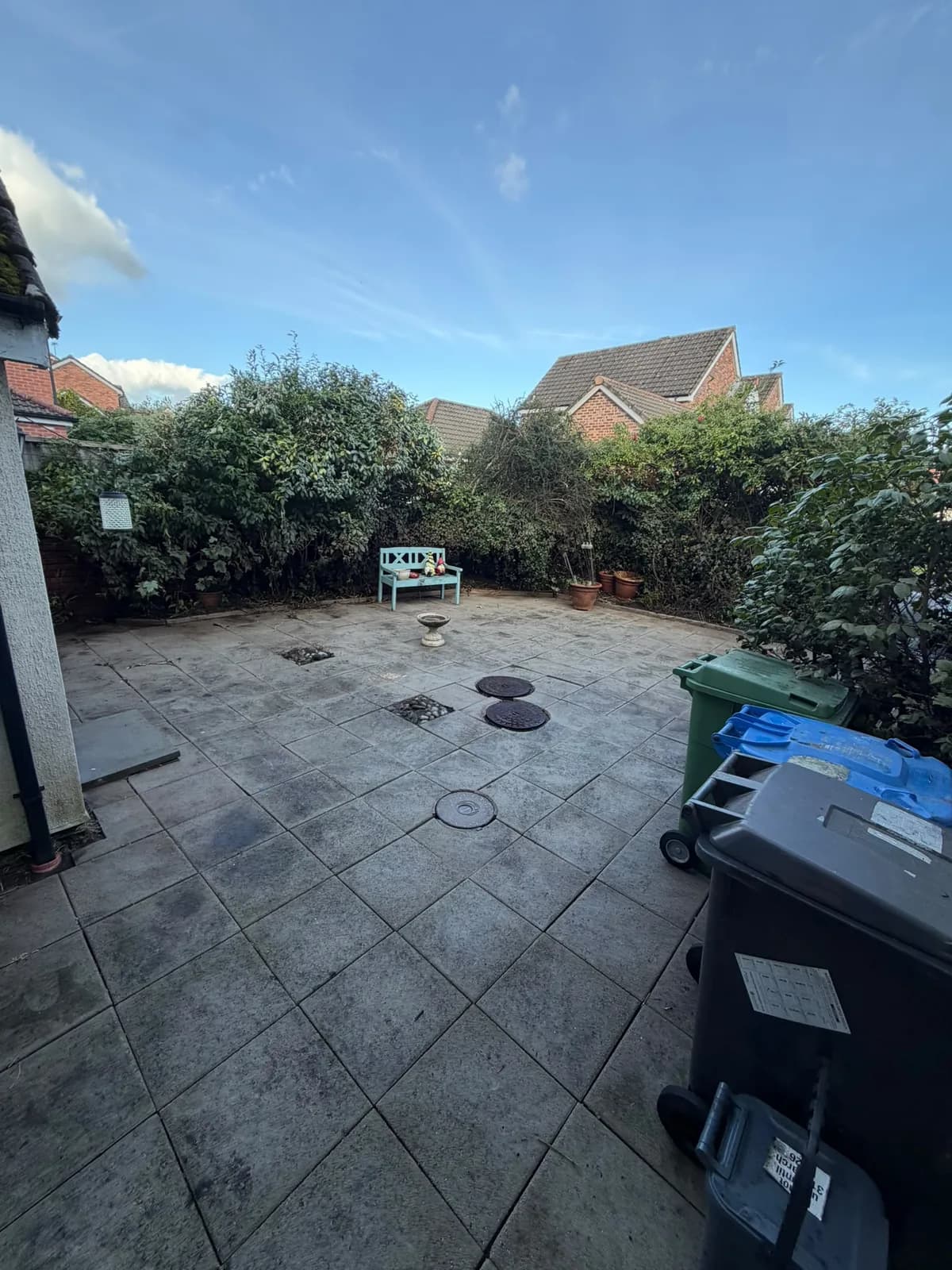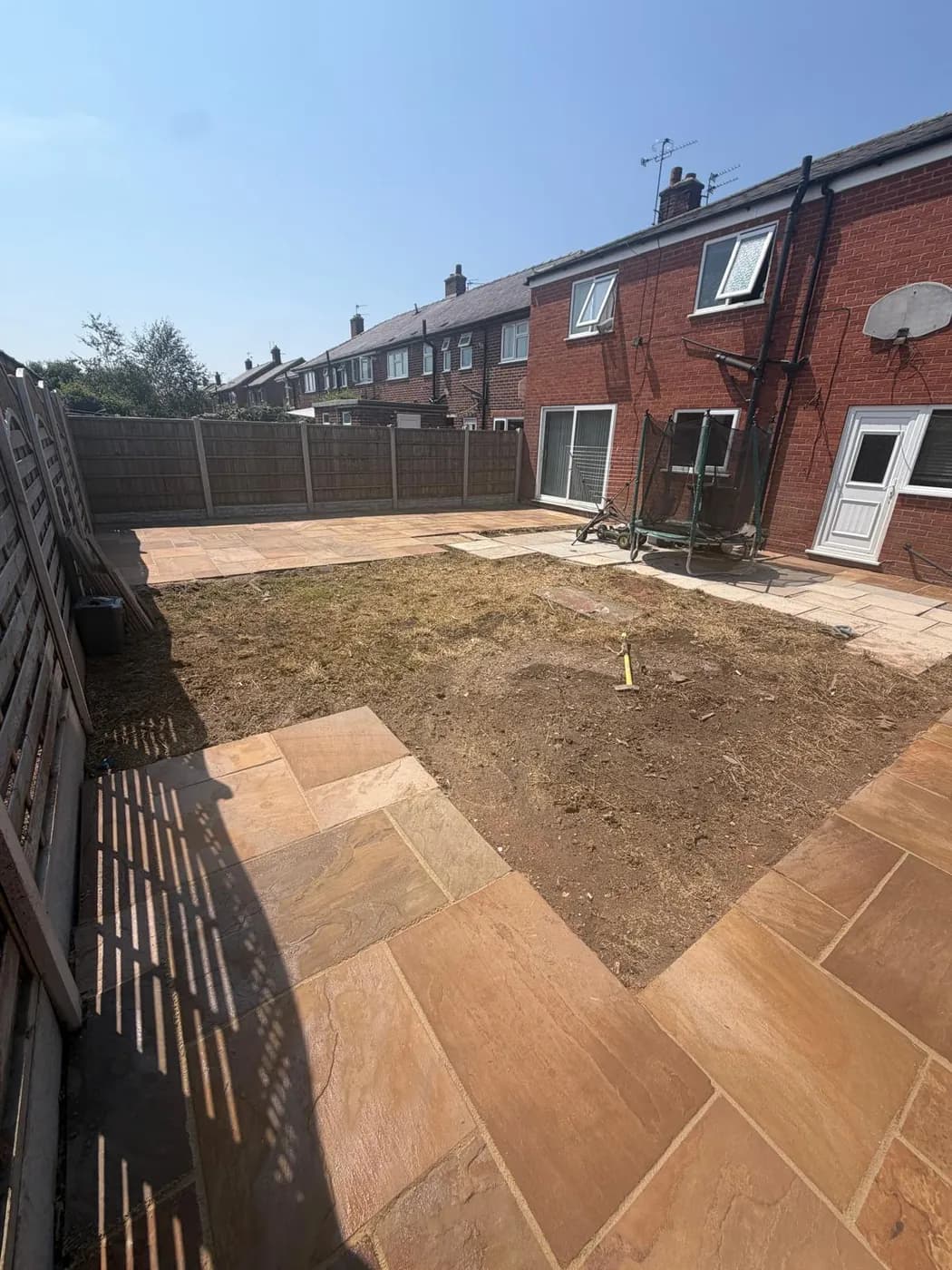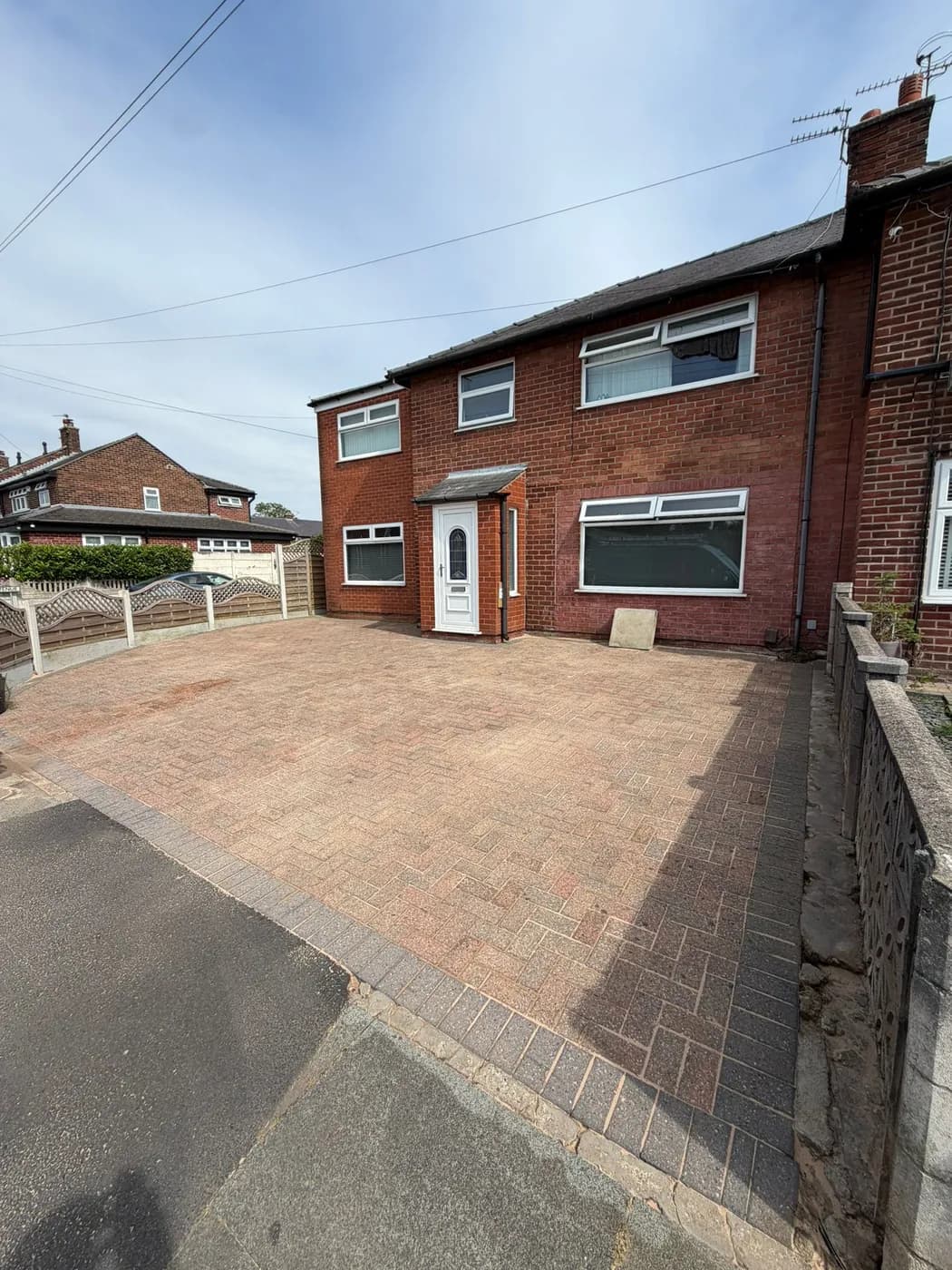
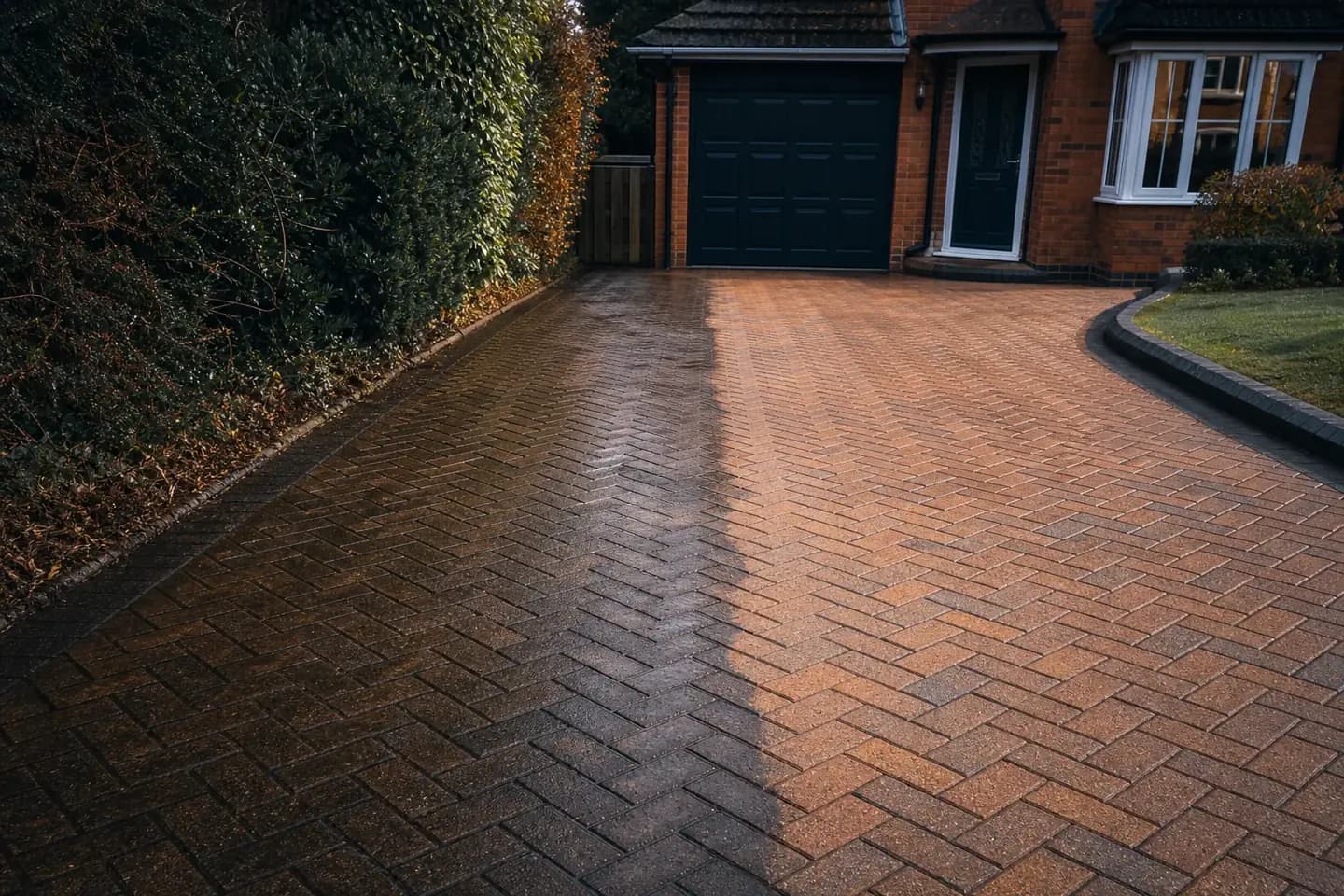
Short answer
Driveway and patio cleaning in Chester starts from £125, and we confirm your exact price from a few photos before anything is booked. As a market guide, professional cleaning runs at roughly £3 to £6 per square metre. Re-sanding block paving and sealing can be added, and we price them with your quote. The final price depends on size, surface and how much moss and algae has built up.
What actually changes the price
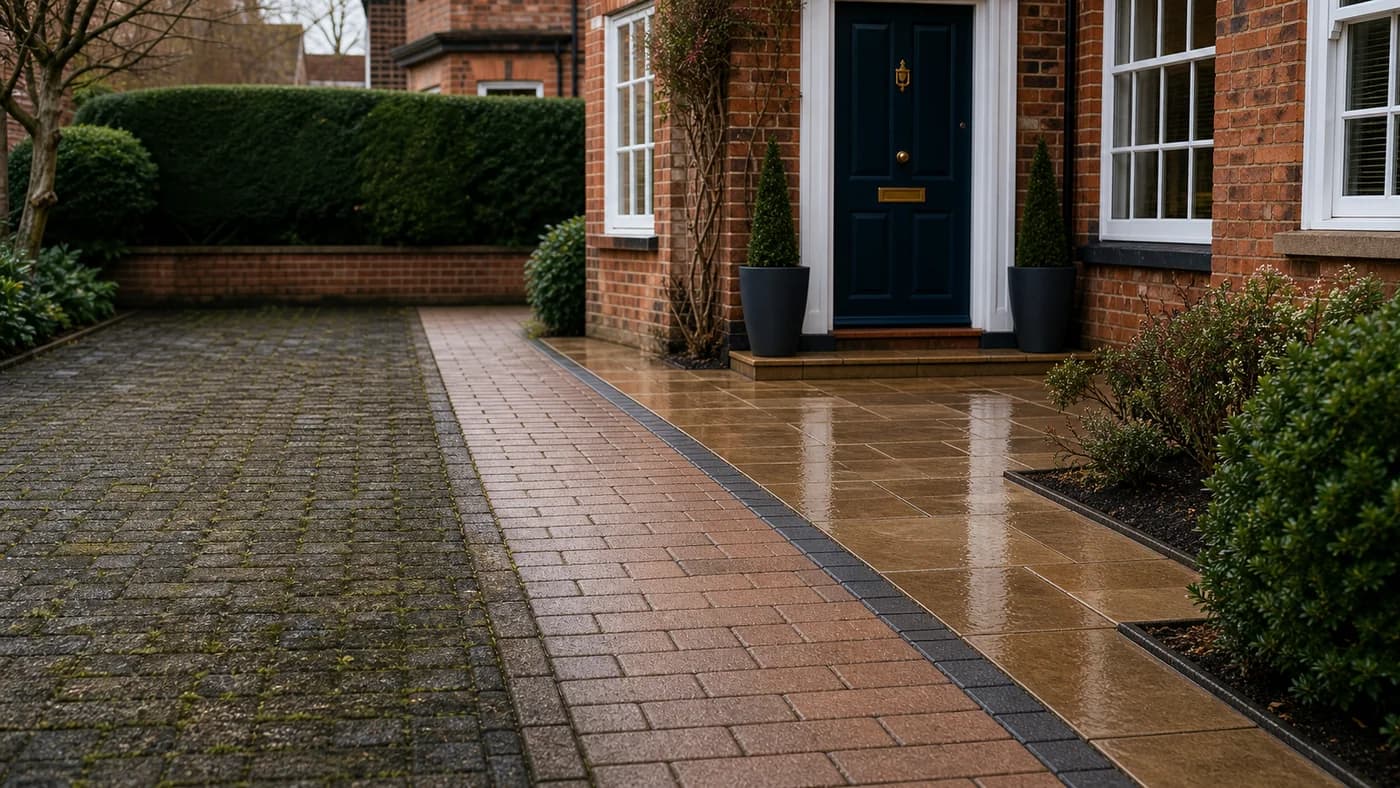
Driveway cleaning is priced on the area, the surface and the condition — not just the hours on the job. A small concrete path is quick and sits at the bottom of the range. A large block-paving driveway that has not been touched in years, with weeds rooted in the joints and black algae across every block, takes far longer, needs pre-treating, and needs the jointing sand replacing afterwards. That spread is exactly why honest driveway cleaning prices are quoted as a 'from' figure and confirmed once we have seen the surface.
Across Chester, Hoole, Handbridge, Upton and the wider Cheshire and Wirral area we clean a lot of damp, shaded driveways. Our climate sits wet for much of the year, north-facing frontages barely see the sun, and homes near the Dee or under trees green over fast. That green film and the black spotting on patio slabs are living growth, which is why a surface comes back looking tired a season after a cheap, rushed clean.
The surface itself matters just as much. Block paving, imprinted concrete, Indian sandstone, porcelain, standard concrete and tarmac all behave differently under pressure, so matching the right pressure and technique to the material is what protects the surface rather than scarring it. Get that wrong and a bargain clean can cost you a new driveway.
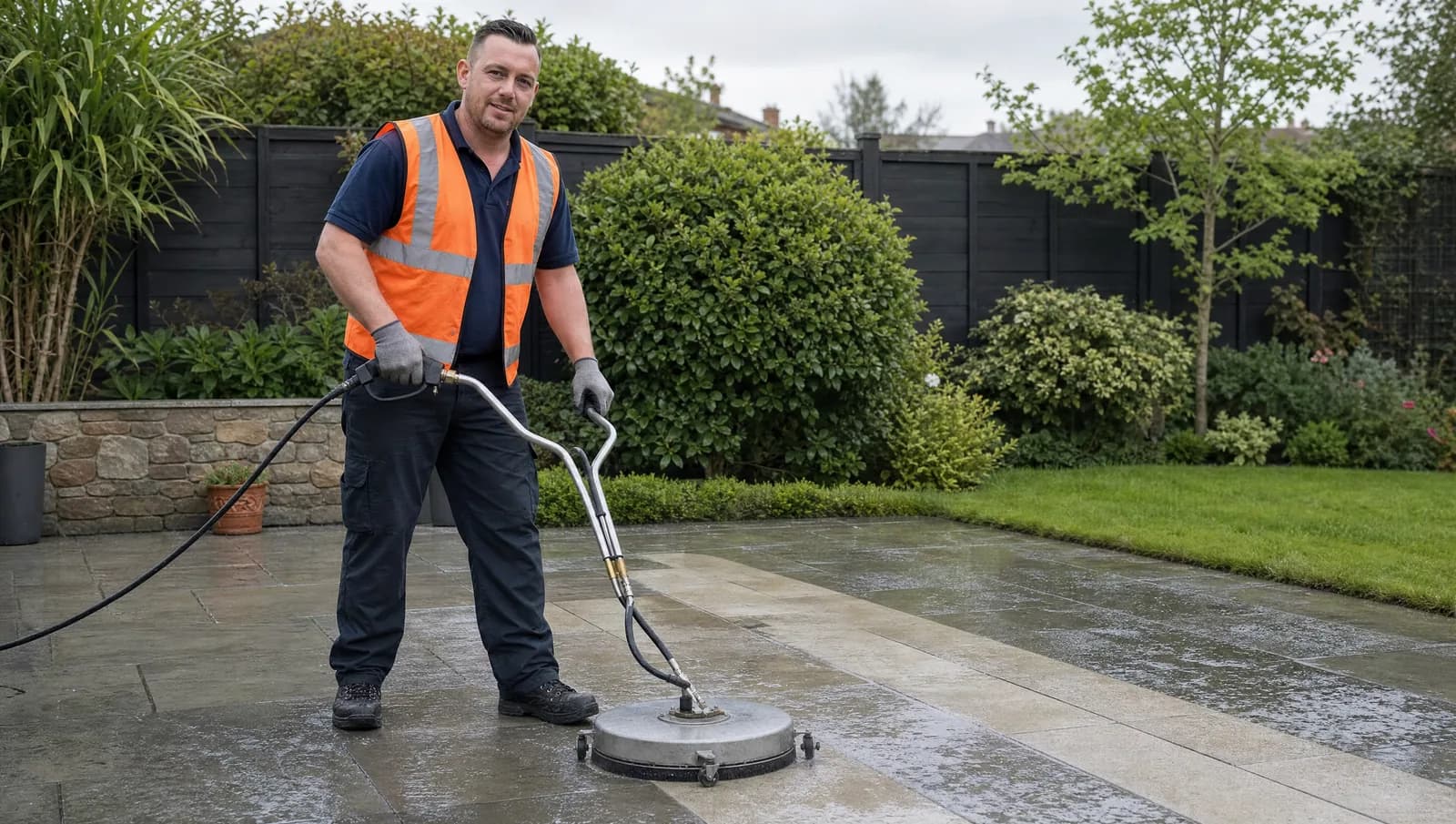
Driveway & patio cleaning — guide prices in Chester & Cheshire
| Job | Guide price | What affects it |
|---|---|---|
| Small patio or path — full cleanCompact area, single surface, easy access | From £125 | Compact area, single surface, easy access |
| Standard block-paving drivewayTypical semi-detached frontage, moss and algae removed | Confirmed from photos | Typical semi-detached frontage, moss and algae removed |
| Large drivewayDetached or double-width drive, more area and edging | Confirmed from photos | Detached or double-width drive, more area and edging |
| Re-sanding (kiln-dried sand into joints)Recommended add-on after cleaning block paving | Priced with your quote | Recommended add-on after cleaning block paving |
| Black-spot treatmentFor stubborn dark lichen spotting that water alone will not shift | Priced with your quote | For stubborn dark lichen spotting that water alone will not shift |
| Sealing treatmentProtects the finish, sheds water and oil, and slows regrowth | Priced with your quote | Protects the finish, sheds water and oil, and slows regrowth |
Driveway and patio cleaning starts from £125 for typical Chester properties; the wider UK market rate is roughly £3 to £6 per square metre. The job is confirmed after a few photos or a quick visit, because the surface type, area, level of growth and whether you add re-sanding or sealing all change the scope.
Driveway cleaning cost per square metre
If you are comparing quotes it helps to know the market rate. Across the UK, professional driveway cleaning is often priced at roughly £3 to £6 per square metre for a straightforward jet wash, with heavily soiled or delicate surfaces towards the top of that range. Those are market guide figures rather than our fixed prices — our driveway and patio cleaning starts from £125, and we confirm the price for your frontage from a few photos.
We quote by the job rather than a flat per-metre rate because two drives of the same size can be worlds apart: one lightly used and swept, the other carrying ten years of moss, oil stains and weeds through every joint. A per-metre figure is a useful sanity check, but condition, surface type and whether you want re-sanding or sealing on top are what really set the price. Be wary of anything priced far below the £3-per-metre mark — it is usually a rushed surface blast that greens over again within months rather than a proper restoration.
Driveway cleaning cost by surface type
| Job | Guide price | What affects it |
|---|---|---|
| Block paving drivewayStandard drive; joints re-sanded afterwards to lock the blocks and slow weeds, priced with your quote | Confirmed from photos | Standard drive; joints re-sanded afterwards to lock the blocks and slow weeds, priced with your quote |
| Imprinted (pattern) concreteGentler wash to protect the coloured surface; usually re-sealed, priced with your quote | Confirmed from photos | Gentler wash to protect the coloured surface; usually re-sealed, priced with your quote |
| Tarmac or asphalt driveLow-pressure clean only — no jointing sand, and sealed differently to block paving | Confirmed from photos | Low-pressure clean only — no jointing sand, and sealed differently to block paving |
| Natural stone / Indian sandstone patioSofter surface, gentler technique to avoid marking; patio-sized areas | Confirmed from photos | Softer surface, gentler technique to avoid marking; patio-sized areas |
| Standard concrete drive or pathRobust surface; small paths and patios at the lower end, full drives more | Confirmed from photos | Robust surface; small paths and patios at the lower end, full drives more |
Driveway and patio cleaning starts from £125. The exact figure is confirmed after a few photos or a quick visit, because size, condition and any black-spot treatment, re-sanding or sealing change the scope.
What pushes a driveway cleaning quote up on the day
A handful of things move a driveway cleaning quote up or down. Size is the obvious one — a single-car drive versus a double-width detached frontage. Condition is the next: a surface with years of thick moss, black spot and rooted weeds needs pre-treating and a slower, careful pass, whereas a lightly greened drive that is cleaned every couple of years is quick. Black spot in particular — those stubborn dark lichen dots on patio slabs — will not shift with water alone and needs a dedicated treatment, which we can add and price with your quote.
Surface type changes both the method and the time: delicate Indian sandstone and porcelain need a gentler approach than robust concrete. Access matters too — a drive you can reach easily with a water supply nearby is faster than a rear courtyard reached through a narrow side gate. And the add-ons you choose — re-sanding, black-spot treatment or sealing — are the final piece. We cover Chester and roughly a 45-minute radius, from Frodsham and Northwich to Ellesmere Port and across the Wirral, so travel rarely changes a full driveway price.
What a professional driveway clean involves
- 1
Inspect the surface and protect the area
We check the paving type and condition, move what we can, and protect borders, drains and any vulnerable pointing before any water touches the surface.
- 2
Pre-treat moss, algae, weeds and black spot
Where growth is heavy we treat it first so it lifts at the root, rather than just blasting the surface and watching it grow back within weeks. Established black spotting gets a dedicated treatment.
- 3
Clean at the right pressure for the surface
Block paving, imprinted concrete, sandstone and tarmac each need a different approach. We clean evenly so you do not end up with stripes, gouged blocks or a patchy finish.
- 4
Rinse, re-sand, seal and tidy
We rinse the residue away, brush kiln-dried sand back into block-paving joints where needed, apply a sealer if you have chosen one, and leave the area swept and tidy.
Pressure washing can wreck a surface if it is done wrong
A pressure washer held too close, or used at the wrong setting, can strip the surface off paving, blow out jointing sand, force water under slabs and lift block paving. On older or loose paving it can do real, expensive damage. If you are not sure how your surface will react — or the pointing is already crumbling — get it looked at before anyone turns a lance on it.
DIY pressure washer vs professional driveway clean
| DIY with a hired washer | Professional clean | |
|---|---|---|
| Finish | Easy to leave stripes, swirls and patchy areas | Even, consistent finish across the whole surface |
| Surface safety | Risk of blowing out sand, gouging blocks or lifting slabs | Right pressure and technique for your paving type |
| Regrowth | Moss and weeds often return within weeks | Pre-treated growth and re-sanded joints slow it down |
| Effort and mess | Hours of hard work, soaked and covered in slurry | Done in one visit, with the area cleared and tidied |
| Typical cost | £40–£70 washer hire, plus your day and the risk | From £125, insured, with a finished result |
Clean only vs clean, re-sand and seal
| Clean only | Clean + re-sand + seal | |
|---|---|---|
| What's included | A pressure clean to lift moss, algae and dirt | A clean, kiln-dried sand brushed back into the joints, then a protective sealer |
| Typical cost (standard drive) | Confirmed from a few photos | One quote covering the clean, re-sand and seal |
| How long it lasts | Looks great, but joints are left empty and the surface unprotected | Locked joints and a sealed surface that stays cleaner for longer |
| Weed & moss regrowth | Faster — bare joints let weeds seed again | Much slower — sand and sealer make it hard for growth to take hold |
| Best for | Concrete, tarmac, or a quick refresh before selling | Block paving and imprinted concrete you want to keep looking good |
Re-sanding block paving and when sealing is worth it
Cleaning block paving does more than lift the green off the top — the high-pressure water also flushes the old kiln-dried sand out of the joints. That sand is what locks the blocks together, stops them rocking under car tyres, and makes it harder for weeds to seed in the gaps. Leaving the joints empty after a clean is a false economy, which is why we brush fresh kiln-dried sand back in as a re-sanding add-on, priced with your quote. On block paving it is less an optional extra and more the finishing half of the job.
Sealing is the step that decides how long the result lasts. A quality sealer soaks into the surface, binds the jointing sand, and leaves a coat that sheds water, resists oil and diesel drips, and makes the next clean far easier. It slows moss and algae coming back and keeps the colour from fading in the sun. Sealing is not essential for every drive, but on block paving and imprinted concrete it is usually worth it — you are protecting the clean you have just paid for. Sealing can be added to your clean and priced with your quote, and it is best applied when the surface is fully clean, dry and freshly re-sanded, so cleaning, re-sanding and sealing are naturally booked together.
Tarmac and some loose-laid natural stone are the exceptions — tarmac carries no jointing sand and is sealed differently, and porous stone can need a specific breathable sealer rather than a standard one. We will tell you honestly whether sealing adds anything for your surface rather than selling you a coat you do not need.
Is sealing worth the extra?
On block paving and imprinted concrete, sealing after a clean and re-sand is usually money well spent — it binds the joint sand, sheds oil and rain, slows moss returning and makes every future clean easier. It is less useful on tarmac or some porous natural stone, and we will always say so rather than add a coat you do not need.
Photos that get you an accurate price fast
- A wide photo of the whole driveway or patio so the area is clear
- A close-up of the worst patches — black spots, thick green algae, or weeds growing through the joints
- A photo showing the surface type (block paving, imprinted concrete, slabs, natural stone or tarmac) and how the area is accessed
- A note of whether you would like re-sanding or sealing added, so the quote is complete first time
Frequently asked questions
How much does driveway cleaning cost?
In the Chester area, driveway and patio cleaning starts from £125. Re-sanding block paving and sealing can be added, and we price them with your quote. Every job is confirmed after a few photos or a quick visit, because size, surface and condition all change the price.
How much does it cost to clean a driveway per square metre?
As a market guide, professional driveway cleaning across the UK runs at roughly £3 to £6 per square metre for a straightforward jet wash, with delicate or heavily soiled surfaces at the top of that range. We quote by the job rather than a flat per-metre rate: our driveway and patio cleaning starts from £125, and we confirm the price for your frontage from a few photos.
How much does it cost to pressure wash a driveway?
Professional driveway and patio jet washing starts from £125 in and around Chester, with the exact price for your drive confirmed from a few photos. Hiring a pressure washer yourself is typically £40 to £70 a day, but on block paving there is a real risk of blowing out the jointing sand or gouging the blocks, which is why most people have it done properly.
How much does block paving cleaning cost?
Our driveway and patio cleaning starts from £125, and the price for your block paving depends on the size of the drive and its condition — we confirm it from a few photos before anything is booked. Because cleaning flushes the old sand out of the joints, we recommend re-sanding afterwards to lock the blocks and slow weed regrowth, and many customers add sealing to protect the finish; both are priced with your quote.
How much does it cost to clean and reseal a driveway?
Our driveway and patio cleaning starts from £125, and re-sanding and sealing are added to the same quote, with the total confirmed after photos or a visit. Doing all three in one go is the best value because the sealer needs a clean, dry, freshly re-sanded surface to bond to, so it makes sense to combine them rather than book separate visits.
How often should a driveway be cleaned in Chester?
Most driveways benefit from a clean every one to two years. Shaded, north-facing or tree-lined drives in our damp Cheshire climate green over faster and often need doing yearly to stay on top of the moss and algae. Sealing after a clean extends how long the surface stays looking good between washes.
Do I need re-sanding after my block paving is cleaned?
Usually yes. Cleaning lifts the old kiln-dried sand out of the joints, and that sand is what locks the blocks together and helps keep weeds down. Re-sanding afterwards protects the result and stops the blocks rocking, which is why we offer it as the finishing step on any block-paving clean, priced with your quote.
Is sealing a driveway worth it?
On block paving and imprinted concrete, yes — sealing binds the jointing sand, sheds water and oil, slows moss and weed regrowth and makes every future clean easier, and we price it with your quote. It is less useful on tarmac or some porous natural stone, and we will tell you honestly if your surface will not benefit rather than add it anyway.
Will the moss and weeds just come straight back?
Not if it is done properly. We pre-treat the growth so it lifts at the root rather than just on the surface, re-sand the joints so weeds struggle to seed, and can seal the surface to slow regrowth further. A cheap surface blast with no pre-treatment or re-sanding is what tends to green over again within weeks.
Can you clean Indian sandstone and porcelain patios safely?
Yes. Softer and more delicate surfaces such as Indian sandstone and porcelain need a gentler approach than concrete or block paving, so we adjust the pressure and method to suit the material and avoid marking or dulling it. Patio-sized areas start from £125.
What areas do you cover?
We cover Chester and roughly a 45-minute radius, including Hoole, Handbridge, Upton, Frodsham, Northwich and Ellesmere Port, plus the wider Cheshire area, the Wirral and parts of Wrexham and Flintshire. Travel rarely changes the price on a full driveway clean.