Short answer
Those stubborn black spots on a patio are lichen, not dirt — which is why jet-washing alone never shifts them. The reliable fix is a dedicated black-spot remover, applied to a dry surface and left to dwell, then a gentle clean and rinse, repeated on stubborn patches and sealed afterwards to slow its return. A professional CPAGM black-spot treatment in Chester starts from £125.
What causes black spots on a patio
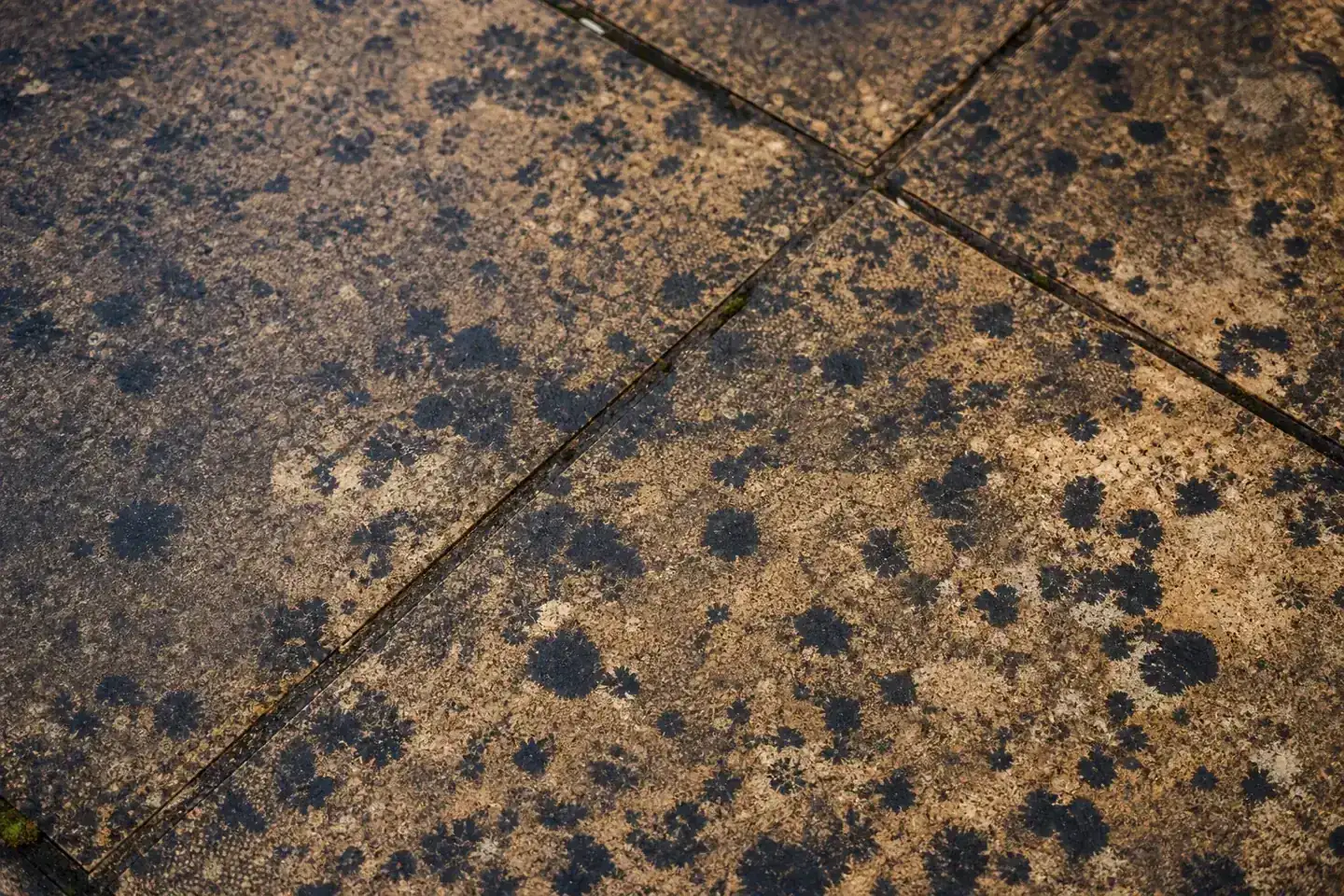
Black spots are lichen — a tough, slow-growing organism (part fungus, part algae) that bonds tightly into the surface of the stone. They are not loose grime or a bit of algae sitting on top, which is exactly why people scrub, jet-wash and bleach them and the spots barely move. The lichen has anchored its roots into the slab, so cleaning the surface around it just leaves the black core behind.
Our weather makes it worse. Chester, the Wirral and the Cheshire and Flintshire countryside sit damp for a big part of the year, and any patio that is shaded, north-facing, or tucked under a wall, fence or trees stays wet long enough for lichen and algae to settle in and spread. Homes near the Dee, in the older parts of Hoole and Handbridge, and rural properties out toward Frodsham, Tarporley and Wrexham green over especially quickly — as do patios in Upton, Saughall, Northwich and Ellesmere Port that get little direct sun.
The type of patio matters too. Indian sandstone, limestone and other natural stone are porous and lichen loves them; porcelain, concrete slabs and block paving spot up a little less but still get it in damp, shaded corners. Knowing the surface is half the job, because the wrong treatment or too much pressure will mark the stone permanently — and a scarred slab is a far bigger problem than the spots you started with.
Why a pressure washer alone won't remove black spots
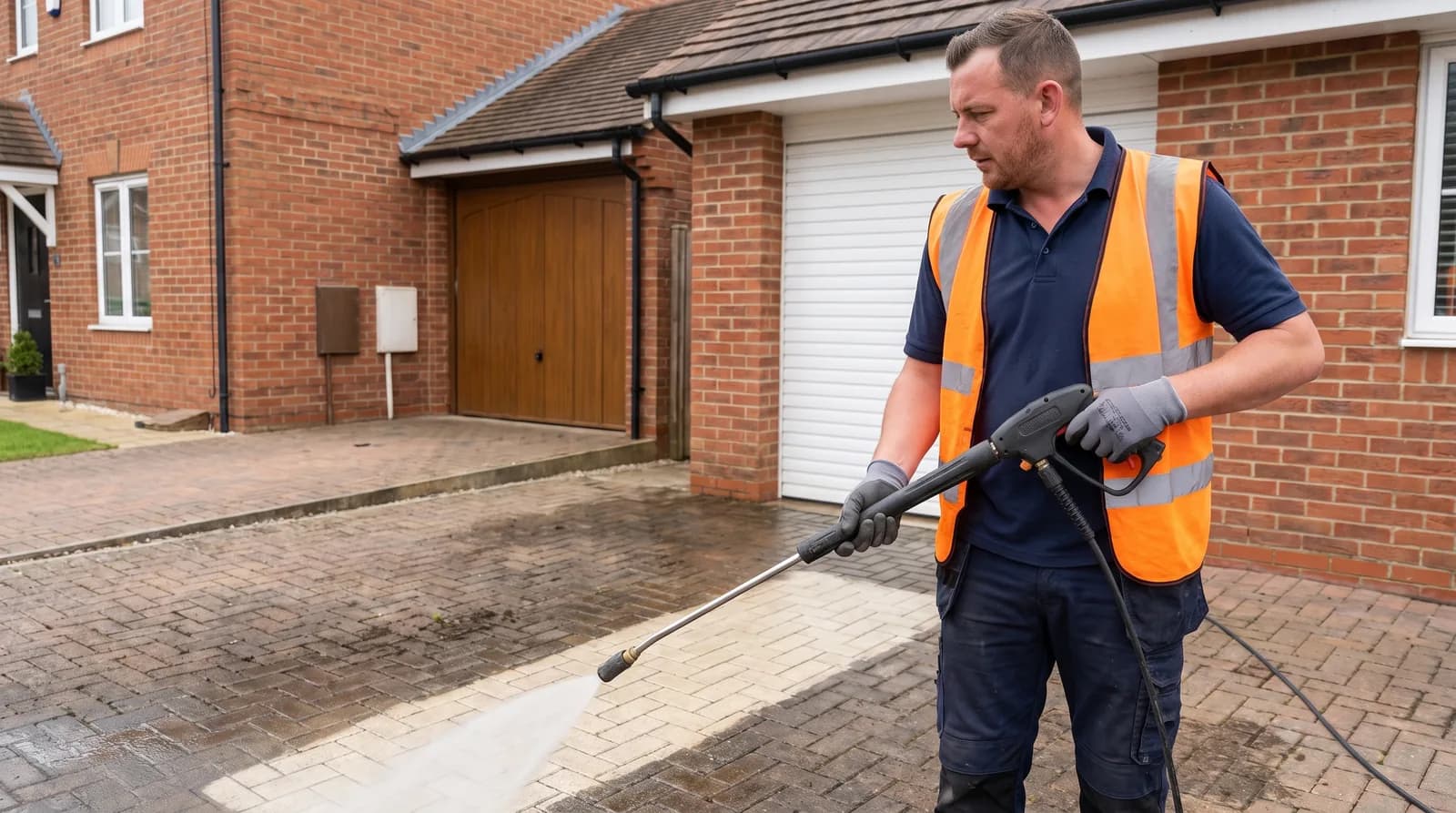
A pressure washer is brilliant at lifting loose dirt, moss and the green algae film off paving, so it feels like it should tackle black spots too. It doesn't. Lichen is physically anchored into the pores of the stone, so a jet cleans the slab all around each spot and leaves the black mark sitting there — often looking worse against the freshly cleaned paving. You end up with a bright patio dotted with black flecks and no idea why.
Push harder to try to blast the lichen out and you cause the real damage. A tight, high-pressure jet held close to natural stone etches and gouges the surface, blows the jointing sand out from between block paving, and forces water underneath the slabs where it can lift and rock them. On Indian sandstone and older concrete that scarring is permanent. The lichen, meanwhile, is perfectly happy to grow straight back.
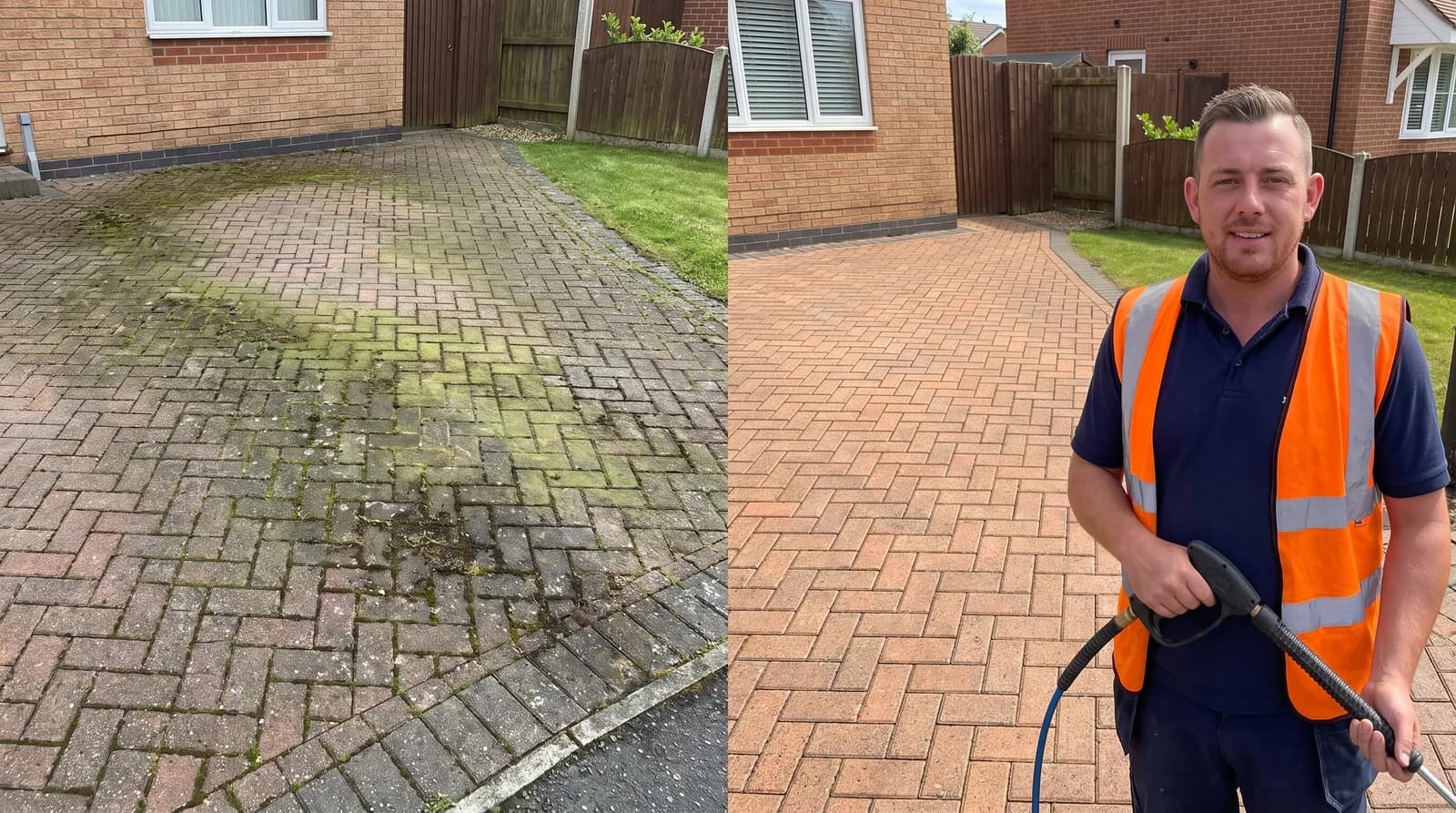
The order that actually works is chemistry first, gentle cleaning second. Kill the lichen at the root with a dedicated black-spot remover, give it time to break down, and only then lift the residue away with a brush or a low-pressure rinse. Get that sequence right and you clear the spots without touching the stone.
How to remove black spots from a patio, step by step
- 1
Identify the spots and the surface
Confirm they are lichen — small, flat, firmly stuck black or grey patches you can't wipe or sweep off — and note your slab type. Natural stone like Indian sandstone or limestone is soft and porous and needs gentler handling than concrete slabs or block paving. If in doubt, treat it as delicate.
- 2
Choose the day and prep the patio
Work on a dry, still day with no rain forecast for 24 hours, so the treatment isn't washed off before it can work. Sweep the patio clear of leaves and debris, snip back any overhanging plants, and move furniture and pots aside. The surface should be dry, not wet, when you apply.
- 3
Apply a dedicated black-spot remover
A general patio cleaner or bleach will not do it — you need a purpose-made patio black-spot / lichen remover. Dilute it to the product's instructions and apply it evenly with a watering can or garden sprayer, covering every spot generously. Wear gloves and eye protection and keep it off borders, lawns and pond water.
- 4
Leave it to dwell — this is where patience pays
This is where most people go wrong: they rush it. The treatment needs proper dwell time to break the lichen down at the root — often several hours, and many products are best left overnight. Don't rinse it off early. Keep pets and children off the treated area while it works.
- 5
Clean off gently, then rinse
Once the lichen has darkened and lifted, agitate it with a stiff brush or a low-pressure wash — never a tight, high-pressure jet on natural stone — working with the joints, not across them. Then rinse the residue away thoroughly so nothing is left to stain or wash into borders.
- 6
Repeat on any stubborn spots
Badly established lichen rarely clears in one go. Where black marks remain, let the patio dry and repeat the treatment on those patches a week or two later. A second (sometimes third) application on the worst spots is normal — it is patience, not extra pressure, that finishes the job.
- 7
Seal the patio to slow the return
Once the slabs are clean and fully dry, a breathable patio sealer suited to your stone makes the surface less porous, so lichen and algae find it harder to take hold and the patio is easier to keep clean. Sealing is optional but it is the single best way to buy yourself longer between treatments.
Don't reach for a strong pressure washer on natural stone
A pressure washer held too close, or used at a high setting, will gouge and scar Indian sandstone, limestone and older slabs, blow out the jointing sand and force water under the patio. The damage is permanent and far more expensive to put right than the original black spots. If your patio is natural stone, the pointing is already crumbling, or the lichen is thick and widespread, stop and get it looked at before anyone turns a lance on it — the right chemistry and a gentle method beat brute force every time.
Professional black-spot removal — CPAGM prices in Chester & Cheshire
| Job | Guide price | What affects it |
|---|---|---|
| Black spot treatmentDedicated black-spot remover applied with proper dwell time to break the lichen down at the root | From £125 | Dedicated black-spot remover applied with proper dwell time to break the lichen down at the root |
| Small surface cleanA compact patio, path or set of steps cleaned and treated in a single visit | From £125 | A compact patio, path or set of steps cleaned and treated in a single visit |
| Sealing treatmentBreathable sealer applied once the surface is clean and dry, to slow algae and lichen returning | Priced with your quote | Breathable sealer applied once the surface is clean and dry, to slow algae and lichen returning |
Black-spot treatment starts from £125 for typical Chester patios, and sealing is often added — many jobs are a treatment plus a seal. The job is confirmed after you send a few photos or we take a quick look, because the surface type, the area, how established the lichen is, and whether a second treatment is needed all change the scope. We cover Chester and roughly a 45-minute radius across Cheshire, the Wirral and parts of Wrexham and Flintshire.
Doing it yourself — typical UK material costs
| Job | Guide price | What affects it |
|---|---|---|
| Dedicated black-spot / lichen remover (5L concentrate)Covers a small to medium patio; concentrates go further than ready-to-use sprays | £15–£30 | Covers a small to medium patio; concentrates go further than ready-to-use sprays |
| Ready-to-use black-spot sprayHandy for small paths and spot-treating, but dearer per square metre | £10–£20 | Handy for small paths and spot-treating, but dearer per square metre |
| Garden sprayer or watering can + stiff brushFor even coverage and agitating the stubborn patches after dwell time | £10–£25 | For even coverage and agitating the stubborn patches after dwell time |
| Breathable patio sealer (optional)Slows lichen and algae returning; choose one suited to your stone | £25–£60 | Slows lichen and algae returning; choose one suited to your stone |
| Second application on stubborn lichenEstablished black spot usually needs a repeat treatment a week or two later | Extra product | Established black spot usually needs a repeat treatment a week or two later |
Typical UK retail guide prices for DIY materials only — your time, care and the risk of marking the stone are on top. On natural stone or a large patio, a professional treatment often costs little more once product, a sprayer and repeat visits are added up.
DIY black-spot removal vs a professional treatment
| DIY | Professional treatment | |
|---|---|---|
| What actually works | Bleach and pressure washing rarely shift true lichen | Dedicated black-spot remover with proper dwell time |
| Surface safety | Easy to scar sandstone or blow out the joint sand | The right chemistry and pressure for your slab type |
| Coverage | Patchy results and spots left behind | Even treatment across the whole patio |
| How long it lasts | Spots often return within a season | Treated at the root, with the option to seal afterwards |
| Typical cost | £15–£30 of remover, plus your time, repeat visits and the risk | From £125, insured, with a finished result |
Patience and sealing keep black spots away for longer
Black spot is a living organism, so the two things that keep it off are time and prevention. Let the treatment dwell fully and repeat it on stubborn patches rather than blasting harder — you clear more lichen with less risk. Then, once the patio is clean and dry, seal it, keep it swept, cut back anything that shades it, and let in light where you can. On a damp, north-facing Chester patio a periodic treatment will always be part of upkeep, but sealing and airflow stretch the gap between jobs considerably.
Getting black-spot removal right — the essentials
- Confirm the spots are lichen, not loose dirt — if they won't sweep or wipe off, they need treating, not just cleaning
- Use a dedicated black-spot / lichen remover, never bleach or a general patio cleaner
- Apply to a dry surface on a dry day with no rain forecast, and keep the product off lawns, borders and ponds
- Give it proper dwell time — hours or overnight — and resist rinsing it off early
- Clean off gently with a brush or low pressure; keep high-pressure jets away from natural stone
- Expect to repeat the treatment on stubborn patches rather than turning up the pressure
- Seal the patio once clean and dry, then sweep regularly and let in light to slow regrowth
When it's worth calling a professional
Plenty of light black spot on a robust concrete or porcelain patio is a fair DIY job if you have the time and the patience to let the treatment work. Where it is worth having done properly is when the stone is valuable or delicate, the lichen is thick and widespread, or the patio is large enough that repeat applications and rinsing turn into several weekends.
Indian sandstone and limestone in particular reward the right product and a gentle method — get it wrong with strong pressure or the wrong chemical and you can bleach, etch or blotch the stone, which is far harder and costlier to fix than the spots. A professional treatment also comes with the option to reseal afterwards, so you leave with a patio that looks restored and stays cleaner for longer.
We cover Chester and roughly a 45-minute radius — across Cheshire, the Wirral and parts of Wrexham and Flintshire, from Hoole and Handbridge to Frodsham, Northwich, Tarporley and Ellesmere Port. Send a few photos of the patio and the worst of the spots and you get a clear guide price back, with the black-spot treatment starting from £125 and sealing priced with your quote if you want it.
Frequently asked questions
What causes black spots on a patio?
Black spots are lichen — a tough, slow-growing organism (part fungus, part algae) that bonds into the surface of the stone. Damp, shade and porous slabs let it take hold, which is why north-facing and tree-shaded patios in the Chester area spot up fastest. It is not ordinary dirt, so it won't sweep, wipe or wash off.
How do I get rid of black spots on a patio?
Apply a dedicated patio black-spot remover to a dry surface on a dry day, leave it to dwell for several hours or overnight to break the lichen down at the root, then clean it off gently with a brush or low-pressure rinse. Repeat on stubborn patches, and seal the patio afterwards to slow it coming back. Bleach and pressure washing alone won't do it.
What is the best black spot patio remover?
The best product is a purpose-made patio black-spot / lichen remover, not a general patio cleaner or bleach. Choose one rated for your surface — a sandstone-safe formula for natural stone — dilute it to the instructions, and give it proper dwell time. The product matters less than using a dedicated remover and letting it work rather than rinsing early.
Why won't my pressure washer remove the black spots?
Because they are lichen, not dirt. The lichen is anchored into the surface of the stone, so blasting it only cleans around each spot and leaves the black core behind — and on natural stone a strong jet can permanently scar the slabs and blow out the joint sand. It needs a dedicated black-spot treatment to break it down first, then a gentle clean.
Does bleach get rid of black spots on a patio?
Not reliably, and we don't recommend it. Bleach can lighten the spots briefly but rarely kills the lichen at the root, it can discolour natural stone, and the run-off harms borders, lawns and drains. A proper patio black-spot remover is safer and far more effective.
How do I remove lichen from a patio?
Lichen is exactly what causes patio black spots, so the method is the same: treat it with a dedicated black-spot / lichen remover, let it dwell fully rather than scrubbing, then lift it away gently and rinse. Because lichen bonds into the stone, patience and a repeat treatment clear it — high pressure only risks damaging the surface.
How do you remove black spots from block paving?
Block paving is treated the same way — a dedicated black-spot remover left to dwell, then a gentle clean — but take care not to wash out the jointing sand between the blocks with a high-pressure jet. Once the paving is clean and dry, re-sanding the joints and sealing helps lock everything in and slows the lichen returning.
How long does a black-spot treatment take to work?
The treatment itself is quick to apply, but it needs dwell time to work — often several hours, and many products are best left overnight. Heavily established lichen frequently needs a second application a week or two later to clear fully, so allow for more than one visit on a badly spotted patio.
Will the black spots come back after treatment?
They can, especially on a shaded, damp, north-facing patio in our climate. Keeping the area swept, cutting back what shades it and letting in light all help, and sealing the surface once it's clean is the single best way to slow regrowth. On a wet patio a periodic treatment will always be part of upkeep.
Is it safe to treat black spots on Indian sandstone myself?
You can, but carefully — sandstone is soft and porous, so use a sandstone-safe black-spot remover, never strong pressure, and test a hidden corner first. If the patio is large, valuable or badly spotted, it's worth having it treated professionally to avoid bleaching or scarring the stone.
How much does professional black-spot removal cost in Chester?
As a guide, a CPAGM black-spot treatment or a small surface clean starts from £125, and a sealing treatment can be added and priced with your quote — the two often combine on the same visit. The final price is confirmed after you send a few photos, because the surface type, the area and how established the lichen is all change the scope.