Short answer
Patio repointing in Chester typically costs from around £150 for a small repair area, with full patio sections and block paving re-sanding priced with your quote. As a market guide, repointing often works out at roughly £20 to £45 per square metre depending on joint condition, with a full patio running into several hundred pounds. Your price depends on patio size, how many joints have failed, and whether it needs cleaning first, and we confirm it from a few photos before anything is booked.
Repointing vs re-sanding — and why they cost differently
There are two jobs hiding behind the phrase "patio repointing", and knowing which one you need is the first step to understanding the cost. Repointing is replacing the mortar between paving slabs. Re-sanding is brushing fresh kiln-dried sand back into the joints of block paving. They sound similar, but they use different materials, take different amounts of time and sit at different price points — so a quote only makes sense once you know which surface you have.
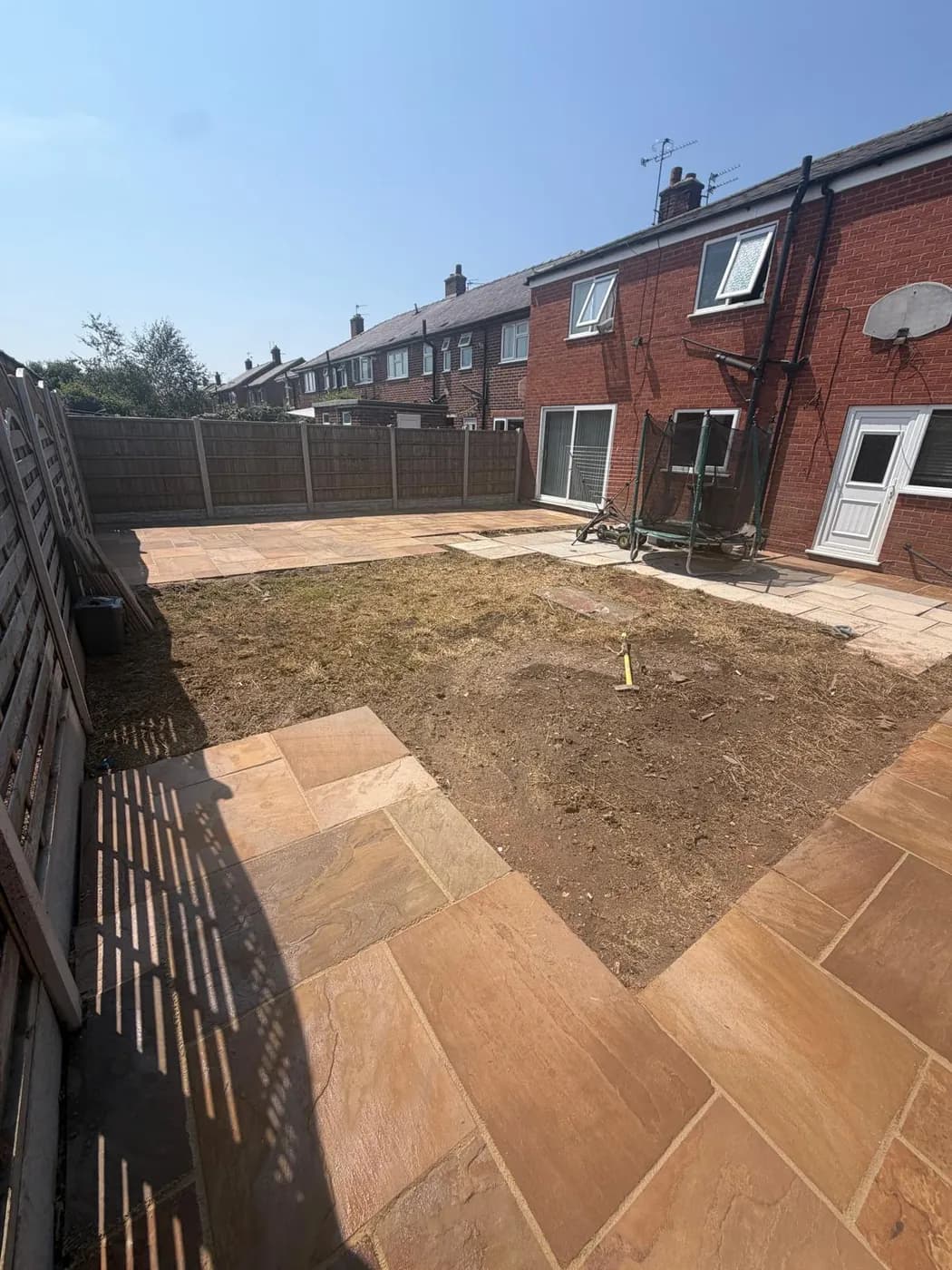
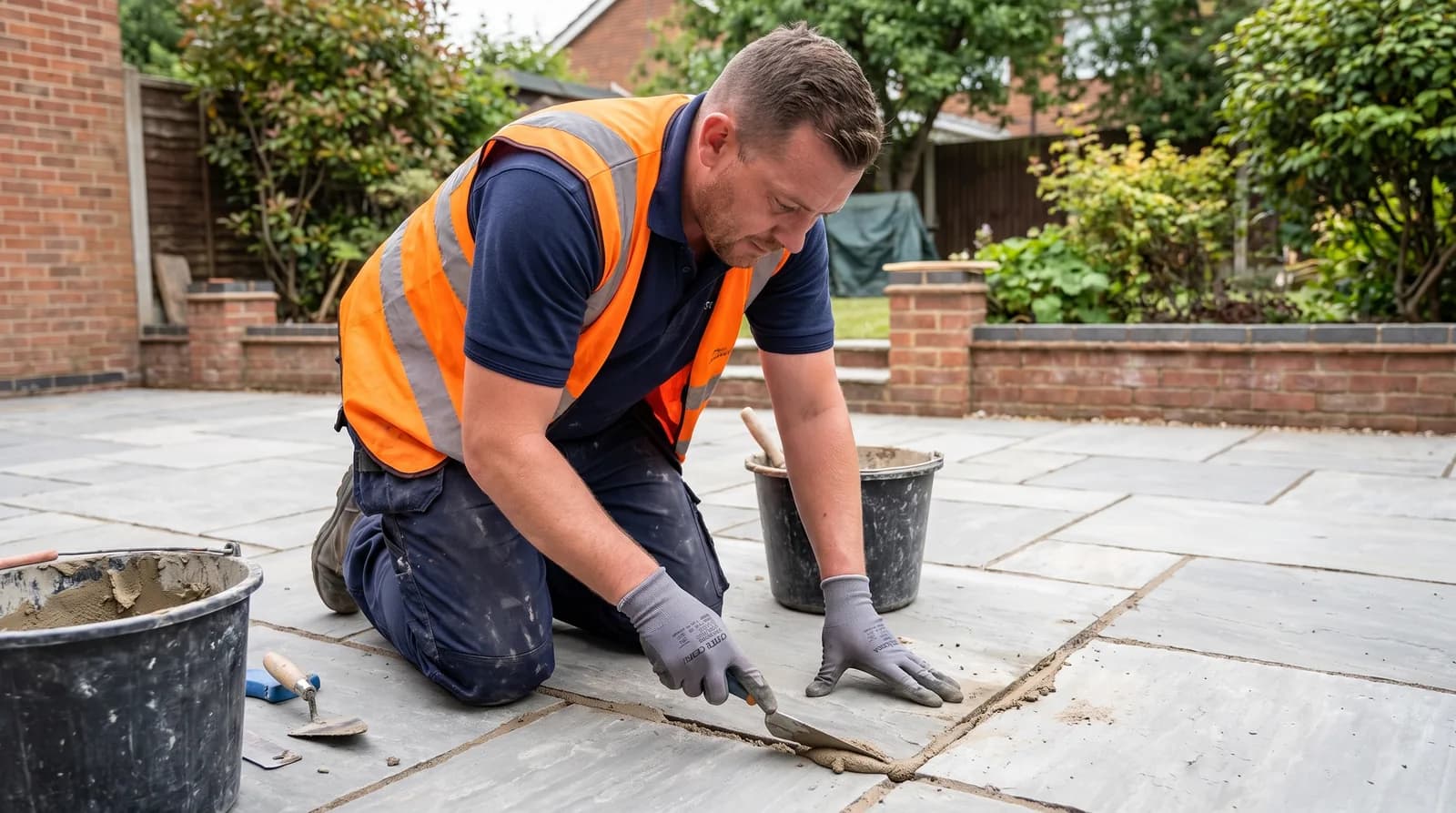
Slabbed patios — sandstone, Indian stone, riven concrete flags, Yorkstone — are bedded on mortar and pointed with a mortar mix. When that mortar cracks and crumbles out, the fix is to rake out the old pointing and work fresh mortar into the joint. It is slower, more skilled work, which is why repointing sits higher than re-sanding. With CPAGM, repointing starts from £150, and your exact price depends on the size of the job and access, confirmed from a few photos before anything is booked.
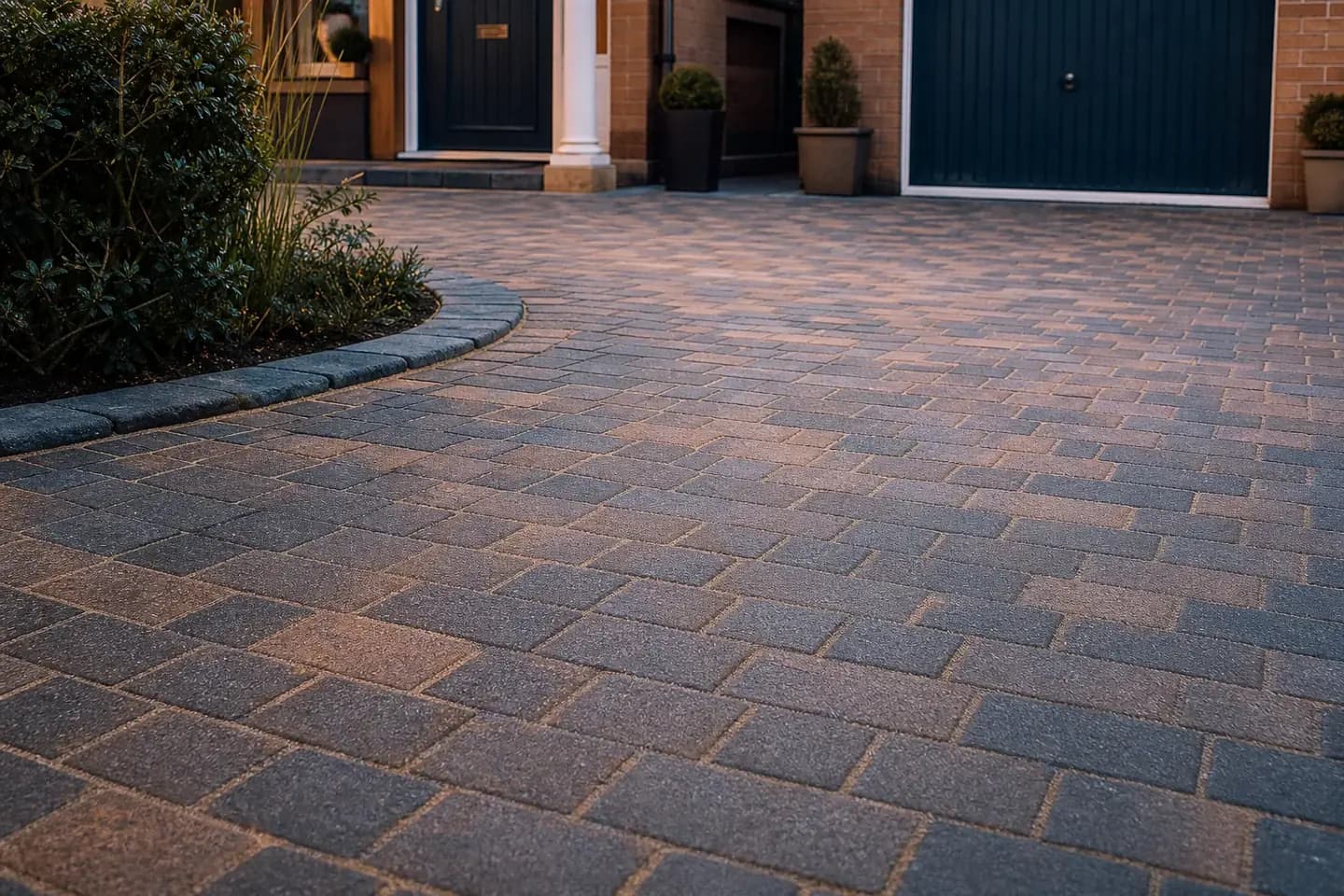
Block paving and brick paviours — the kind you see on driveways and newer patios around Upton, Saughall and the estates off the A55 — are laid on a sand bed with kiln-dried sand swept into the joints. Over a few seasons that sand washes out, blocks start to loosen and weeds move in. The remedy is a re-sand: brush new kiln-dried sand fully into every joint to lock the blocks back together. It is quicker and cheaper because there is no mortar to mix, rake out or finish.
Why Chester patios lose their joints
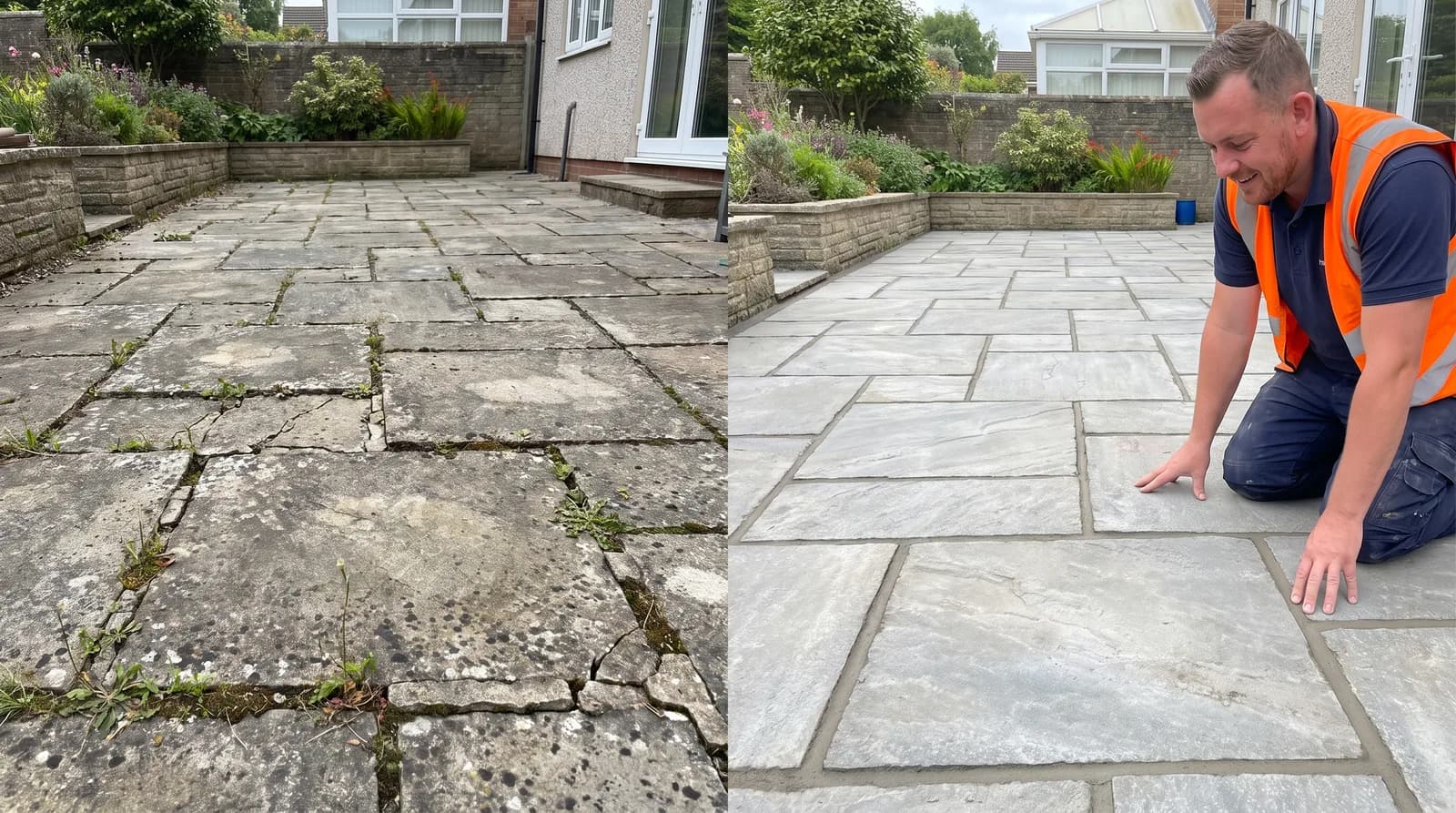
Our wet North West climate is hard on patio joints. Across Chester, Hoole, Handbridge and the wider Cheshire and Wirral area, water sits in the joints through a long damp autumn, then freezes and expands over winter. That freeze-thaw cycle is what cracks mortar and pops it out in lumps, and it is what washes kiln-dried sand out of block paving. North-facing and shaded patios stay wet longest, so they tend to fail first — a shaded rear patio in Frodsham or Northwich will often lose its pointing years before a sunny south-facing one.
Once a joint goes, the problem speeds up. Open gaps let more water under the slabs, weeds and moss root in the cracks, and slabs start to rock. On older Cheshire properties with sandstone or Indian stone patios, sound joints are part of what holds the whole surface stable — so a few failed joints today become a lifting, moving patio in a couple of winters if they are left.
This is why repointing early is far cheaper than relaying later. Making good a handful of joints while the base is still sound is a modest job. Waiting until slabs have dropped, water has washed out the bedding and the surface has started to move turns a repointing job into a re-lay — a job many times the price. Catching it early is the single biggest thing you can do to keep the cost down.
Patio repointing & re-sanding — CPAGM guide prices in Chester & Cheshire
| Job | Guide price | What affects it |
|---|---|---|
| Small repair area — failed joints made goodA handful of cracked or missing joints in one area of a slabbed patio | From £150 | A handful of cracked or missing joints in one area of a slabbed patio |
| Full patio section — repointedA whole patio or large section with widespread joint failure | Quoted from photos | A whole patio or large section with widespread joint failure |
| Block paving re-sand (kiln-dried sand)Brushing fresh kiln-dried sand into block-paving joints to lock the blocks | Priced with your quote | Brushing fresh kiln-dried sand into block-paving joints to lock the blocks |
| Clean before repointingOften needed first so new pointing or sand bonds to a clean joint | From £125 | Often needed first so new pointing or sand bonds to a clean joint |
| Loose or rocking slab re-beddedPer slab, where a slab has lifted and needs re-setting before pointing | Priced with your quote | Per slab, where a slab has lifted and needs re-setting before pointing |
These are CPAGM guide prices for typical Chester patios. Every job is confirmed after a few photos or a quick visit, because the patio type, the number of failed joints, and whether a clean is needed first all change the scope.
Patio repointing cost per square metre — the market picture
If you have searched "patio repointing cost per square metre", you will see UK guide figures of roughly £20 to £45 per square metre for repointing slabbed paving. That is a useful benchmark, but treat it as a market guide rather than a fixed price — where a patio actually lands in that range depends almost entirely on the condition of the joints, not just the floor area.
A patio where only a few joints have failed is priced as a repair, not by the metre, because the raking-out and pointing is confined to small patches — which is why CPAGM starts a small repair area from £150. Where most of the joints across a full patio have crumbled, the whole surface has to be raked out and repointed, and that is where a per-square-metre picture becomes fair: a typical domestic patio commonly runs from a few hundred pounds up, with larger or badly weathered patios higher again.
Block paving re-sanding is cheaper per square metre than mortar repointing because it is quicker work with a cheaper material — no mixing, raking out or finishing, just a thorough brush-in of kiln-dried sand. As a rough market guide, expect it to sit well below the repointing figures above. The table that follows sets these market ranges alongside the CPAGM starting prices so you can see how they line up.
What patio pointing work costs — market ranges & CPAGM starting prices
| Job | Guide price | What affects it |
|---|---|---|
| Mortar repointing (per square metre)UK market guide for raking out and repointing slabbed paving; condition-dependent | £20–£45/m² | UK market guide for raking out and repointing slabbed paving; condition-dependent |
| Small repair — a few failed jointsCPAGM starting price; priced as a repair rather than by the metre | From £150 | CPAGM starting price; priced as a repair rather than by the metre |
| Full patio repointedConfirmed from photos; a full domestic patio can run into several hundred pounds | Quoted from photos | Confirmed from photos; a full domestic patio can run into several hundred pounds |
| Block paving re-sandAdded to your quote; cheaper per m² than mortar repointing | Priced with your quote | Added to your quote; cheaper per m² than mortar repointing |
| Clean first (if heavily mossed)Prices the surface prep separately so you see exactly what you pay for | From £125 | Prices the surface prep separately so you see exactly what you pay for |
Per-square-metre figures are a UK market guide for comparison only; the From prices are real CPAGM starting points. Because joint condition drives the cost far more than area alone, the job is always confirmed after photos or a visit.
Repointing vs re-sanding — which does your patio need?
| Repointing (mortar joints) | Re-sanding (block paving) | |
|---|---|---|
| Patio type | Slabbed patios — sandstone, Indian stone, concrete flags | Block paving and brick paviours laid on sand |
| What's gone wrong | Mortar cracked, crumbled or fallen out of the joints | Joints washed out, blocks loosening, weeds taking hold |
| What's used | A pointing mortar mix raked in and worked into the joint | Kiln-dried sand brushed fully into the joints |
| How long it lasts | Years when raked out and pointed properly | A few seasons — easy and cheap to top up again |
| Typical cost | From £150, confirmed from photos | Priced with your quote |
What a professional repointing job involves
- 1
Assess the joints and the slabs
We check which joints have actually failed, whether any slabs are loose or rocking, and whether the patio needs cleaning first so the new pointing has a clean, sound joint to grip. This is also where we tell you honestly whether it is a repointing job at all, or whether the base has moved and it needs re-bedding.
- 2
Rake out and prepare the joints
Old, crumbling mortar is raked out and the joints cleared down to a sound base; washed-out block-paving joints are brushed clean and dry. Skipping this preparation is the single main reason a cheap repointing job lifts again within a season — new mortar simply will not bond to loose, dirty joints.
- 3
Repoint or re-sand correctly
Slabbed patios are pointed with the right mortar mix, worked in and struck to a neat finish. Block paving is re-sanded with kiln-dried sand brushed fully into every joint to lock the blocks and slow weed regrowth. Each surface gets the material it was designed for — the difference between a fix that holds and one that fails.
- 4
Finish, protect and tidy
We strike the joints to a clean finish, keep fresh mortar off the slab faces, and leave the patio swept. We will also let you know how long to keep foot traffic and furniture off it while it cures, which depends on the weather at the time.
Don't repoint over loose slabs or a failing base
Repointing only works when the slabs underneath are stable. If the patio is rocking, slabs have sunk, or the base has washed out, new pointing will simply crack out again within months and you will have paid twice. When several slabs move or the surface has dropped, the patio needs re-bedding or relaying — not just fresh joints — so get it looked at before spending money on pointing that won't hold. We would rather tell you that up front than take money for a job that is going to fail.
What changes the price on the day
Four things move a repointing quote up or down. First, and by far the biggest, is how many joints have actually failed. A handful of cracked joints in one spot is a small repair; a whole patio where the pointing has crumbled everywhere means raking out and repointing the full surface, which is where the cost climbs. This is why joint condition matters far more than area alone — two patios the same size can be priced very differently.
Second is whether a clean is needed first. New mortar and fresh kiln-dried sand bond far better to a clean joint, so a heavily mossed or algae-covered patio — common on shaded plots in Hoole or Frodsham — is usually cleaned before pointing. We price that separately, from £125, so you can see exactly what you are paying for. Third is the patio type and slab: raked, riven and irregular natural stone takes longer to point neatly than uniform concrete flags.
Fourth is condition of the base and access. A stable, level base means straightforward pointing; loose or sunken slabs need re-bedding first, which we include in your quote. And a patio reached through the house or up a step takes longer to move materials to than one with side access. The way to keep the price down is the same advice any honest trade gives: get it looked at early, be clear about whether a clean is included, and send photos so nothing is a surprise when we arrive.
Bundle the clean and the repointing into one visit
If your patio needs cleaning as well as repointing, having both done together is almost always cheaper than two separate visits. The surface is already prepped and dry after a clean, so the pointing or re-sand can follow straight on. It is the same reason landlords across Chester bundle end-of-tenancy patio work — one booking, one set-up, a finished result in one go.
Photos that get you an accurate price fast
- A wide photo of the whole patio so the area and slab type are clear
- A close-up of the failed joints — cracked, crumbling or missing mortar, or washed-out sand
- A photo of any slab that rocks or has sunk, and how the patio is accessed
Frequently asked questions
How much does it cost to repoint a patio?
In the Chester area, repointing a patio starts from around £150 for a small repair area with a few failed joints; a full patio section depends on its size and joint condition and is priced with your quote. As a UK market guide, repointing often works out at roughly £20 to £45 per square metre depending on joint condition, so a full domestic patio can run into several hundred pounds. The exact price is confirmed after photos or a quick visit.
What is the cost to repoint a patio per square metre?
As a UK market guide, patio repointing commonly runs at roughly £20 to £45 per square metre for raking out and repointing slabbed paving. Treat that as a benchmark rather than a fixed rate, because the condition of the joints matters more than the floor area — a patio with only a few failed joints is priced as a repair (from £150 with CPAGM) rather than by the metre.
How much does block paving re-sanding cost?
With CPAGM, re-sanding block paving is priced with your quote. It is cheaper than mortar repointing because it is quicker work with a cheaper material — fresh kiln-dried sand brushed fully into the joints to lock the blocks and slow weed regrowth, with no mortar to mix, rake out or finish. The exact price depends on the area and how much sand has washed out, and we confirm it from a few photos before anything is booked.
What are typical patio repointing prices in Chester?
Patio repointing with CPAGM starts from £150, and patio cleaning, if it is needed first, starts from £125. Full patio sections, block paving re-sanding and re-bedding any loose or rocking slabs are priced with your quote. Every job is confirmed after photos or a visit, because patio type and joint condition change the scope.
What is the cost to repoint paving versus re-sanding it?
It depends on the surface. Slabbed paving is repointed with mortar — from £150 — because raking out and pointing is slower, skilled work. Block paving is re-sanded with kiln-dried sand, which is quicker and cheaper, and priced with your quote. We will tell you which yours needs once we see it, so you are not paying for the wrong job.
What's the difference between repointing and re-sanding?
Repointing replaces the mortar between slabbed paving. Re-sanding brushes kiln-dried sand back into block-paving joints. Slabbed patios get repointed; block paving gets re-sanded. They use different materials and sit at different prices, so knowing which you have is the first step to an accurate quote.
Does my patio need cleaning before it's repointed?
Often yes. New mortar and fresh kiln-dried sand bond far better to a clean joint, so a heavily mossed or algae-covered patio is usually cleaned first. We price the clean separately, from £125, so you can see exactly what you are paying for — and doing it in the same visit as the repointing is cheaper than two trips.
How long does fresh patio pointing take to cure?
New mortar needs time to set before heavy use, and it cures best when it is not soaked straight away. We will tell you how long to keep furniture and foot traffic off it, which depends on the weather at the time. Our wet Cheshire climate is one reason we pick the right window and finish the joints properly.
Will repointing stop weeds growing in my patio?
It helps a lot. Open joints are exactly where weeds and moss take root, so closing them with sound mortar or fresh kiln-dried sand removes the gap they grow in. It is not a permanent weedkiller, but it makes regrowth much slower and keeps the patio looking cared-for for far longer.
Can you repoint or re-sand on the same visit as a patio clean?
Usually yes. Restoration work often follows straight on from a clean because the surface is already prepped and dry. Doing both together saves a return visit and gives a finished result in one go — which is why it is almost always the cheaper way to book it.
Do you cover areas around Chester for patio repointing?
Yes. CPAGM covers Chester and roughly a 45-minute radius, including Hoole, Handbridge, Upton, the wider Cheshire area, the Wirral and parts of Wrexham and Flintshire — places like Frodsham and Northwich included. Send a few photos of your patio and you will get a clear guide price back.