Short answer
CPAGM's fence repairs and treatment service in Chester starts from £95, and the price for painting your fence is confirmed once you send a few photos. As a typical UK guide, painting a fence works out at roughly £10 to £25 per panel, or £3 to £8 per square metre, for a single coat. The final cost depends on the number of panels, their height and condition, whether the fence is sprayed or brushed, and how many coats you want.
Why Chester fences need treating more often than you'd think
Fence painting is usually priced on the number of panels or the total area, plus the amount of prep — not just the paint. A short, sound stretch of new feather-edge fencing is quick to coat. A long run of older, lichen-covered panels that need scrubbing down, brackets refixing and a gravel board replacing before a brush touches them takes far longer, and that labour is most of the price.
Across Chester, Hoole, Saughall, the Wirral and out towards Wrexham and Flintshire we get a lot of wet, still air and shaded north-facing boundaries. Timber sits damp for much of the year, green algae builds up on the cold side of a fence, and the sun bleaches the exposed side grey. That combination is exactly why an untreated fence can look tired within two or three seasons and why a yearly or two-yearly coat keeps the wood sound for far longer.
The product matters too. A spirit-based or water-based treatment, a solid colour paint, or a penetrating oil all cover differently, last different lengths of time and cost different amounts — so a like-for-like price always depends on what you actually want on the timber.
How fence painting is priced — per panel, per metre or per square metre
There is no single national rate for fence painting, which is why quotes vary so much. Most tradespeople price one of three ways: per panel (a standard 6ft × 6ft panel is the usual unit), per square metre of fence face, or per metre run for a set height. Per panel is the easiest to picture — count your panels, and a rough UK guide of £10 to £25 each for a single coat puts you in the right area for a straightforward job.
Whichever unit is used, the same things push the number up: taller panels (6ft closeboard has far more area than a 4ft picket), fences that need cleaning or minor repair first, two coats rather than one, coating both faces instead of one, and a solid-colour paint instead of a quick-soak preserver. A fence in poor condition can easily double the labour, because the prep — not the coating — is where the time goes.
CPAGM prices the whole job rather than asking you to count panels yourself. You send a few photos of the run, we work out the area, condition and access, and you get one clear figure with nothing sprung on you on the day.
Fence painting & treatment — CPAGM prices
| Job | Guide price | What affects it |
|---|---|---|
| Fence painting / treatment (standard garden)Cleaned, prepped and coated — brushed or sprayed to suit the fence and product | Confirmed from photos | Cleaned, prepped and coated — brushed or sprayed to suit the fence and product |
| Panel replacement — labourRemoving a failed panel and fitting a new one; panel and any post supplied at cost | Priced with your quote | Removing a failed panel and fitting a new one; panel and any post supplied at cost |
| Minor repair visitRefixing brackets, a loose gravel board or a sagging panel before it's coated | From £95 | Refixing brackets, a loose gravel board or a sagging panel before it's coated |
Our fence work starts from £95 for typical Chester gardens, and painting is priced to your fence. Materials such as replacement panels, posts and paint are supplied at cost on top. Every job is confirmed after you send a few photos or we take a quick look, because the run length, panel height, condition, product choice and access all change the scope.
Spray vs brush — which is better for a fence?
There are two ways to apply fence treatment — spraying and brushing — and each has its place. Spraying is fast, lays an even film into rough-sawn timber and is ideal for long, open runs: a whole garden that would take a full day by brush can be sprayed in a fraction of the time. That speed is why spray painting a fence often costs less per panel in labour. The trade-off is masking — everything nearby, from borders and paving to the neighbour's shed and your washing line, has to be sheeted, and it is a poor choice on a windy day or a boundary you share closely with next door.
Brushing is slower but works the product deep into the grain, joints and end grain, which many people feel gives longer-lasting protection on older, thirsty timber. It also makes far less mess, so it suits tight town gardens in Hoole or Handbridge where there is no room to mask off a spray zone. In practice we pick the method to suit the fence, the product and the access — sometimes spraying the open runs and brushing the joints and posts by hand on the same job.
For a rough idea, sprayed application is often quoted from around £8 to £15 a panel and brushing from around £12 to £25 a panel across the UK, before prep, extra coats or colour paint. Neither is automatically 'better' — the right choice depends on your fence and your garden.
Typical UK fence painting prices (market guide)
| Job | Guide price | What affects it |
|---|---|---|
| Per panel — single coat, one sideStandard 6ft panel, sound timber, brushed or sprayed | £10–£25 | Standard 6ft panel, sound timber, brushed or sprayed |
| Per square metre — single coat treatmentCommon way to price larger or non-standard fences | £3–£8 | Common way to price larger or non-standard fences |
| Sprayed application (labour, per panel)Faster on long open runs; masking of borders and paving adds time | £8–£15 | Faster on long open runs; masking of borders and paving adds time |
| Brushed application (labour, per panel)Slower, but works the product into the grain; less mess in tight gardens | £12–£25 | Slower, but works the product into the grain; less mess in tight gardens |
| Two coats / solid-colour paintColour finishes and longer-life products need more product and time | +£5–£12 per panel | Colour finishes and longer-life products need more product and time |
| Small garden — up to ~10 panels, one sideTypical starter job for a short or single-boundary garden | £150–£300 | Typical starter job for a short or single-boundary garden |
| Average semi — full perimeter, both faces where accessibleMore panels, both sides, gates and posts included | £300–£600 | More panels, both sides, gates and posts included |
Typical UK guide ranges for labour, with paint and any replacement timber extra. These are market figures to help you sense-check quotes — not CPAGM's exact price, which we confirm from your photos. Fence condition, height, number of coats and access all move the final number.
Sprayed vs brushed fence painting
| Sprayed | Brushed | |
|---|---|---|
| Speed | Very fast — a whole garden in a fraction of the time | Slower, worked panel by panel |
| Coverage | Even film over rough-sawn timber and large areas | Driven deep into grain, joints and end grain |
| Mess / masking | Everything nearby must be sheeted; poor in wind | Minimal masking; suits tight town gardens |
| Best for | Long, open runs with room around them | Older thirsty timber, shared boundaries, small gardens |
| Typical labour cost | From ~£8–£15 a panel | From ~£12–£25 a panel |
Treatment vs decorative paint — and why treating pays for itself
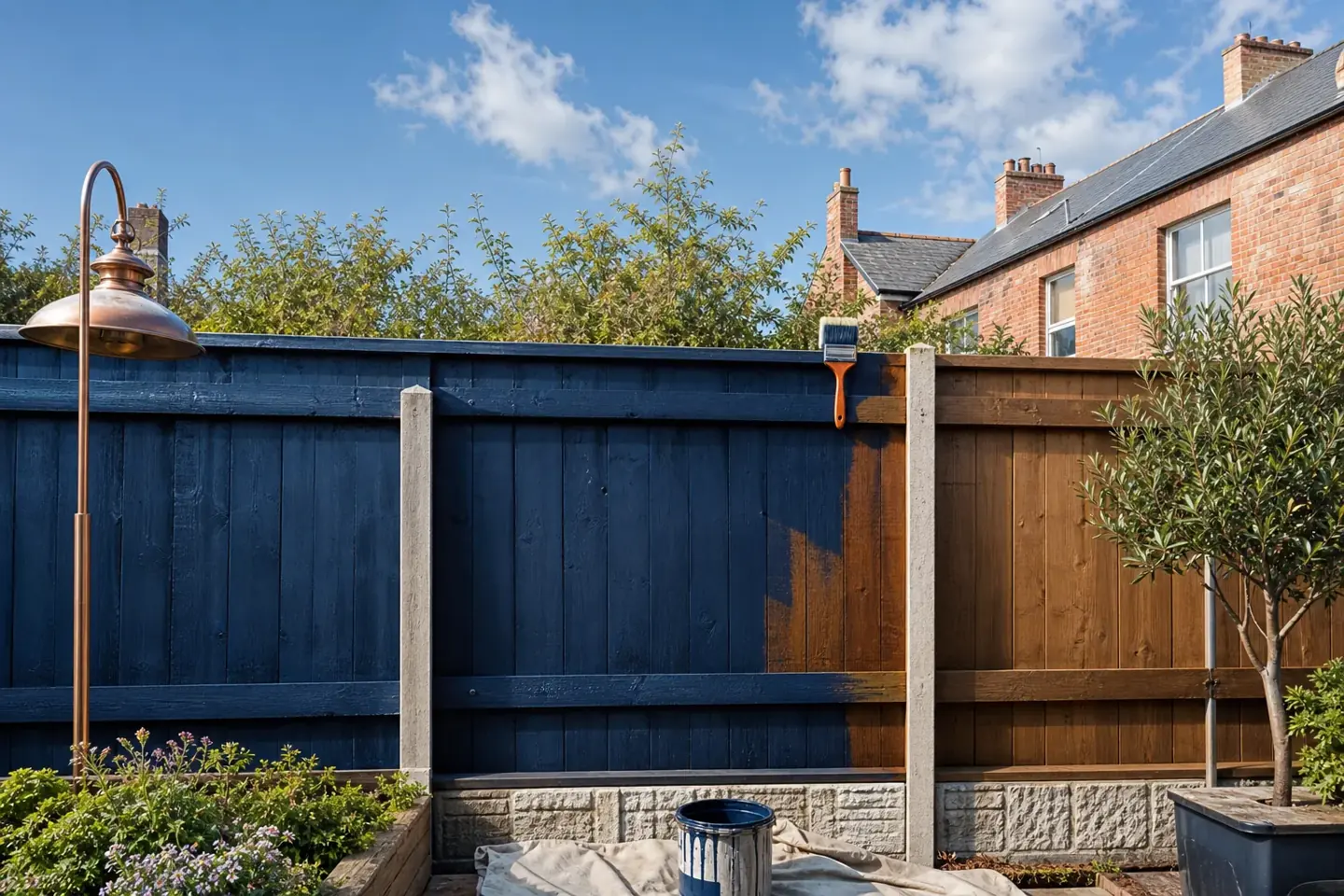
It helps to separate two jobs people lump together as 'fence painting'. A treatment or preserver soaks into the timber to keep water, rot and UV out; it is usually a quick-drying, one or two-coat job and often the cheaper option. A decorative or solid-colour paint sits more on the surface, gives you a specific garden colour (the fashionable dark greys, sages and charcoals), and usually needs proper prep and two coats to look right and last, so it costs a little more per panel.
Whichever you choose, the real value is protection. Bare timber left untreated in our damp, shaded North West climate greys off within a couple of seasons, then starts to soften, split and harbour rot at the base and the joints. A fence panel is not cheap to replace, and a run of posts even less so, so a coat every one to three years is genuinely money-saving — it keeps the wood sound and pushes a costly replacement years down the line. Treating a fence is maintenance, not decoration; the colour is a bonus.
That is also why prep and the number of coats matter. Treatment only soaks in and lasts on a clean, dry surface, and a second coat on the exposed, sun-and-rain side noticeably extends the life of the finish. Skimping on prep to save an hour is the most common reason a DIY coat fails within a year.
What a professional fence treatment involves
- 1
Check the timber and the boundary
We walk the run, check which panels are sound and which need a repair first, and agree the colour and product with you. There's no point coating a panel that's about to fail.
- 2
Clean and prep the surface
Green algae, dirt and loose flaking are cleaned off and the timber is allowed to dry, because treatment soaks in and lasts far longer on a clean, dry surface than on a damp, dirty one.
- 3
Protect plants, paving and neighbours' property
Borders, lawn, decking and paving are sheeted, and we work cleanly along shared boundaries so nothing overspray-marks your patio or next door's.
- 4
Coat evenly, then tidy up
We apply an even coat — brushed, rolled or sprayed to suit the fence — work the product into joints and posts, add a second coat to the weather side where it's worthwhile, and leave the garden swept and clear.
Treating a fence that's already failing is money wasted
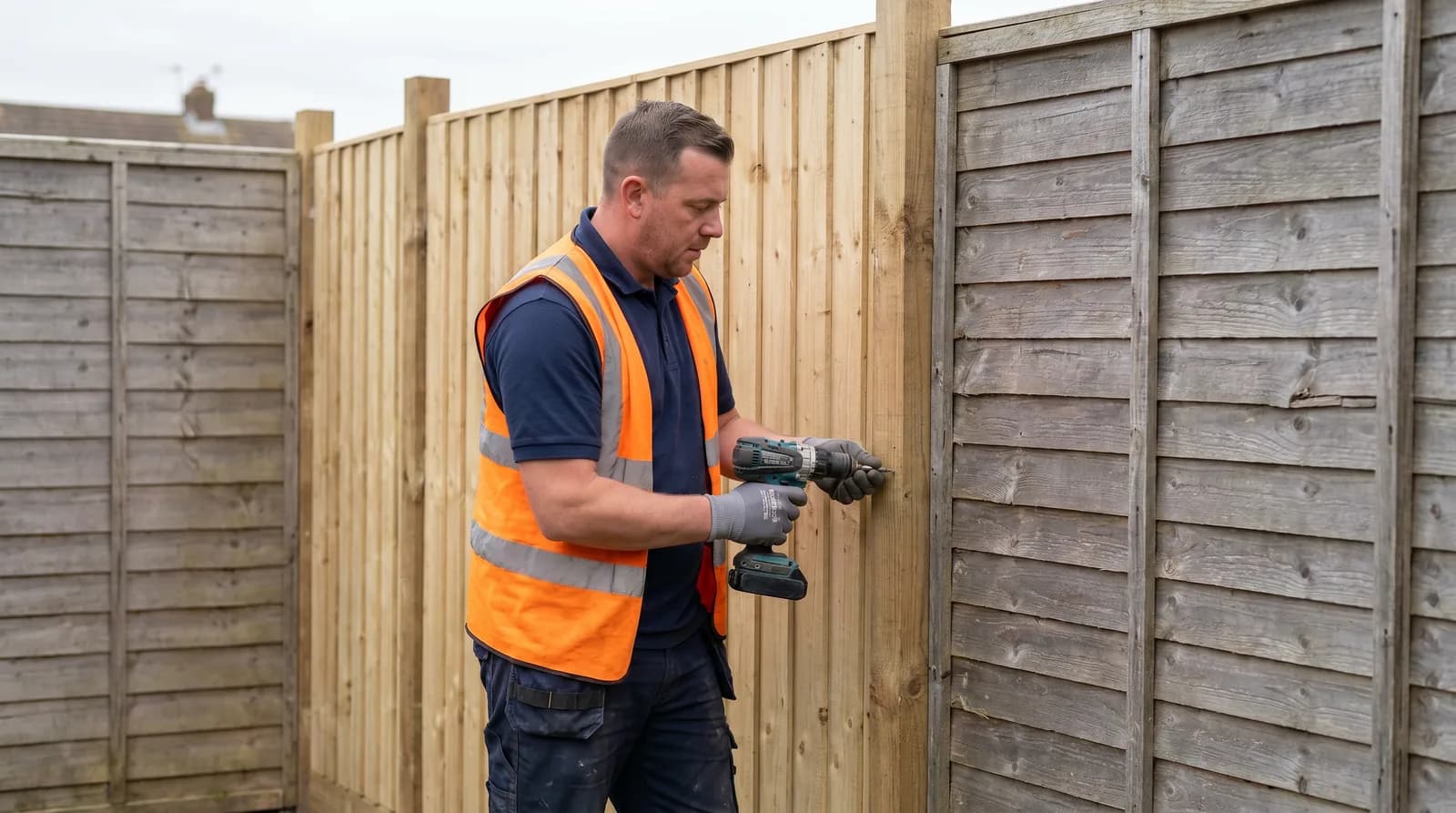
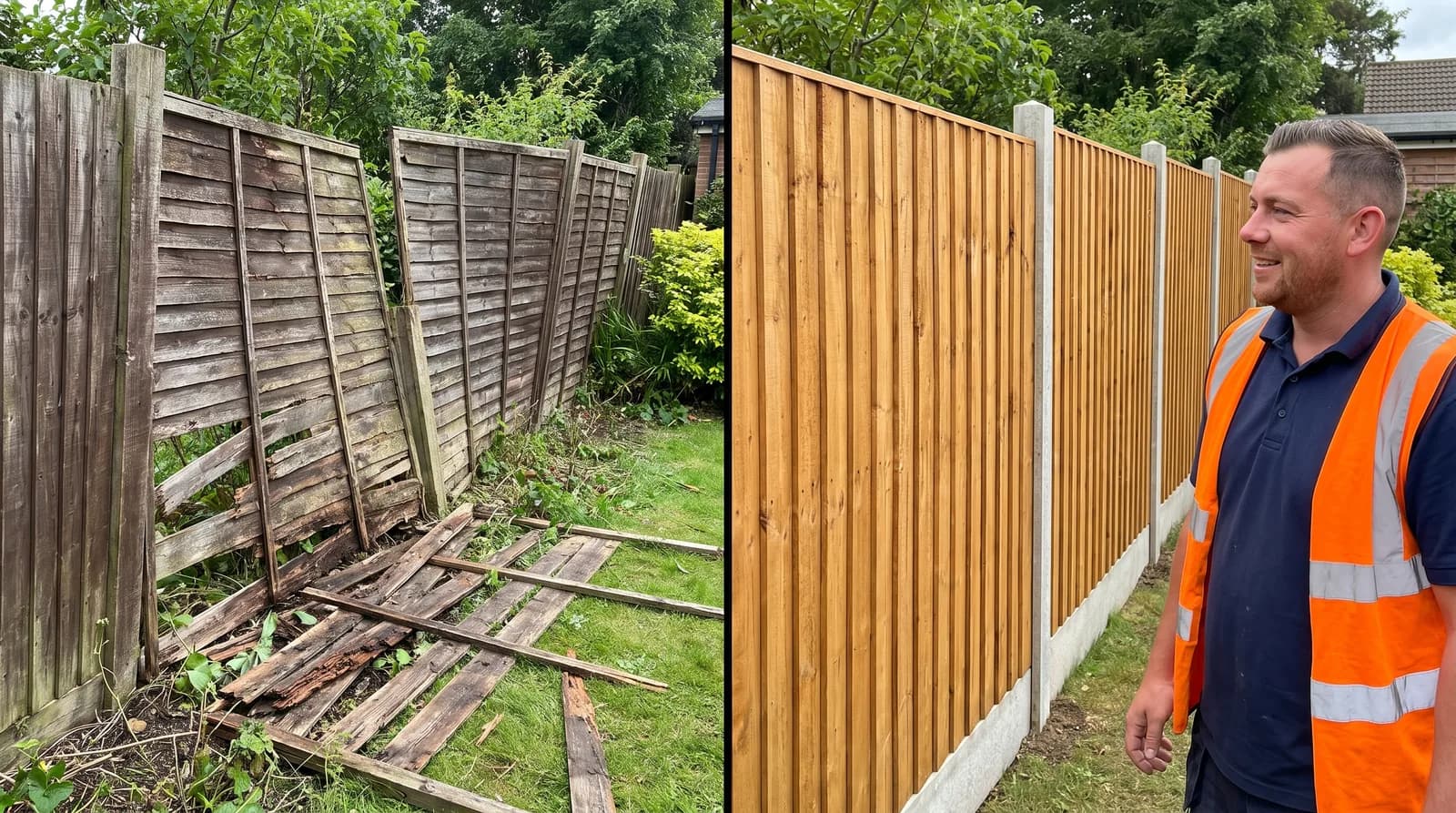
If posts are rotten at the base, panels are split or the fence rocks in the wind, a coat of paint won't fix it — it just hides the problem until the panel comes down in the next storm. Rotten posts and leaning runs are a repair or replacement job, not a paint job. Get the structure sound first, then treat it. We'll always tell you honestly if treating a tired fence is throwing good money after bad.
Two coats on the weather side, and mind the forecast
Timber has to be dry for treatment to soak in and cure, so a settled dry spell from late spring to early autumn is ideal — coating damp wood in winter simply wastes product. Where the budget allows, give the sun-and-rain side of the fence a second coat: it is the face that weathers first, and that extra coat is the cheapest way to add years to the finish.
DIY fence painting vs a professional treatment
| DIY weekend job | Professional treatment | |
|---|---|---|
| Finish | Easy to leave brush marks, missed strips and patchy coverage | Even coverage across every panel, post and gate |
| Prep | Often skipped, so the coat doesn't soak in or last | Cleaned and dried first, so the treatment grips and lasts |
| Mess | Stained paving, splashed borders and overspray on the patio | Plants and surfaces sheeted, area left clean |
| Time | A full weekend or two, plus drying time between coats | Done in one visit for most gardens, fitted around the weather |
| Typical cost | £30–£70 of product and kit, plus your weekend | Priced from a few photos, insured, with a tidy, even finish |
Photos that get you an accurate price fast
- A wide photo of the full fence run so the length and height are clear
- A close-up of any tired, split or algae-covered panels and the post bases
- A photo showing access and the colour or finish you'd like (any gates, narrow side returns, shared boundaries)
Frequently asked questions
How much does it cost to paint a fence?
As a typical UK guide, painting a fence works out at roughly £10 to £25 per panel, or £3 to £8 per square metre, for a single coat — so a small garden often lands around £150 to £300 and a full semi's perimeter around £300 to £600. In Chester, CPAGM's fence repairs and treatment start from £95, and the price for painting your fence is confirmed once you send a few photos.
How much does fence painting cost per panel?
Per panel is the usual way to picture it: a standard 6ft panel is roughly £10 to £25 for a single coat across the UK, less per panel when sprayed on a long open run, and more for two-coat colour paint or panels that need cleaning and repair first.
How much does spray painting a fence cost?
Spraying is quick, so it often costs less in labour — commonly from around £8 to £15 a panel — but everything nearby has to be masked off, so it suits long, open runs rather than tight boundaries. We choose spray or brush to suit your fence and garden, and quote it clearly either way.
Is it cheaper to spray or brush a fence?
Spraying is usually cheaper per panel because it's far faster, especially on long open runs. Brushing costs a little more but works the product deep into the grain and makes far less mess, which is often the better choice on older timber or a boundary you share closely with a neighbour.
Should I treat or paint my fence?
A preserver or treatment soaks in to protect the timber and is usually the cheaper, longer-soaking option; a solid-colour paint gives you a specific garden colour but needs more prep and usually two coats. Both protect the wood — the main difference is the look and the cost. We can do either and will advise what suits your fence.
Does treating a fence really make it last longer?
Yes. Untreated timber in our damp, shaded North West climate greys off, softens and starts to rot at the base and joints within a few seasons. A coat every one to three years keeps the wood sound and pushes a costly panel or post replacement years down the line, so treatment is genuinely money-saving maintenance rather than just decoration.
How many coats does a fence need?
A single coat of preserver is fine for sound timber on the sheltered side, but the exposed, sun-and-rain face lasts noticeably longer with two. Solid-colour paints almost always need two coats to look even and last. We'll recommend what your fence actually needs rather than what sells the most product.
How often should a fence be treated in Chester?
Most timber fences benefit from a coat every one to three years, depending on the product. In our damp, shaded climate — and on north-facing or tree-lined boundaries that green over fast — sticking to the shorter end keeps the wood sound for much longer.
Can you paint a fence a colour, not just clear-treat it?
Yes. We can apply solid colour paints and modern garden colours as well as traditional clear or tinted preservers. Colour finishes usually need two coats and a bit more prep, so they cost a little more per metre — we'll quote it clearly.
Do you treat both sides of the fence?
Where we have access, yes — coating both faces protects the timber far better. Some shared boundaries only allow access to your side, in which case we treat what we can reach and tell you upfront.
What's the best time of year to treat a fence?
A dry spell from late spring through to early autumn is ideal, because the timber needs to be dry for the coat to soak in and cure. We watch the forecast and book the work for settled, dry weather rather than coating damp wood.
Do you cover Cheshire, the Wirral and Wrexham as well as Chester?
Yes. CPAGM covers Chester and roughly a 45-minute radius, including Hoole, Handbridge, Upton, Saughall, Frodsham, Northwich, Ellesmere Port and Tarporley, and out towards the Wirral and parts of Wrexham and Flintshire. Send a few photos of your fence run and we'll confirm a price.
Sources & further reading