Short answer
Fence installation is usually priced per metre. As a typical UK guide, supply-and-fit panel or feather-edge fencing runs about £90 to £160 a metre installed, so a full garden fence comes to several hundred to a few thousand pounds depending on length, height and posts. For repairs in Chester, CPAGM's fence work starts from £95; the exact price depends on the job and access, and we confirm it from a few photos before anything is booked.
What changes the price of a fence in Chester
Fence cost is driven by three things far more than by the panel itself: the posts, the access and the ground. A panel swap where the existing concrete posts are sound is quick and cheap. The same fence run becomes a much bigger job when rotten timber posts have to come out, or when old concrete posts have snapped at the base and need digging out and re-setting.
Chester and the wider Cheshire and Wirral area throw up a few local realities. Exposed gardens out toward the Wirral coast and the open Cheshire plain take a battering from south-westerly wind, so storm-loosened and blown-down panels are common after a rough spell. Heavy clay soil around parts of Chester holds water, which rots fence posts faster at the ground line and makes digging slower. And in terraced streets in Hoole, Boughton and Handbridge, rear-only access through the house or a shared entry adds time because every post, panel and bag of postcrete is carried by hand.
Boundary fencing also has a neighbour dimension. Before replacing a shared boundary it is worth checking the deeds for who owns which side, and having a friendly word next door. It avoids disputes and sometimes means the cost is shared.
Fence repair and replacement — guide prices in Chester & Cheshire
| Job | Guide price | What affects it |
|---|---|---|
| Minor fence repair visitRefix a loose panel, secure a leaning post, sort a dropped gate | From £95 | Refix a loose panel, secure a leaning post, sort a dropped gate |
| Replace a fence panel (labour)Swap a damaged panel where the posts are sound; panel cost on top | Priced with your quote | Swap a damaged panel where the posts are sound; panel cost on top |
| Replace a broken or rotten postDig out, re-set in postcrete; concrete posts cost more than timber | From £95 | Dig out, re-set in postcrete; concrete posts cost more than timber |
| New close-board or panel fencingQuoted by the metre once height, panel type and post work are known | Priced per metre | Quoted by the metre once height, panel type and post work are known |
| Fence painting or treatmentClean down and treat a typical garden run to protect the timber | Priced with your quote | Clean down and treat a typical garden run to protect the timber |
Fence repairs start from £95 for typical Chester gardens. Labour is separate from materials, and a new fence run is confirmed by the metre after a few photos or a quick visit, because height, panel type, post condition and access all change the scope.
Panel, feather-edge or closeboard: fence types and what they cost
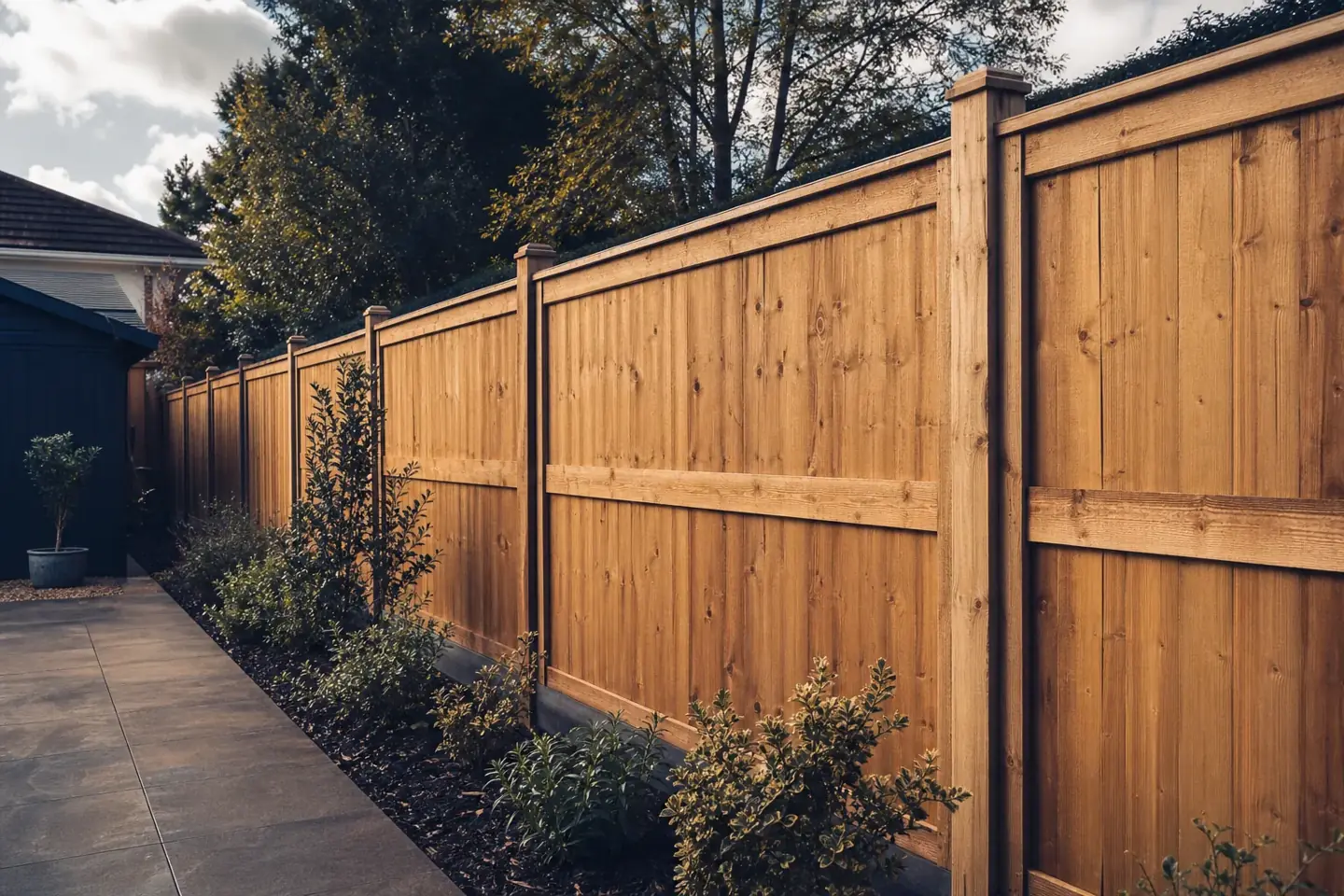
After the posts, the type of fence is the biggest single thing that moves the per-metre price. Panel fencing — overlap (waney-edge) panels, or the sturdier closeboard panels held in a frame — drops between the posts as ready-made bays, so it is quicker to fit and usually the cheapest to install. Feather-edge, often called closeboard, is built board by board on site over horizontal rails and a gravel board. It is stronger, longer-lasting and far better in exposed, windy gardens, but it takes more labour, so it costs more per metre.
For most Chester back gardens, plain overlap panels are the budget choice, closeboard panels the middle ground, and traditional feather-edge the premium, longest-lived option. Decorative styles — slatted, hit-and-miss, trellis-topped — sit above plain panels again. Whichever you choose, the metre rate still moves with the height, the posts and how the old fence comes out, which is exactly why a new run is measured up and quoted by the metre rather than sold at a flat price.
Panel fencing vs feather-edge (closeboard)
| Panel (overlap / closeboard panels) | Feather-edge / closeboard | |
|---|---|---|
| Cost to install | Lower per metre — ready-made bays drop straight in | Higher per metre — built board by board on site |
| Strength & lifespan | Fine for sheltered gardens; overlap panels are the shortest-lived | Stronger and longer-lasting, better for security and privacy |
| Wind & exposure | Panels can lift or blow out of the posts in a gale | Copes with exposed Wirral-coast and open-plain wind far better |
| Repairs | A blown panel swaps out quickly and cheaply | Repaired board by board, so localised damage is easy to patch |
| Best for | Budget runs, fast replacement, tidy suburban gardens | Long boundaries, privacy and windy or exposed sites |
Typical UK guide: supply-and-fit fencing per metre
| Job | Guide price | What affects it |
|---|---|---|
| Panel or feather-edge, ~1.2m (4ft) highLower heights and simpler runs sit at the bottom of the range | From ~£90/m | Lower heights and simpler runs sit at the bottom of the range |
| Panel or feather-edge, ~1.8m (6ft) highThe common back-garden height; most installs land in here | ~£100–£160/m | The common back-garden height; most installs land in here |
| Concrete posts & gravel boards (vs timber)Cost more than timber up front but outlast several sets of panels | Adds to the metre rate | Cost more than timber up front but outlast several sets of panels |
| Remove & dispose of the old fenceDigging out old posts and tipping the waste adds labour and tip fees | Extra on top | Digging out old posts and tipping the waste adds labour and tip fees |
| Full garden boundary (supply & fit)A typical 15–40m run, depending on height, fence type and posts | Several hundred to low thousands | A typical 15–40m run, depending on height, fence type and posts |
Typical UK market ranges for supply and fit — not a CPAGM quote. Real figures move with fence type, height, whether the posts are concrete or timber, the ground and the access. We confirm your own price by the metre after a few photos or a quick look.
Posts, height and removing the old fence
Posts decide how long a fence lasts and a big share of what it costs. Timber posts are cheaper to buy and quicker to fit, but they rot at the ground line and are usually the first thing to fail in Cheshire's wet clay. Concrete posts with gravel boards cost more up front and add to the per-metre rate, but they keep the panels clear of the wet ground and typically outlast several sets of panels — so on a full replacement they are often the better long-term value.
Height changes both the materials and the labour. A 6ft (1.8m) boundary is the common back-garden choice and sits in the middle of the range; lower 3–4ft fencing to a front garden is cheaper per metre, while anything taller, trellis-topped or stepped down a slope adds cost. Planning rules matter too: garden fences over 2m generally need planning permission, and 1m where they front a road, so most gardens stay at or below those heights.
Removing the old fence is a real part of the price that is easy to forget. Digging out snapped concrete posts, lifting rotten timber and getting the waste to the tip all take time and carry tip fees — more so with rear-only access in terraced Hoole or Handbridge, where everything is barrowed through by hand. It is also why the two jobs are priced differently: a repair is quoted per panel or per post because you only touch what has failed, while a new run is quoted per metre because posts, gravel boards and labour flow along the whole length.
What a fence job actually involves
- 1
Check the posts, panels and gates
We look at what is actually failing. Often it is one or two posts or a single blown panel, not the whole run, so you only pay for what genuinely needs doing.
- 2
Agree the repair or replacement route
You get a clear choice: a targeted repair to buy more years, or a full replacement where the timber is past saving. We are honest about which makes sense.
- 3
Remove the old fence and set new posts
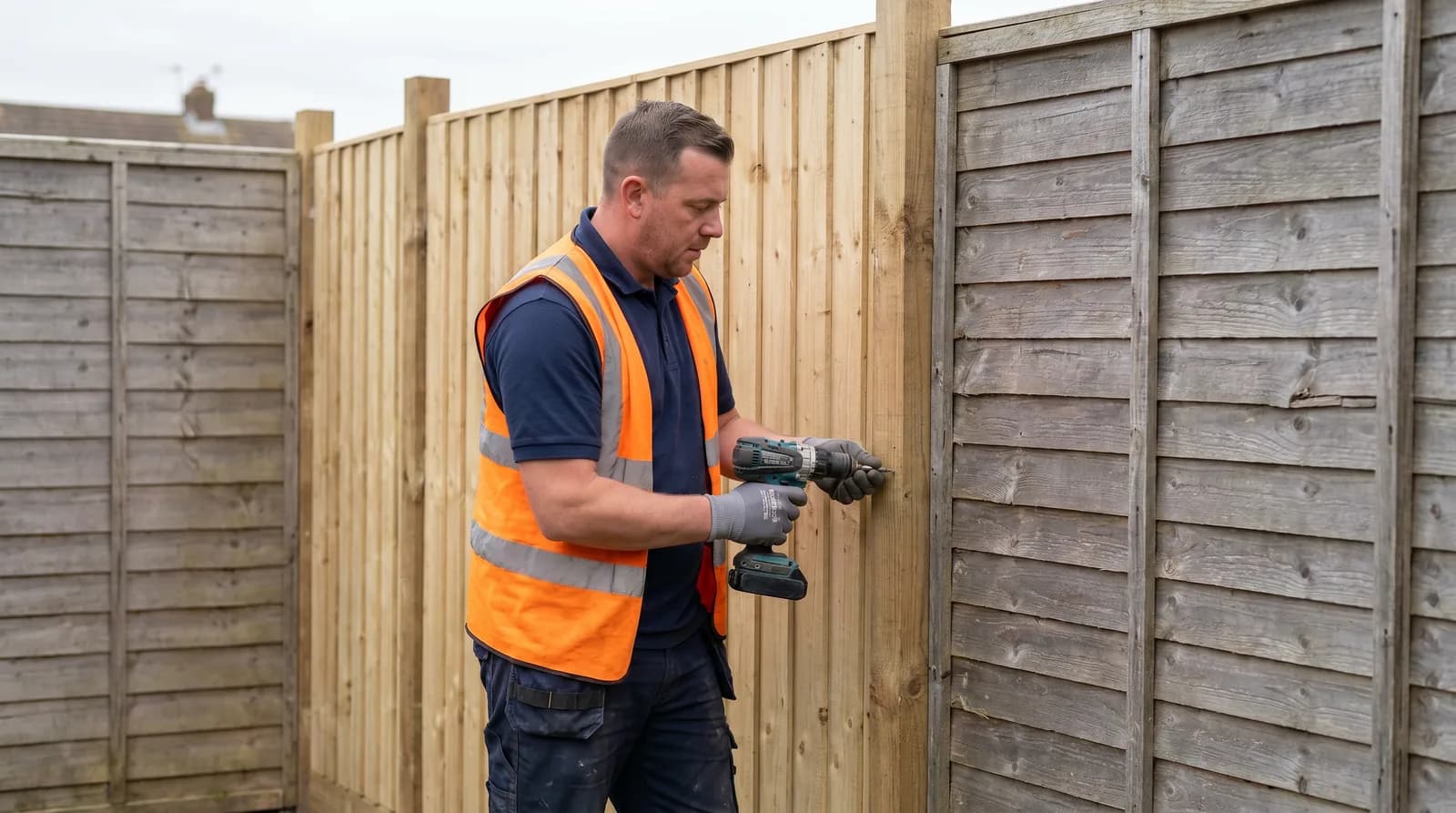
Failed panels and posts come out, post holes are dug to a sensible depth and new posts are set plumb in postcrete so the line stays straight and solid.
- 4
Fit, then paint or treat
Panels or boards go up level, gates are hung to swing and latch properly, and where you have asked we treat or paint the timber to protect it through Cheshire winters.
Leaning posts and storm damage after high wind
If a fence has blown over or a post has snapped in a storm, keep children and pets away from it and don't try to prop a heavy panel up alone — they catch the wind and can drop. Concrete posts that have cracked at the base are also heavier and more awkward than they look. Get a leaning or damaged boundary made safe properly rather than risking a back injury or a panel landing on someone.
DIY fence panel swap vs a professional repair
| DIY panel swap | Professional fence repair | |
|---|---|---|
| When it works | One light panel, sound concrete posts, easy access | Rotten or snapped posts, leaning runs, awkward access |
| Posts | Digging out and re-setting a post is heavy, slow work | Posts dug out and re-set plumb in postcrete so the line holds |
| Tools | Spirit level, spade, postcrete, often a second pair of hands | Right tools and the kit to carry materials through tight access |
| Finish | Easy to end up with a leaning or uneven run | Straight, level and properly fixed, with timber treated if asked |
| Typical cost | Price of the panel and postcrete, plus your weekend | From £95 for a repair, insured, with the job done in one visit |
How to keep the cost of a fence down
Three things reliably lower a fencing bill. Book the whole run in one visit rather than a panel here and a post there. On a full replacement, choose concrete posts and gravel boards so you are not paying to redo rotten timber posts again in a few years. And on a shared boundary, have a friendly word next door before you start — where both sides benefit, neighbours often split the cost, and it heads off any dispute over who owns which side.
Photos that get you an accurate price fast
- A wide photo of the full fence run so we can see the length and how many panels are involved
- A close-up of the failing posts at ground level — whether they are timber, concrete, rotten or snapped
- A photo showing how we'd reach the garden: front, side gate, shared entry or only through the house
Frequently asked questions
How much does fence installation cost?
Fence installation is usually priced per metre. As a typical UK guide, supply-and-fit panel or feather-edge fencing costs about £90 to £160 a metre installed, so most garden boundaries come to several hundred to a few thousand pounds depending on length, height and posts. Send a photo of the run and we'll give you a realistic per-metre guide.
How much does it cost to install a fence in the UK?
Across the UK, installing a new fence typically costs around £90 to £160 per metre supplied and fitted. The exact figure is driven by the fence type, the height, whether the posts are concrete or timber, the ground and how the old fence comes out. A full garden run usually lands between several hundred and a few thousand pounds.
How much is fencing per metre?
As a typical guide, fencing is roughly £90 to £160 per metre installed for panel or feather-edge at a common 6ft height. Lower fences and simpler runs sit at the bottom, while taller or sloping runs with concrete posts and gravel boards sit toward the top. We quote new fencing by the metre once we know the height, type and post work.
How much does a new fence cost?
A new garden fence usually works out at several hundred to a few thousand pounds, because it is priced per metre — about £90 to £160 a metre installed as a UK guide — and multiplied by the length of your boundary. The panel type, the height, concrete-or-timber posts and removing the old fence all move the final figure.
How much does it cost to replace a fence?
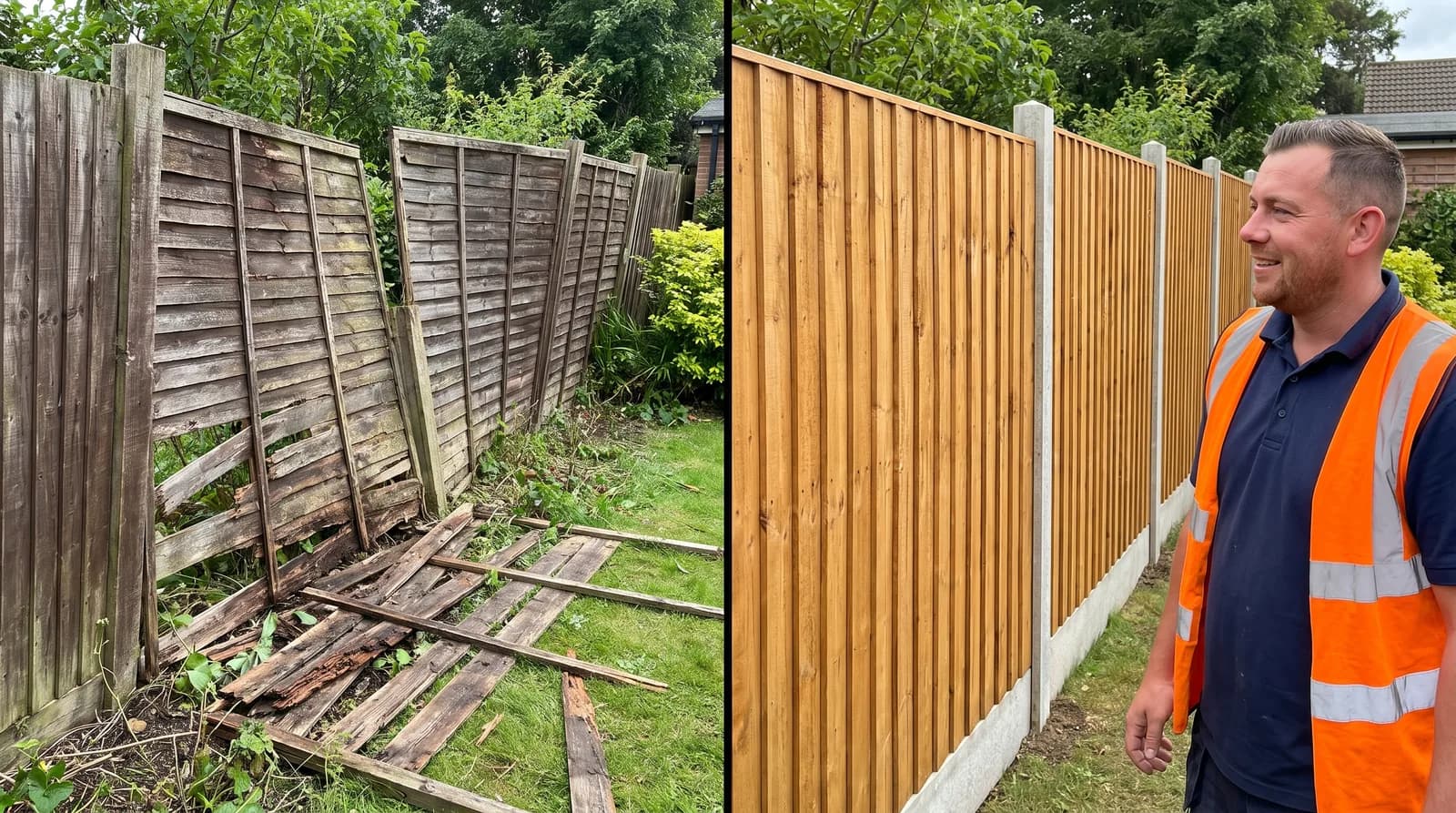
Replacing a fence is charged at the same per-metre rate as a new one — around £90 to £160 a metre installed as a guide — plus removing and disposing of the old fence and posts. If only some parts have failed, replacing individual panels or just the posts is far cheaper than a full run, and we'll tell you honestly which makes sense.
How much does a garden fence cost?
A typical garden fence costs several hundred to a few thousand pounds installed, depending on how long the boundary is and how high. Repairs are much cheaper — our fence repairs start from £95. We confirm the price after a few photos, by the metre for a full run.
How much does a new fence cost per metre in Chester?
As a local guide, a new fence in Chester works out at roughly £90 to £160 per metre supplied and fitted, in line with the wider UK. Where it lands depends on the panel type, the height and the post work, so we confirm your own per-metre price after a photo of the run rather than guessing a flat figure.
Can you just replace one blown-down panel?
Yes. If the posts are sound, swapping a single panel is a straightforward repair — our fence repairs start from £95, and we confirm the price, plus the cost of the panel, from a few photos. After a storm that is often all that's needed, so we won't push a full replacement you don't require.
Are concrete or timber posts cheaper?
Timber posts are cheaper to buy and fit but rot at the ground line and usually fail first, especially in Cheshire's wet clay. Concrete posts with gravel boards cost more and add to the per-metre rate, but they keep panels out of the wet and outlast several sets of panels, so they are generally better value on a full replacement.
What's the cost difference between panel and feather-edge fencing?
Ready-made panels (overlap or closeboard panels) drop between the posts quickly, so they are usually the cheaper install. Feather-edge, or closeboard, is built board by board on site with rails and a gravel board — stronger and longer-lasting, and better in exposed gardens, but more labour, so it costs more per metre.
Do I have to replace the whole fence if some posts have rotted?
Not always. We can often replace just the failed posts and keep good panels, which is far cheaper than a full run. We'll tell you honestly when the timber is genuinely past saving.
Who pays for a fence between two gardens?
It depends on who owns the boundary, which is usually set out in the property deeds. It's worth checking before work starts, and many neighbours agree to share the cost of a shared boundary.
Will you paint or treat the fence too?
Yes. Cleaning down and treating a garden run helps the timber last through wet Cheshire winters, and we price it with your quote. We can do it on the same visit as a repair or replacement.