Short answer
To get rid of driveway weeds for good, kill them at the root while they are still growing, clear and re-sand the joints, then keep new seed and moss from settling back in — pulling or jetting the tops off only buys a few weeks. A professional driveway weed treatment in Chester starts from £50, and a follow-up visit can catch any regrowth; the exact price depends on the area and how established the weeds are, confirmed from a few photos.
Why Chester driveways green over and weed up so fast
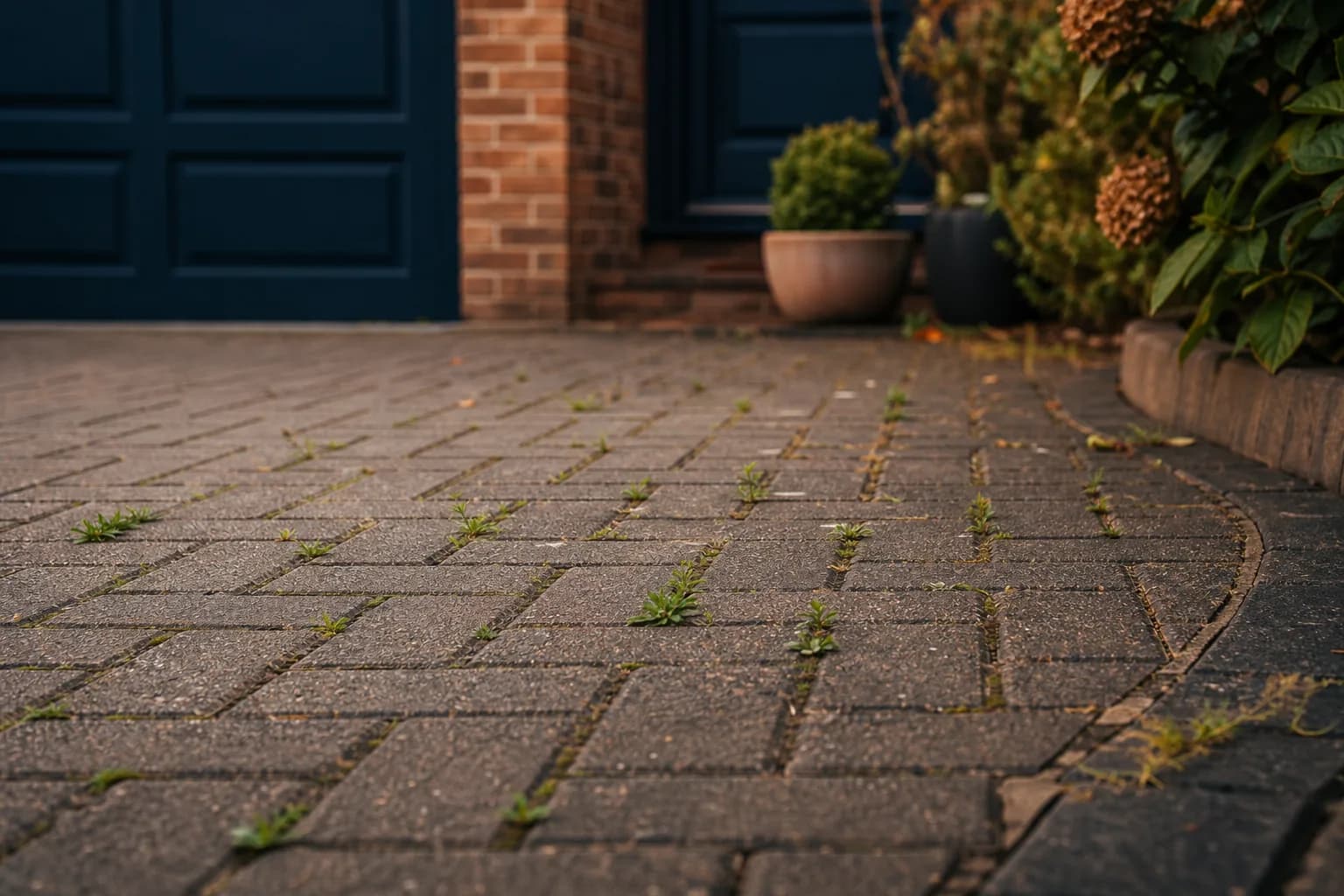
Weeds on a drive don't grow from the slabs — they grow from the thin layer of dirt, moss and washed-in soil that builds up in the joints between blocks or in cracks in the concrete. Seed blows in, lands in that grit, and our damp climate does the rest. That is why a freshly laid driveway stays clean for a couple of years and then suddenly seems to weed up everywhere at once.
Chester, the Wirral and the Cheshire and Flintshire countryside sit wet for a big part of the year, and a drive that is shaded, north-facing, or tucked beside a wall or under trees stays damp long enough for moss and weeds to take hold. Homes near the Dee, the older streets of Hoole and Handbridge, and rural properties out toward Tarporley and Wrexham green over especially quickly.
The surface matters too. Block paving has dozens of metres of open joints for seed to settle in, gravel and resin drives trap soil, and even solid concrete or tarmac weeds up along the edges and any hairline cracks. Knowing what you are dealing with is half the job, because a quick blast with a pressure washer can blow the jointing sand out and actually make next year's weeds worse.
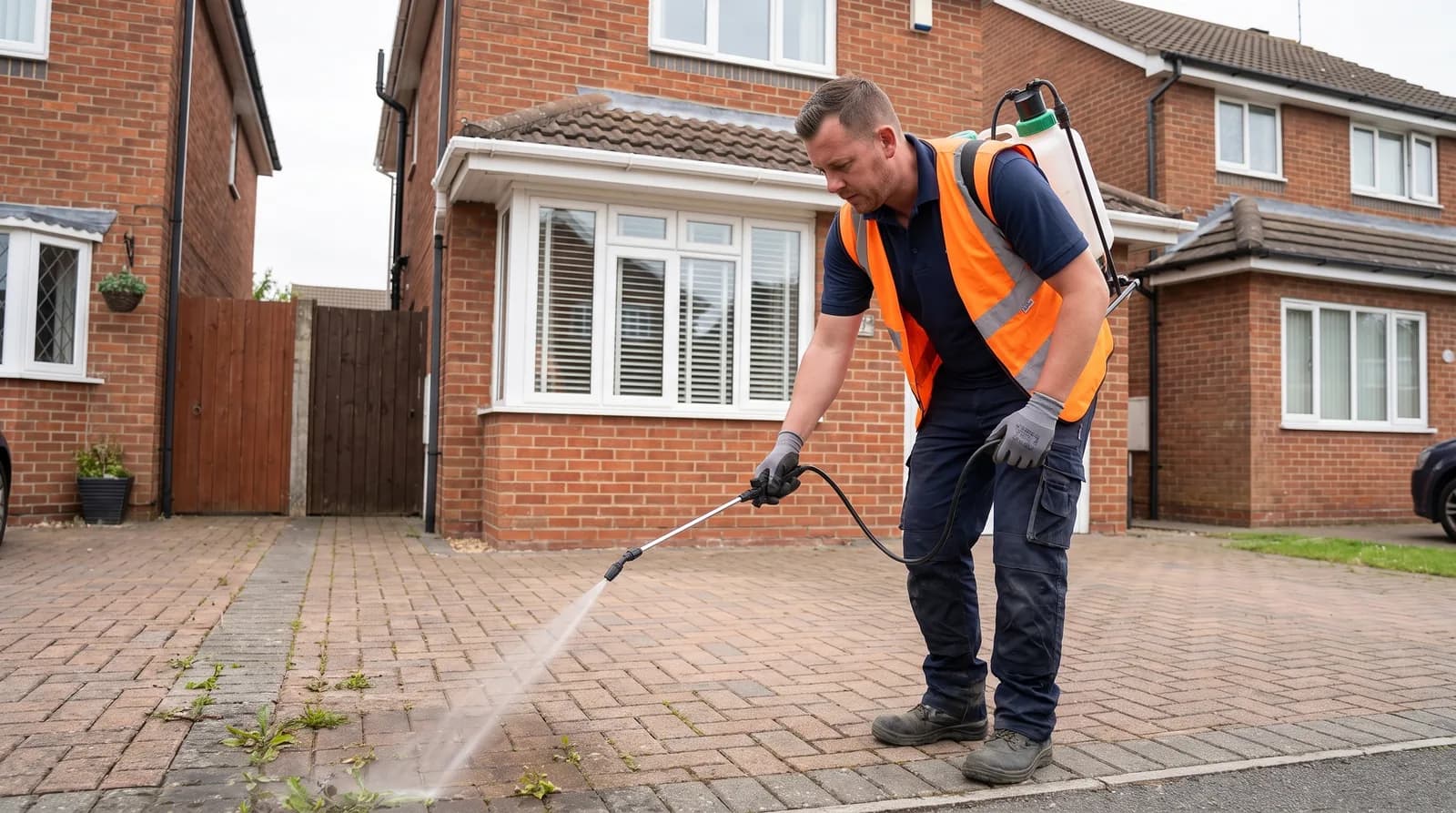
Professional weed control — guide prices in Chester & Cheshire
| Job | Guide price | What affects it |
|---|---|---|
| Driveway weed treatmentTypical block-paving or concrete drive, treated at the root | From £50 | Typical block-paving or concrete drive, treated at the root |
| Patio or path treatmentSlabs, flags or paths where weeds and moss are established | Confirmed from photos | Slabs, flags or paths where weeds and moss are established |
| Follow-up visitCatches regrowth and any seed that germinates later in the season | From £50 | Catches regrowth and any seed that germinates later in the season |
| Clean, weed and re-sand (block paving)Full clean to lift the growth, then kiln-dried sand back into the joints | Confirmed from photos | Full clean to lift the growth, then kiln-dried sand back into the joints |
| Seasonal maintenance planRegular visits so the drive never gets a chance to weed up again | From £50 / visit | Regular visits so the drive never gets a chance to weed up again |
Weed control starts from £50 for typical Chester properties. The job is confirmed after you send a few photos or we take a quick look, because the surface, area, how established the growth is, and whether you want a one-off treatment or an ongoing plan all change the scope.
How to get rid of driveway and patio weeds properly
- 1
Kill the weeds at the root first
Don't start by pulling or jetting — treat the growth while it is still in place. A suitable weedkiller applied to the leaf on a dry, still day travels down into the root, so the plant dies for good rather than shooting back from what is left in the joint. Moss responds to a moss treatment rather than a standard weedkiller, so it is worth doing both where you have both.
- 2
Let it work, then clear the joints
Give the treatment time to take — usually a week or more — until the weeds and moss have browned off. Then scrape and brush the dead growth and the built-up grit out of the joints and cracks. This is the step most people skip, and it is the one that matters: clean joints give new seed nowhere to land.
- 3
Clean the surface and re-sand the joints
Once the joints are clear, a proper clean lifts the last of the moss film. On block paving, brush fresh kiln-dried sand back into the joints afterwards — that sand locks the blocks and is your main defence against weeds and moss returning. Skipping it is why a cheap rushed clean weeds up again within a season.
- 4
Stay on top of it
Weeds and moss are living growth in a damp climate, so 'for good' really means keeping the gap closed. A quick treatment once or twice a year, sweeping leaves and grit off before they rot down, and letting in light where you can will keep a treated drive clear far longer than a single annual blitz.
The main ways to kill driveway weeds — what works and what doesn't
There are really five ways people tackle driveway and patio weeds, and they are not equal. Hand-weeding with a hoe or a weeding knife is free and chemical-free, but the roots tend to snap off in the joints and it is slow, hard work over a whole drive — fine for a handful of weeds, frustrating for a full block-paved frontage.
Boiling water and vinegar are the popular 'natural' options. A kettle of boiling water scalds young weeds in a path crack, and white or horticultural vinegar (acetic acid) burns off the tops on contact. Both are cheap and kinder to the environment, but they only affect what they touch — the deep roots survive, so you will be repeating the job every few weeks, and strong vinegar can etch some natural stone, so spot-test first.
Salt gets recommended a lot online and it does scorch weeds, but be careful: it leaches into the soil, can damage nearby lawns, borders and planting, harms the ground around the edges and lingers for a long time. Use it very sparingly on an isolated crack if at all, and never where it can wash into a border, a bed or a drain.
Chemical weedkillers are the most effective DIY route when they are the right type. A systemic weedkiller (typically glyphosate-based) is absorbed through the leaf and carried down to the root, so the whole plant dies rather than shooting back — that is what 'kill it for good' means on a drive. Contact weedkillers and vinegar only burn the tops. Whatever you use, follow the label exactly, apply on a dry, still day, and keep it off drains and borders and away from pets and children until it has dried.
A professional treatment does the same job with the right product, dilution and timing, applied safely and insured — and, crucially, it is paired with clearing and re-sanding the joints and a follow-up visit, which is the part that actually keeps the weeds from marching straight back.
Best weed killer for driveways: methods, cost and how well they work
| Job | Guide price | What affects it |
|---|---|---|
| Hand-weeding, hoe or a weeding knifePulls and scrapes weeds out by hand. Fine for a few, but roots snap off in the joints and it is slow over a whole drive — regrowth in weeks. | £0 + your time | Pulls and scrapes weeds out by hand. Fine for a few, but roots snap off in the joints and it is slow over a whole drive — regrowth in weeks. |
| Boiling waterScalds young weeds in path cracks on contact. Cheap and chemical-free, but it cools fast, misses deep roots and won't clear a full driveway. | Free | Scalds young weeds in path cracks on contact. Cheap and chemical-free, but it cools fast, misses deep roots and won't clear a full driveway. |
| White or horticultural vinegar (acetic acid)A contact weedkiller that browns off the tops of small weeds. Doesn't reach the root, needs repeating, and strong versions can etch some stone. | £3–£15 | A contact weedkiller that browns off the tops of small weeds. Doesn't reach the root, needs repeating, and strong versions can etch some stone. |
| SaltScorches weeds but leaches into the soil, can harm borders, lawns and the ground around the edges, and lingers. Use very sparingly, if at all. | Not recommended | Scorches weeds but leaches into the soil, can harm borders, lawns and the ground around the edges, and lingers. Use very sparingly, if at all. |
| Path & patio (contact) weedkillerFatty-acid or pelargonic-acid sprays burn off top growth quickly. Good for a fast tidy-up, but the roots often survive, so weeds return. | £5–£15 | Fatty-acid or pelargonic-acid sprays burn off top growth quickly. Good for a fast tidy-up, but the roots often survive, so weeds return. |
| Systemic weedkiller (e.g. glyphosate)Absorbed through the leaf and carried to the root, so the plant dies for good. The most effective DIY option — apply strictly to the label. | £10–£30 | Absorbed through the leaf and carried to the root, so the plant dies for good. The most effective DIY option — apply strictly to the label. |
| Professional weed treatmentThe right product, dilution and timing, applied safely and insured, plus clearing and re-sanding the joints — and a follow-up to catch regrowth. | From £50 | The right product, dilution and timing, applied safely and insured, plus clearing and re-sanding the joints — and a follow-up to catch regrowth. |
DIY costs are rough guide figures for typical products; results vary with how established the weeds are. Whatever the method, clearing and re-sanding the joints afterwards is what actually keeps a driveway clear — see below.
Go easy on the weedkiller — and never near drains, pets or borders
Strong or wrongly mixed weedkiller run-off harms lawns, planting, pets and wildlife, and on a hard surface it runs straight into the gutter and the drain. Stick to the product's dilution, treat on a dry, still day so nothing drifts onto plants, keep children and pets off until it is dry, and keep it away from gulleys and borders. If your drive backs onto a watercourse, you have a knotweed-type invasive plant, or the weeds keep storming back whatever you do, stop and get it looked at — the right treatment and timing beat repeatedly dousing the surface.
Re-sanding block paving joints: the step that stops weeds coming back
On block paving, the sand packed between the blocks does two jobs — it locks the paving together so it doesn't rock and spread, and it fills the gap where weed seed and moss would otherwise settle. Over the years that sand washes and blows out, the joints open up, and dirt collects in the gap. That dirt is the seedbed your weeds grow from, which is why an old drive suddenly weeds up all over.
Once you have killed the weeds and scraped the joints clean, brushing fresh kiln-dried sand back in is what turns a one-off clean into a lasting fix. Kiln-dried sand is fine and dry enough to run right down into the joints — you sweep it across the dry paving, work it in with a stiff broom, and top up any joints that are still low. On a clean, well-sanded drive, new seed simply has nowhere to take hold.
This is also why blasting a driveway with a pressure washer before treating is counter-productive: it strips the jointing sand out, opens the joints wider and, without re-sanding, leaves the drive greener the following year than before. Treat first, clear the joints, then clean and re-sand — in that order.
Quick DIY tidy-up vs proper weed control
| Quick DIY tidy-up | Proper weed control | |
|---|---|---|
| What it does | Pulls or jets the tops off — roots stay in the joint | Kills the weed and moss at the root so it doesn't return |
| How long it lasts | Weeds are usually back within a few weeks | Clear for the season, with a follow-up to mop up regrowth |
| Effect on the surface | Pressure washing blows out sand and invites more weeds | Joints cleared and re-sanded so seed has nowhere to settle |
| Safety | Easy to over-apply weedkiller near borders and drains | Right product, dilution and timing, applied carefully |
| Typical cost | £10–£30 of product, repeated all summer | From £50, insured, treated at the root with photos |
Stop weeds coming back: a driveway prevention checklist
- Re-sand block-paving joints with kiln-dried sand after treating — it locks the blocks and blocks new seed
- Sweep leaves, moss and grit off before they rot down into the joints and turn into fresh soil
- Keep the surface draining — clear gulleys and low spots where water and silt collect
- Let in light: cut back overhanging branches and shrubs so shaded, damp areas dry out
- Treat lightly once or twice a year (spring and again in late summer) rather than waiting for a full takeover
- Book a follow-up or a simple seasonal plan for shaded, north-facing or tree-lined drives that green over fast
Recurring weeds? A follow-up is normal, not a failure
Even a thorough treatment rarely clears a drive in one hit, because seed that hadn't germinated yet comes up later in the season. That is why an established or long-neglected driveway is usually treated once, then given a follow-up visit (from £50) a few weeks later to catch the second flush and any survivors. After that, a light treatment once or twice a year — or a simple seasonal plan — keeps it clear. If weeds keep storming back whatever you do, it is worth having the surface and drainage looked at rather than treating over and over.
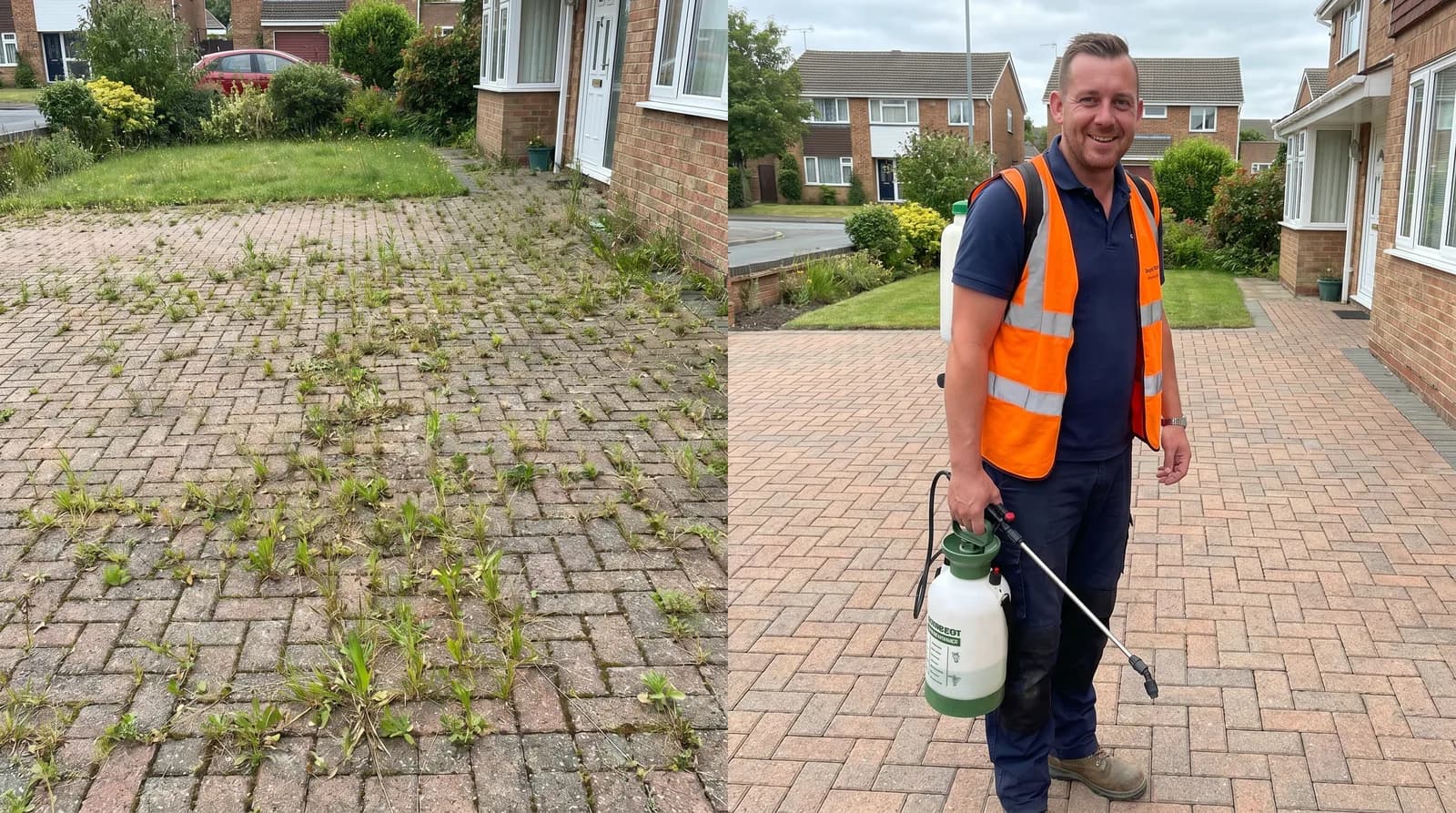
Frequently asked questions
How do I get rid of driveway weeds?
Kill the weeds at the root while they are still growing — a systemic weedkiller on a dry, still day, or a professional treatment — then wait for them to die back, scrape and brush the dead growth out of the joints, and re-sand block paving so new seed has nowhere to settle. Pulling or jetting the tops off alone only clears them for a few weeks.
How do you kill weeds on a driveway?
The most effective way is a systemic, root-killing weedkiller applied to the leaf, which travels down and kills the whole plant, with boiling water or a contact spray for the odd small weed in a path crack. A professional treatment does the same with the right product, dilution and timing, then clears and re-sands the joints so the weeds don't grow straight back.
What is the best weed killer for driveways?
For lasting results a systemic weedkiller (such as a glyphosate-based path & patio product) is usually the most effective, because it is carried from the leaf down to the root. Contact sprays and vinegar burn off the tops quickly but leave the roots. Whichever you use, apply it strictly to the label on a dry, still day and keep it well away from drains, borders and pets.
How do I stop weeds growing on my driveway?
Close the gap they grow in. Once the joints are clear, brush fresh kiln-dried sand into block paving, sweep leaves and grit off before they rot into the joints, keep the surface draining and let in light where you can, and treat once or twice a year. On a damp Chester drive a light ongoing plan keeps it clear far better than a single annual blitz.
How do I remove weeds from block paving?
Treat them at the root first, let them die back, then scrape and brush the dead weeds and built-up grit out of the joints. Finish by brushing fresh kiln-dried sand back in — that sand locks the blocks and is your main defence against weeds and moss returning. Jetting block paving before treating just blows the sand out and invites more weeds.
What is the best way to kill weeds in block paving for good?
Treat them at the root with a suitable weedkiller while they are still growing, let them die back, then clear the joints and brush fresh kiln-dried sand in. The sand is the bit that keeps them out long term — clean, sanded joints give new seed nowhere to take hold — and a follow-up visit catches anything that germinates later.
Can you permanently kill driveway weeds?
Not literally forever — weeds are living growth and fresh seed blows in every year — but you can get very close. Killing them at the root, clearing and re-sanding the joints, then keeping the surface swept and treated once or twice a year keeps a drive clear for the long term. 'For good' really means keeping the joints closed and staying on top of it.
Does pressure washing get rid of driveway weeds?
Only for a few weeks. A pressure washer rips the tops off and looks great on the day, but it leaves the roots in place and blasts the jointing sand out, so the weeds and moss usually come back worse the following season. Treat first, then clean and re-sand — not the other way round.
Is salt or boiling water a good way to kill driveway weeds?
They can scorch small weeds in a path crack, but they are unreliable on an established drive: salt can damage planting and harm the ground around the edges, and boiling water only reaches what you pour it on. For a whole driveway a proper root treatment is safer and far more effective.
Will weedkiller harm my pets, plants or the drains?
It can if it is over-applied or washed off a hard surface into the gutter. Stick to the product's dilution, treat on a dry, still day so nothing drifts onto borders, keep children and pets off until it is dry, and never let run-off reach a drain or watercourse. If your drive backs onto a stream or you have an invasive plant like Japanese knotweed, get it looked at rather than dousing the surface.
How often will my driveway need treating in Chester?
Most drives need a treatment once or twice a year in our damp climate — typically spring and again in late summer. Shaded, north-facing or tree-lined drives green over faster and do best on a simple ongoing plan so they never get a chance to weed up.
Do recurring driveway weeds need a follow-up visit?
Usually, yes. Seed that hadn't germinated when the drive was first treated will come up later in the season, so a follow-up visit — from £50 — catches that second flush and any survivors. After that, a treatment once or twice a year, or a simple maintenance plan, keeps an established drive from weeding up again.